
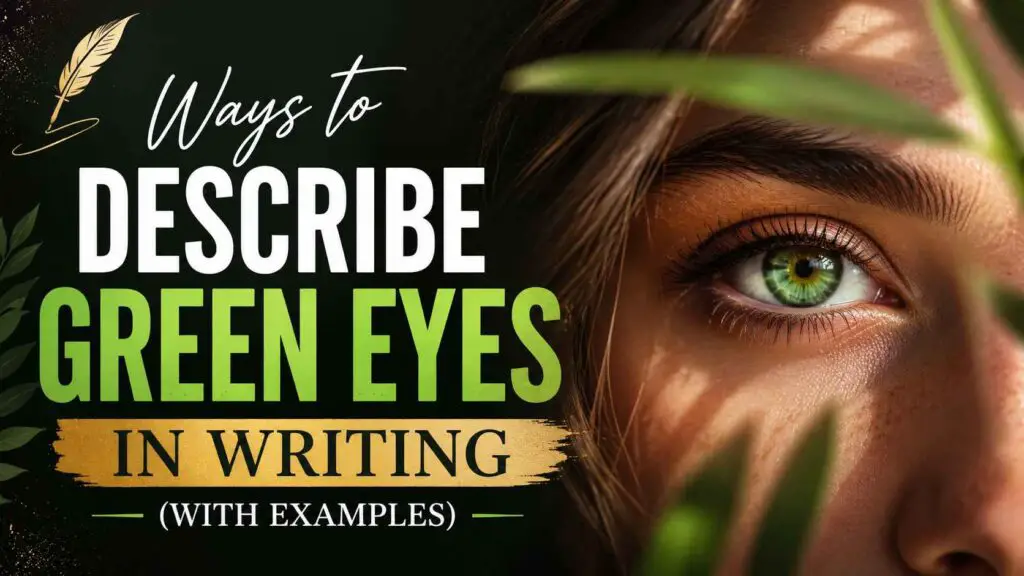
Green eyes have long fascinated writers because they are relatively uncommon and naturally draw attention. Depending on how they are described, they can make a character seem warm, mysterious, intelligent, dangerous, enchanting, or deeply emotional. A simple statement that a character has green eyes gives readers a physical detail, but a thoughtful description can reveal personality, create atmosphere, and strengthen the emotional impact of a scene.
When describing green eyes, think beyond the color itself. Consider their shade, how they reflect light, what emotions they convey, and how other characters perceive them. A pair of green eyes might resemble fresh spring leaves, polished emeralds, stormy seas, or the depths of an ancient forest. They can appear gentle in one moment and intimidating in the next, depending on the situation.
Strong descriptions also work best when they fit naturally into the story. Instead of interrupting the narrative with long physical descriptions, weave the details into dialogue, action, or emotional moments. This allows the description to enhance both the character and the scene rather than simply listing physical features.
The following techniques will help make descriptions of green eyes more vivid, memorable, and engaging.
Ways to Describe Green Eyes in Writing
#1. Compare Them to Nature
Nature provides some of the richest inspiration for describing green eyes because the color itself is closely associated with the natural world. Trees, forests, moss, leaves, grass, and rivers all offer imagery that readers instantly recognize. These comparisons can make your descriptions feel fresh while also helping establish a mood. Bright greens may suggest youth and vitality, while darker greens can create a sense of mystery or depth.
Her eyes were the green of new leaves after rain, bright with a softness he could not ignore.
His eyes reminded her of moss-covered stones hidden deep in the woods.
#2. Use Gemstone Imagery
Gemstones add elegance and intensity to descriptions of green eyes. Comparing eyes to emeralds, jade, peridot, or malachite emphasizes their rarity, beauty, and brilliance. These comparisons are especially effective when you want the eyes to become one of a character’s defining physical features. The image of a polished gemstone can also suggest clarity, strength, or hidden value.
Her emerald eyes caught the candlelight and held it like a secret.
He had jade-green eyes, calm on the surface but unreadable underneath.
#3. Show the Shade of Green
Green eyes vary greatly in appearance, and describing the specific shade makes your writing more precise. Some eyes are pale and almost gray, while others have golden flecks, deep forest tones, or hints of blue or hazel. Paying attention to these subtle differences helps readers picture the character more clearly and avoids repetitive descriptions that simply rely on the word “green.”
His eyes were a pale green, almost silver, like morning mist over a meadow.
She had golden-green eyes that seemed to change whenever she smiled.
#4. Connect Them to Emotion
Eyes often reveal emotions more effectively than words, making them an excellent way to show rather than tell how a character feels. Green eyes may brighten with excitement, darken with anger, soften with affection, or lose their sparkle during moments of sadness. Describing these emotional changes makes characters feel more believable and creates stronger emotional connections with readers.
Her green eyes darkened with hurt, like a storm moving over open fields.
His eyes flashed bright green, sharp with sudden anger.
#5. Describe Their Light
The way light interacts with green eyes can dramatically change their appearance. Sunlight may make them glow with warmth, while candlelight can create an intimate atmosphere. Shadows may deepen their color, and reflections can make them sparkle or shimmer. Including these details makes descriptions feel dynamic instead of static and helps readers experience the scene more vividly.
Her green eyes glowed in the firelight, warm and wild at once.
His eyes glittered green beneath the streetlamp, full of mischief.
#6. Make Them Mysterious
Green eyes have long been associated with mystery, folklore, and magic in literature. Because they are less common than brown or blue eyes, they often carry an air of intrigue. Writers can use this association to create characters who seem secretive, unpredictable, or enchanting. This technique works especially well in fantasy, romance, gothic fiction, and suspense stories.
Her green eyes held the silence of old forests and forgotten paths.
There was something hidden in his green eyes, something she was not sure she wanted to find.
#7. Use Animal Comparisons Carefully
Comparisons to animals can give green eyes a distinctive personality, but they should always suit the character and the scene. Catlike eyes may suggest grace and alertness, foxlike eyes can imply cleverness, while serpent-like eyes often create unease or danger. Used thoughtfully, these comparisons communicate much more than appearance alone.
His cat-green eyes followed every movement, calm and watchful.
She looked at him with fox-bright green eyes, clever and amused.
#8. Contrast Green Eyes with Other Features
Green eyes often become even more striking when contrasted with a character’s other physical features. Dark hair, fair skin, freckles, or certain clothing colors can make the green appear brighter and more noticeable. Likewise, placing the character in a setting filled with contrasting colors can naturally draw the reader’s attention to the eyes without making the description feel forced.
Against her dark hair, her green eyes looked almost unreal.
His sun-browned face made the green of his eyes seem even sharper.
#9. Use Simple, Direct Description
Not every description needs elaborate metaphors or poetic language. Sometimes a straightforward description is the most effective choice, especially during fast-paced scenes or when introducing a character naturally. Simple wording can feel more authentic while still allowing readers to form a clear mental picture.
She had clear green eyes and a steady gaze.
His eyes were green, quiet, and impossible to forget.
#10. Show Their Effect on Others
One of the strongest ways to describe green eyes is to focus on how they affect the people around them. Instead of concentrating solely on appearance, show how another character reacts when they meet that gaze. This approach develops relationships, reveals emotions, and makes the description feel like an active part of the story rather than a static observation.
When she looked at him, her green eyes made him forget what he had meant to say.
He tried to look away, but her green eyes held him there.
Closing Thoughts
Green eyes can be described in many ways, but the best description depends on the character, scene, and emotion. A romantic moment may call for soft emerald imagery. A tense moment may need sharp, cold, or shadowed green. A fantasy scene may invite comparisons to forests, magic, or moonlit jade.
The key is to move beyond color alone. Describe the shade, light, mood, and effect of the eyes. When done well, green eyes become more than a physical detail. They become part of the character’s presence on the page.