
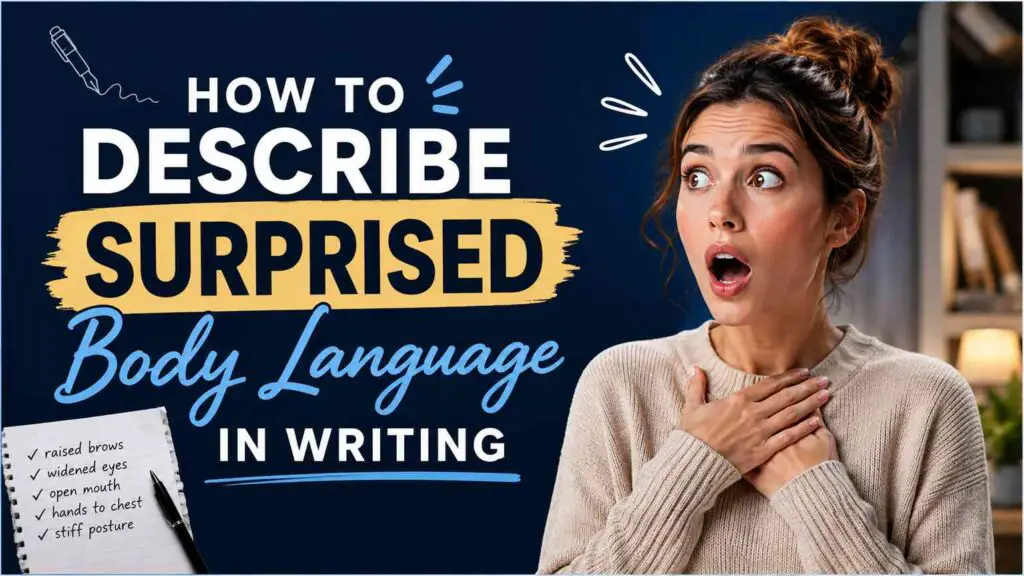
Surprise is one of the most immediate and instinctive emotions a person can experience. Unlike emotions that develop gradually, surprise happens in an instant, often before a character has time to process what is happening. Because it is such a spontaneous reaction, body language becomes one of the most effective ways to show it. Readers can often recognize surprise through physical actions alone, even before a single word of dialogue is spoken.
Whether the surprise is pleasant, shocking, frightening, or confusing, the body usually reacts first. Eyes widen, breathing changes, muscles tense, and movement may stop altogether. Some characters become speechless, while others react with exaggerated gestures or nervous laughter. The exact response depends on the character’s personality, the situation, and the intensity of the unexpected event.
Showing surprise through body language also helps create more immersive scenes. Instead of simply telling readers that a character was surprised, describing their physical reactions allows readers to experience the moment alongside them. Small details, such as a hand freezing halfway through a movement or a sharp intake of breath, often communicate emotion more effectively than direct statements.
The key is to choose body language that fits both the character and the circumstances. A minor surprise may only raise an eyebrow, while life-changing news may leave someone completely frozen or unable to speak. By varying these reactions, writers can make each moment feel authentic and emotionally engaging.
Below are several effective ways to describe surprised body language in writing, along with explanations and examples that can be adapted to many different types of scenes.
How to Describe Surprised Body Language in Writing
Surprise is not always loud or dramatic. While some people gasp or shout, others react with subtle movements that reveal just as much emotion. A brief pause, an involuntary blink, or a stiff posture can communicate that something unexpected has happened. Understanding these different reactions allows writers to avoid repetitive descriptions while creating believable characters.
The following body language cues can be mixed and matched depending on the situation. Combining several small reactions often creates a more realistic portrayal than relying on a single gesture.
#1. Widened Eyes
The eyes are usually the first part of the body to reveal surprise. When something unexpected happens, the eyes naturally open wider as the brain tries to gather more visual information. This instinctive reaction occurs before a character has time to consciously control their expression, making it one of the most believable indicators of surprise.
Widened eyes can communicate many different forms of surprise depending on the context. They may reflect excitement after receiving wonderful news, fear after witnessing danger, or disbelief when something impossible seems to happen. Pairing widened eyes with other physical details, such as a sharp breath or frozen posture, creates an even stronger emotional image for readers.
Because this reaction is so common, it is helpful to vary the wording rather than repeatedly writing that a character’s “eyes widened.” Describing how the character stares, blinks less frequently, or struggles to look away can make each scene feel fresh.
Her eyes widened as the letter slipped from her fingers.
His eyes went wide, fixed on the empty chair at the end of the table.
#2. Raised Eyebrows
Raised eyebrows often signal a milder form of surprise than wide eyes alone. They can indicate curiosity, confusion, disbelief, or sudden interest. This reaction is especially useful when a character is caught off guard but remains calm enough to observe what is happening instead of reacting dramatically.
Eyebrows can also reveal subtle emotional shifts during conversations. A character who hears unexpected information may lift one eyebrow in skepticism, while raising both eyebrows may show genuine astonishment. These small facial movements help communicate emotion without interrupting the flow of dialogue.
Since eyebrow movements are relatively understated, they work particularly well in scenes where the surprise is amusing, awkward, or intellectually surprising rather than physically threatening.
One eyebrow lifted, and a slow smile crept across her face.
He raised both brows, clearly not expecting that answer.
#3. Open Mouth
When people are caught by surprise, they often begin to speak before realizing they have no words. This leaves the mouth slightly open as the brain struggles to process the unexpected event. An open mouth can communicate that the character is momentarily speechless without explicitly stating it.
The intensity of the surprise influences how this reaction appears. A slight parting of the lips may indicate quiet amazement, while a fully open mouth may suggest complete shock. In either case, the lack of immediate speech emphasizes how deeply the surprise has affected the character.
Writers can strengthen this description by pairing it with silence, interrupted dialogue, or an unfinished movement, reinforcing the idea that the character’s thoughts have temporarily stalled.
Her lips parted, but no words came out.
He opened his mouth to respond, then closed it again.
#4. Freezing in Place
One of the body’s natural responses to sudden surprise is to stop moving altogether. A character may freeze because their brain is processing unexpected information before deciding how to react. Even a pause lasting only a second can feel significant when described well.
This reaction is especially effective during moments of emotional shock, danger, or revelation. Freezing creates tension because it interrupts whatever action the character was performing. Readers immediately recognize that something important has happened.
Describing the exact point where the movement stopped adds realism. A hand suspended in midair, a foot hovering above the floor, or a character halted in a doorway paints a vivid mental image.
She froze halfway through the doorway.
His hand stopped inches from the cup, suspended in the air.
#5. A Sudden Step Back
Physical distance is a natural reaction when surprise feels overwhelming or threatening. A character may instinctively step backward to create space between themselves and whatever caused the shock. This movement often happens without conscious thought.
A backward step can communicate fear, disbelief, emotional pain, or even respect for something unexpectedly powerful. It also introduces movement into the scene, making the surprise feel more dynamic than facial expressions alone.
Combining this action with changes in posture, breathing, or facial expression helps emphasize the emotional impact while making the reaction feel realistic.
He took a step back, his face draining of color.
She stumbled backward as if the words had pushed her.
#6. Sharp Inhale
Breathing often changes before any visible expression appears. A sudden intake of breath is one of the body’s quickest responses to unexpected events, making it an excellent way to show surprise without relying on dialogue or exaggerated gestures.
A sharp inhale may communicate excitement, fear, relief, admiration, or disbelief depending on the surrounding context. Because breathing is largely involuntary, this reaction feels authentic across many different situations.
Adding sensory details, such as the silence that follows or the character struggling to exhale, can make the moment feel even more emotionally charged.
She drew in a sharp breath when she saw the ring.
His breath caught the moment her name appeared on the screen.
#7. Staring Without Blinking
Sometimes surprise leaves a character unable to do anything except stare. Instead of reacting immediately, they remain completely focused on whatever has captured their attention while their mind attempts to understand what they are seeing.
A prolonged stare works particularly well when the surprise involves disbelief or emotional overwhelm. The absence of blinking suggests complete concentration, making the reaction feel intense without requiring dramatic movement.
This description becomes even stronger when combined with silence, stillness, or delayed speech, allowing readers to sense that the character is mentally catching up with reality.
He stared at her, unblinking, as the truth settled over him.
She could only stare at the broken window and the muddy footprints beneath it.
#8. Hand Movements
The hands often react automatically when a person is surprised. Without thinking, a character may cover their mouth, grip an object more tightly, drop something, or reach out for balance. These unconscious gestures make emotional reactions feel genuine.
Hand movements also add variety to body language descriptions. Instead of focusing only on facial expressions, they show how surprise affects the entire body. Small actions involving the hands often reveal emotion more naturally than lengthy explanations.
Choosing gestures that match the character’s personality helps make the scene more believable. Some people hide their mouths, while others throw their hands into the air or instinctively reach toward another person.
Her hand flew to her mouth.
The glass slipped from his hand and shattered against the floor.
#9. Stumbling Over Words
Surprise can interrupt a person’s ability to think clearly, making speech hesitant or fragmented. A character may repeat words, stop halfway through a sentence, ask obvious questions, or struggle to form complete thoughts as they process unexpected information.
This reaction is particularly useful in dialogue-heavy scenes because it allows surprise to be shown through the rhythm of speech rather than lengthy narration. Broken sentences and repeated words often feel more realistic than perfectly composed responses.
When combined with visible body language, stumbling over words creates a convincing picture of someone whose mind is racing faster than their mouth can keep up.
“Wait—what? You mean today?”
“I don’t understand,” she said, shaking her head. “How is that possible?”
#10. Sudden Silence
Silence is sometimes the strongest possible reaction to surprise. Instead of shouting or asking questions, a character may become completely quiet because they are unable to process what has happened. This lack of response often carries more emotional weight than immediate dialogue.
Silence can suggest shock, grief, amazement, confusion, or deep reflection. Readers naturally pause along with the character, allowing the emotional significance of the moment to settle in.
Writers can make this reaction even more effective by describing the quiet surroundings, the absence of movement, or the reactions of other characters waiting for someone to speak.
For a long moment, no one said anything.
The room fell silent, and all eyes turned toward him.
Closing Thoughts
Surprised body language is most effective when it feels natural for the character and the situation. No two people react exactly the same way. A reserved character may simply pause and blink, while someone more expressive might gasp, stumble backward, or throw up their hands. Matching the reaction to both the personality and the circumstances makes the emotion feel genuine.
It is also helpful to remember that surprise is usually brief. Once the initial reaction passes, it often develops into another emotion, such as joy, fear, anger, relief, or confusion. Showing this transition helps scenes feel more realistic and keeps characters emotionally dynamic.
The most memorable descriptions rarely rely on a single gesture. Combining facial expressions, posture, movement, breathing, and dialogue creates layered reactions that readers can easily picture. Instead of telling readers that a character was surprised, let the body reveal the emotion first, allowing the reader to experience the unexpected moment alongside the character.