
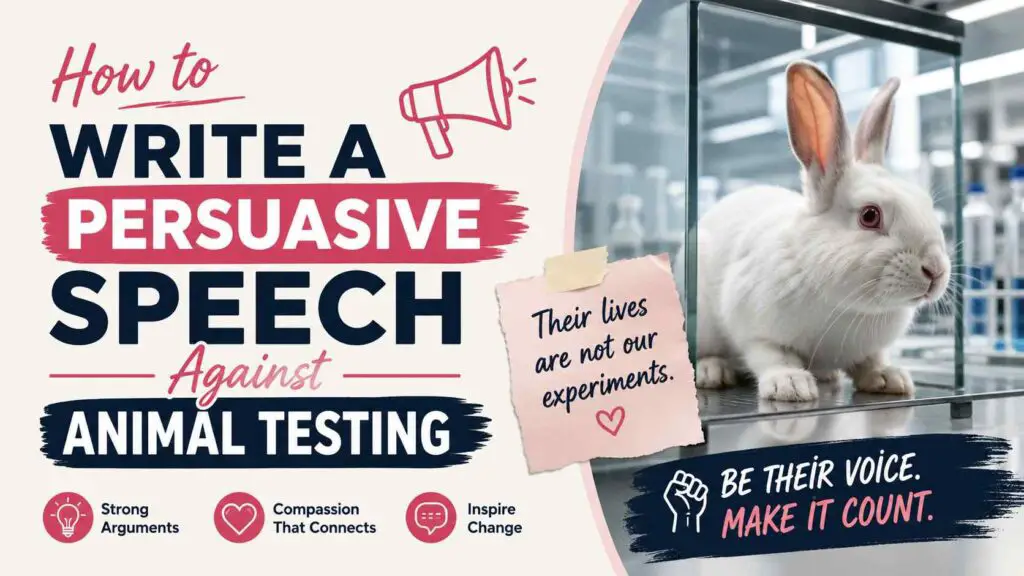
Animal testing is one of the most debated ethical issues in modern science, medicine, cosmetics, and education. Some people defend it as necessary for human progress. Others see it as cruel, outdated, and morally wrong.
A persuasive speech against animal testing must do more than express anger. It must inform, move, and convince the audience. It should show why animal testing matters, why it causes harm, and why better alternatives deserve support.
To write a strong persuasive speech, you need a clear position, emotional appeal, logical reasoning, and a powerful call to action. When these elements work together, your speech can change minds instead of simply stating an opinion.
What Makes a Speech Against Animal Testing Persuasive?
A Clear Position
A persuasive speech needs a firm argument. Do not sound unsure. Make it clear that you believe animal testing should be reduced, replaced, or ended.
For example, you might argue that animal testing is unethical because animals can suffer. Or you might argue that modern alternatives are more humane and often more reliable. A clear position gives your speech direction.
Strong Emotional Appeal
Animal testing is an emotional topic. Therefore, your speech should help the audience feel the weight of the issue.
You can describe the fear, pain, and confinement animals may experience in laboratories. However, avoid sounding overly dramatic. Use emotion with control. The goal is to create compassion, not shock for the sake of shock.
Logical Arguments
Emotion grabs attention, but logic builds trust. Explain why animal testing is a problem.
You might mention ethical concerns, scientific limitations, or the availability of alternative methods. When your points are organized and reasonable, your audience is more likely to take your argument seriously.
Credible Evidence
A persuasive speech becomes stronger when it includes evidence. Use facts, examples, expert opinions, or real-world developments.
For instance, you can refer to cruelty-free testing methods, human cell-based research, computer models, or organ-on-chip technology. Evidence shows that your speech is not based only on personal feelings.
Acknowledgment of the Other Side
A strong speech does not ignore opposing views. Some people believe animal testing is necessary for medical progress. Address that argument respectfully.
Then explain why this view is incomplete. You can argue that scientific progress should not depend on unnecessary suffering, especially when better alternatives continue to develop.
A Powerful Call to Action
Your speech should end by telling the audience what to do next. Should they support cruelty-free products? Sign petitions? Raise awareness? Encourage stronger laws?
A persuasive speech should not leave listeners thinking, “That was interesting.” It should leave them thinking, “Something needs to change.”
How to Write a Persuasive Speech Against Animal Testing
#1. Choose a Strong Main Argument
Start by deciding exactly what your speech will argue. Do not try to cover every possible angle. Instead, choose one main message.
For example:
Animal testing should be banned because it causes unnecessary suffering.
Or:
Modern science should replace animal testing with humane alternatives.
This main argument will guide the entire speech. Every example, story, and fact should support it.
#2. Understand the Audience
Next, think about who will hear your speech. Are they students? Teachers? General listeners? People who already agree with you? People who may disagree?
If your audience already cares about animals, you can focus on action. If they are neutral, you may need more background information. If they support animal testing, you must use calm reasoning and strong evidence.
Knowing your audience helps you choose the right tone.
#3. Open With a Hook
Your introduction should capture attention immediately. You can begin with a question, a vivid image, a short story, or a bold statement.
For example:
“Imagine spending your entire life in a cage, never understanding why you are being tested, handled, or harmed.”
This kind of opening invites the audience to think emotionally and ethically from the start.
#4. State Your Position Clearly
After the hook, present your argument. Do not wait too long. The audience should quickly understand your position.
You might write:
“Animal testing should be replaced because it causes suffering, raises serious ethical questions, and is no longer the only path to scientific progress.”
This sentence gives the speech a clear direction.
#5. Build the Speech Around Three Main Points
A persuasive speech works best when it has a simple structure. Three main points are usually enough.
For example:
First, animal testing causes suffering.
Second, animal testing raises ethical concerns.
Third, humane alternatives are available.
This structure makes your speech easy to follow. It also helps the audience remember your argument.
#6. Use Emotional Examples Carefully
Include examples that help the audience connect with the animals involved. You might describe animals living in cages, being used in experiments, or being denied natural behavior.
However, do not rely only on graphic descriptions. Too much emotional pressure can make an audience uncomfortable or defensive.
Use emotion to create empathy. Then support that empathy with reason.
#7. Add Evidence and Real Alternatives
Your speech becomes more persuasive when you show that change is realistic.
Mention alternatives such as:
Human cell testing
Computer modeling
Artificial tissue
Organ-on-chip technology
Cruelty-free product testing
This shows that opposing animal testing does not mean opposing science. Instead, it means supporting better, kinder science.
#8. Address the Opposing Argument
Acknowledge that some people believe animal testing has helped medical research. This makes your speech sound fair and mature.
Then respond with your own argument. You can say that past use does not justify future harm, especially when science has new tools. You can also argue that ethical progress often requires changing old practices.
This step strengthens your credibility.
#9. Write a Memorable Conclusion
Your conclusion should bring the speech back to its central message. Summarize your main points briefly, then end with impact.
For example:
“Animal testing asks helpless creatures to suffer for human benefit. But progress should not require cruelty. With modern alternatives available, it is time to choose science that protects both people and animals.”
A strong ending helps your message stay with the audience.
#10. End With a Call to Action
Finally, tell the audience what they can do. Keep it simple and practical.
They can buy cruelty-free products. They can support organizations that promote alternative testing. They can speak up in school, online, or in their communities.
A call to action turns your speech from an opinion into a movement.
Closing Thoughts
Writing a persuasive speech against animal testing requires both compassion and structure. You need to show why the issue matters, explain why animal testing is wrong, and offer a better path forward.
The most effective speeches do not only criticize cruelty. They also inspire change.
When you combine a clear argument, emotional storytelling, logical evidence, and a strong call to action, your speech can persuade people to think differently about animals, science, and responsibility.
Animal testing is not just a scientific issue. It is a moral one. A powerful speech can remind people that progress should never come at the cost of unnecessary suffering.