
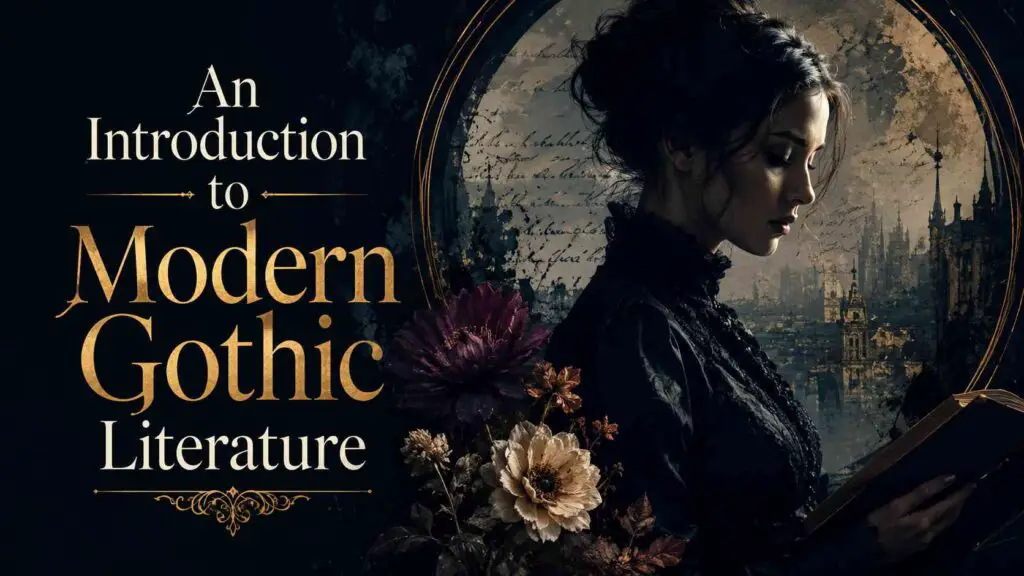
Modern gothic literature is a dark and atmospheric form of storytelling that explores fear, mystery, trauma, and the hidden sides of human nature. It developed from the Gothic fiction of the eighteenth and nineteenth centuries, but it has evolved to reflect the concerns of contemporary society. While traditional Gothic stories often relied on haunted castles, ancient curses, and supernatural creatures, modern Gothic fiction frequently places horror and suspense within familiar settings and everyday lives. This shift makes its themes feel more immediate and relatable. Today, modern gothic literature remains popular because it examines timeless human fears while addressing modern anxieties about identity, isolation, memory, and the unknown.
What Is Modern Gothic Literature?
Modern gothic literature is a contemporary form of Gothic fiction that combines suspense, mystery, psychological tension, and dark atmosphere to explore fear and uncertainty. While it retains many elements of traditional Gothic literature, it adapts them to modern settings, concerns, and audiences.
Classic Gothic fiction often centered on castles, monasteries, aristocratic families, ghosts, and supernatural curses. Modern gothic literature still embraces mystery and darkness, but it frequently places these elements within ordinary homes, urban neighborhoods, schools, hospitals, and workplaces. The result is a genre that feels closer to everyday experience.
A defining feature of modern Gothic fiction is its focus on psychological horror. Fear often emerges from the mind rather than from external threats. Characters struggle with trauma, obsession, guilt, grief, paranoia, and uncertainty. Readers are left questioning whether the source of terror is supernatural, psychological, or rooted in society itself.
Because it explores both personal and collective fears, modern gothic literature remains relevant. It invites readers to confront uncomfortable truths about themselves, their communities, and the world around them.
The Origins of Modern Gothic Literature
The Foundations of Traditional Gothic Fiction
Modern gothic literature traces its roots to the Gothic novels of the late eighteenth and nineteenth centuries. These early works introduced readers to dark castles, mysterious strangers, hidden chambers, ancient family secrets, supernatural events, and looming threats from the past.
Atmosphere played a crucial role in these stories. Gothic writers used darkness, storms, isolation, and decaying structures to create a sense of dread and uncertainty. The settings themselves often seemed alive, influencing the emotions and actions of the characters.
Traditional Gothic fiction also explored intense emotional experiences. Themes of terror, guilt, desire, grief, and obsession were common. These stories allowed readers to examine emotions and fears that society often preferred to keep hidden, laying the groundwork for the psychological depth found in modern Gothic literature.
The Transition to Modern Gothic Literature
As society evolved, so did Gothic fiction. Industrialization, urbanization, scientific progress, world wars, and changing social values transformed the kinds of fears people experienced. Writers began adapting Gothic themes to address these modern concerns.
The remote castle gradually gave way to the suburban home, apartment building, hospital, or small town. Family curses became symbols of inherited trauma. Ghosts often represented memory, guilt, or unresolved history rather than simple supernatural threats.
This transformation shifted the focus of Gothic literature inward. Instead of emphasizing external monsters, modern Gothic stories increasingly explored internal conflicts, psychological instability, and social anxieties. Fear became something that could emerge from ordinary life, making the genre more relatable and unsettling for contemporary readers.
Key Characteristics of Modern Gothic Literature
Psychological Horror
Psychological horror is one of the defining characteristics of modern gothic literature. Rather than relying solely on physical threats or supernatural creatures, these stories create fear through emotional and mental distress.
Characters often struggle with paranoia, obsession, trauma, anxiety, grief, or deteriorating mental health. They may question their memories, doubt their perceptions, or lose confidence in their ability to distinguish reality from illusion. This uncertainty draws readers into the character’s experience and creates a deeply personal form of terror.
The power of psychological horror lies in its realism. Readers may never encounter a ghost, but many understand fear, anxiety, and self-doubt. Modern Gothic fiction uses these familiar emotions to create lasting unease and emotional intensity.
Ambiguous Supernatural Elements
Many works of modern gothic literature include supernatural elements, but they often remain ambiguous. Readers may encounter ghosts, strange visions, unexplained noises, or seemingly impossible events, yet the story rarely offers a definitive explanation.
A haunting may be real, or it may be the result of grief and trauma. A supernatural presence may exist, or it may reflect the character’s psychological state. This uncertainty becomes a source of suspense because readers are constantly forced to question what is happening.
By avoiding clear answers, modern Gothic fiction creates a lingering sense of mystery. The uncertainty itself becomes frightening, encouraging readers to continue thinking about the story long after they finish it.
Dark and Atmospheric Settings
Atmosphere is one of the most important elements of modern gothic literature. The setting often contributes as much to the mood as the characters and plot. These environments frequently feel oppressive, isolated, decaying, or emotionally charged.
Unlike traditional Gothic fiction, modern Gothic settings are not limited to castles and graveyards. Stories may take place in urban neighborhoods, abandoned hospitals, rural communities, schools, or family homes. Even ordinary locations can become unsettling when presented through a Gothic lens.
These settings often reflect the emotional state of the characters. A neglected house may symbolize family dysfunction. A fog-covered city may represent confusion and alienation. Through carefully crafted atmosphere, the setting becomes an active participant in the story.
Social and Cultural Criticism
Modern gothic literature often serves as a vehicle for social commentary. Beneath the horror and suspense, many stories explore issues such as inequality, discrimination, violence, gender expectations, colonialism, environmental destruction, and social alienation.
The Gothic genre is particularly effective for examining uncomfortable truths because it thrives on exposing what is hidden. It reveals fears and problems that society would rather ignore. In many modern Gothic works, the true source of horror is not a monster but an unjust system, a harmful tradition, or a deeply rooted social problem.
Through symbolism and metaphor, these stories encourage readers to think critically about the world around them while remaining engaged in a compelling narrative.
Complex Characters
Characters in modern gothic literature are often morally complex and psychologically layered. They rarely fit neatly into the roles of hero or villain. Instead, they exist in shades of gray, shaped by their experiences, fears, and personal flaws.
These characters frequently carry emotional wounds, hidden desires, unresolved guilt, or painful secrets. Their internal struggles often drive the story as much as external events. Readers may sympathize with them even when they make questionable choices.
This complexity gives modern Gothic fiction emotional depth. The characters feel human, and their personal conflicts often mirror the larger themes of the story. As hidden truths emerge, readers gain a deeper understanding of both the characters and the forces shaping their lives.
Common Themes in Modern Gothic Literature
Fear and Anxiety
Fear remains the central theme of modern gothic literature, but it often appears in complex and symbolic forms. Characters may fear death, madness, rejection, loneliness, social change, or the consequences of hidden truths.
Modern Gothic fiction frequently reflects the anxieties of the era in which it is written. As society changes, the genre adapts to explore new fears, making it a powerful mirror of contemporary concerns.
Isolation and Loneliness
Isolation is a recurring theme that intensifies the emotional and psychological tension within Gothic stories. Characters may find themselves physically separated from others or emotionally disconnected from those around them.
This sense of loneliness creates vulnerability and heightens suspense. Without strong support systems, characters are forced to confront their fears alone, making their struggles feel more immediate and personal.
Identity and Self-Discovery
Many modern Gothic stories explore questions of identity and self-understanding. Characters often embark on journeys that force them to confront hidden aspects of themselves, their families, or their pasts.
As secrets are uncovered, they gain new insights into who they are and how their experiences have shaped them. This process of self-discovery often lies at the heart of the Gothic narrative.
Family Secrets and Generational Trauma
Family histories play an important role in modern gothic literature. Long-buried secrets, unresolved conflicts, and inherited trauma frequently shape the lives of characters.
These stories suggest that the past continues to influence the present. By confronting family secrets and painful histories, characters attempt to break cycles of suffering and understand the forces that have shaped their lives.
The Monstrous Within
Modern Gothic fiction often challenges traditional ideas of monstrosity. Rather than focusing solely on supernatural creatures, it explores the darkness that exists within ordinary people.
Themes of guilt, obsession, cruelty, repression, and moral corruption reveal that human beings can be as frightening as any monster. This perspective adds psychological depth and moral complexity to the genre.
Death, Decay, and Mortality
Images of death and decay appear throughout modern gothic literature. Crumbling buildings, fading memories, dying communities, and physical decline all serve as reminders of mortality.
These themes encourage readers to reflect on the passage of time, the fragility of life, and the inevitability of change. The Gothic fascination with mortality gives the genre much of its emotional and philosophical power.
Popular Subgenres of Modern Gothic Literature
Southern Gothic
Southern Gothic is typically set in the American South and explores themes of social decay, violence, poverty, religion, and historical guilt. The genre often features eccentric characters and communities burdened by the weight of the past.
Its stories reveal the hidden tensions beneath seemingly traditional societies, making it one of the most distinctive forms of Gothic fiction. Southern Gothic frequently highlights the lingering effects of slavery, segregation, and deeply rooted social hierarchies, showing how history continues to shape present-day lives. The setting itself—often marked by decaying plantations, small towns, and oppressive heat—adds to the sense of unease and stagnation.
Urban Gothic
Urban Gothic brings Gothic themes into modern cities and metropolitan environments. Dark alleyways, abandoned buildings, crowded streets, and anonymous neighborhoods replace the castles and forests of traditional Gothic literature.
This subgenre often examines crime, alienation, loneliness, and the fear of becoming invisible within a vast urban landscape. The constant noise and movement of the city can heighten feelings of isolation, as characters struggle to find connection in crowded spaces. Urban Gothic also explores the hidden dangers lurking beneath the surface of everyday life, suggesting that even the most familiar environments can conceal unsettling truths.
Psychological Gothic
Psychological Gothic focuses on the mind and emotions of its characters. Stories in this subgenre emphasize mental instability, obsession, paranoia, and unreliable perceptions.
The resulting tension often comes from uncertainty about what is real and what exists only within the character’s imagination. As characters descend deeper into their own thoughts, readers are drawn into a world where logic becomes unreliable and fear intensifies. This subgenre often blurs the line between internal and external threats, making the psychological experience itself the primary source of horror.
Feminist Gothic
Feminist Gothic examines the experiences of women and critiques social structures that limit freedom and self-expression. Themes of confinement, identity, marriage, sexuality, and power frequently appear.
By reinterpreting traditional Gothic tropes, Feminist Gothic offers new perspectives on fear, resistance, and personal autonomy. It often challenges the roles historically assigned to women in Gothic narratives, transforming passive victims into active agents of change. Through its focus on voice and agency, this subgenre highlights the struggle for independence and the consequences of societal repression.
Eco-Gothic
Eco-Gothic explores humanity’s relationship with the natural world. It often depicts nature as mysterious, threatening, or responding to human exploitation.
Themes such as environmental destruction, climate anxiety, ecological collapse, and the power of nature make Eco-Gothic particularly relevant in the modern era. In many stories, the natural environment becomes an active force, reflecting the consequences of human actions. This subgenre encourages readers to consider the fragility of ecosystems and the unsettling possibility that nature may resist or retaliate against human interference.
Contemporary Supernatural Gothic
Contemporary supernatural Gothic embraces ghosts, curses, spirits, and other paranormal elements while placing them within modern contexts.
These stories often use supernatural events to explore deeper themes such as grief, memory, injustice, and emotional healing, blending horror with psychological and social insight. The supernatural is rarely presented as purely external; instead, it often reflects unresolved emotions or historical wrongs. By combining modern settings with timeless fears, this subgenre creates stories that feel both familiar and hauntingly otherworldly.
Notable Authors of Modern Gothic Literature
Shirley Jackson
Shirley Jackson is widely regarded as one of the most influential modern Gothic writers. Her work masterfully combines psychological tension, social criticism, and atmospheric storytelling to reveal the darkness hidden within everyday life. Jackson often set her stories in seemingly ordinary communities, using subtle details to expose underlying fear, conformity, and cruelty. In works such as The Haunting of Hill House and We Have Always Lived in the Castle, she explores themes of isolation, mental instability, and the fragility of perception. Her ability to blur the line between reality and imagination has made her a defining figure in psychological Gothic fiction.
Angela Carter
Angela Carter transformed Gothic traditions through imaginative and provocative storytelling. Her work frequently explores power, gender, desire, and transformation while reimagining classic myths and fairy tales. Carter’s writing is known for its rich, vivid language and its willingness to challenge traditional narratives, particularly those involving female characters. In collections like The Bloody Chamber, she reinterprets familiar stories through a darker, more complex lens, emphasizing themes of autonomy, sexuality, and resistance. Her innovative approach expanded the possibilities of Gothic literature and influenced later generations of writers.
Toni Morrison
Toni Morrison incorporated Gothic elements into stories that examine history, memory, trauma, and race. Her work demonstrates how personal and collective histories can haunt individuals and entire communities. In novels such as Beloved, Morrison uses supernatural elements to represent the lingering effects of slavery and the emotional scars it leaves behind. Her writing blends lyrical prose with powerful symbolism, creating narratives that are both deeply personal and historically significant. Morrison’s use of Gothic techniques allows her to confront painful truths while exploring the resilience of the human spirit.
Neil Gaiman
Neil Gaiman blends Gothic atmosphere with fantasy, mythology, and contemporary settings. His stories often feature mysterious worlds, supernatural encounters, and characters navigating the boundary between reality and imagination. Gaiman’s work, including novels like Coraline and The Ocean at the End of the Lane, frequently explores childhood fears, memory, and the hidden dangers within familiar environments. His ability to combine dark themes with imaginative storytelling makes his work accessible to a wide audience while still maintaining a distinctly Gothic tone.
Sarah Waters
Sarah Waters is known for Gothic historical fiction that explores secrecy, identity, class, and sexuality. Her novels combine rich atmosphere with psychological complexity and suspense. Works such as The Little Stranger and Fingersmith feature intricate plots, unreliable narrators, and carefully constructed settings that evoke the tension of classic Gothic fiction. Waters often examines the constraints placed on individuals by social expectations, particularly in historical contexts, while weaving in elements of mystery and the supernatural. Her attention to detail and character development adds depth to her Gothic narratives.
Silvia Moreno-Garcia
Silvia Moreno-Garcia has become one of the most prominent voices in contemporary Gothic fiction. Her novels combine classic Gothic motifs with fresh cultural perspectives, creating stories that feel both familiar and innovative. In works like Mexican Gothic, she reimagines traditional Gothic elements such as the haunted house and family secrets within a distinctly Mexican setting. Moreno-Garcia’s writing often addresses themes of colonialism, identity, and power, while maintaining a strong sense of atmosphere and suspense. Her ability to blend genre conventions with cultural specificity has helped redefine modern Gothic literature.
Influential Works of Modern Gothic Literature
Several works have helped shape modern gothic literature and demonstrate the genre’s remarkable flexibility.
Shirley Jackson’s The Haunting of Hill House remains one of the finest examples of psychological Gothic fiction. Through its eerie atmosphere and unreliable perceptions, it explores loneliness, fear, and mental instability.
Toni Morrison’s Beloved uses Gothic techniques to confront historical trauma and memory. The ghost at the center of the story symbolizes both personal grief and the lasting impact of slavery.
Angela Carter’s The Bloody Chamber reimagines familiar fairy tales through a dark and Gothic perspective. The collection examines power, sexuality, violence, and female agency.
Sarah Waters’ The Little Stranger combines the haunted house tradition with themes of class, repression, and social decline. Its ambiguity keeps readers questioning the nature of the haunting.
Silvia Moreno-Garcia’s Mexican Gothic revitalizes classic Gothic conventions through a unique cultural setting. The novel combines mystery, horror, family secrets, and social commentary in a distinctly modern way.
Together, these works illustrate the many directions modern gothic literature can take while remaining connected to its Gothic roots.
How to Start Reading Modern Gothic Literature
Readers new to modern gothic literature should begin with influential works that showcase the genre’s core characteristics. Shirley Jackson’s The Haunting of Hill House is an excellent introduction because of its atmospheric setting and psychological depth.
From there, readers can explore Toni Morrison’s Beloved for its powerful blend of history and Gothic storytelling. Angela Carter’s The Bloody Chamber provides an introduction to Feminist Gothic, while Mexican Gothic offers a contemporary interpretation of classic Gothic themes.
As you read, pay attention to atmosphere, symbolism, setting, and emotional tension. Consider how fear operates within the story and what deeper anxieties the narrative may be exploring.
A gradual reading journey through psychological Gothic, Southern Gothic, Feminist Gothic, and Eco-Gothic can provide a comprehensive understanding of the genre’s diversity and evolution.
Conclusion
Modern gothic literature is a dynamic and enduring genre that continues to adapt to changing times. While it preserves the mystery, suspense, and atmosphere of traditional Gothic fiction, it uses these elements to examine contemporary fears and concerns.
Its haunted houses may be ordinary homes. Its ghosts may be memories. Its monsters may be hidden within individuals or societies. By exploring fear, identity, trauma, and the influence of the past, modern gothic literature offers readers both entertainment and insight.
For anyone interested in dark, thought-provoking stories that combine emotional depth with suspense and mystery, modern gothic literature provides a fascinating world to explore.