
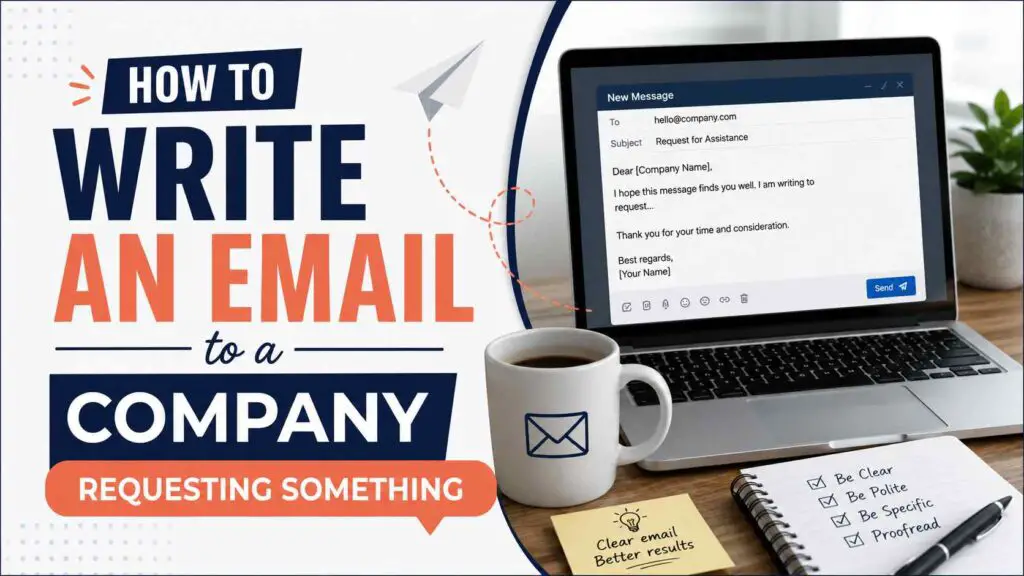
A clear request email can open the door to a helpful reply, a faster decision, or a professional business relationship. Whether the request is for information, support, a refund, a quotation, a partnership, a document, or permission, the way the email is written matters.
A good email to a company should be polite, direct, and easy to understand. It should explain what is being requested, why the request matters, and what action the company should take next. When the message is respectful and specific, the company can respond faster and with less confusion.
What to Include in an Email to a Company Requesting Something
A Clear Subject Line
The subject line should tell the company what the email is about before they open it. A vague subject line can delay the response or cause the email to be ignored.
For example, instead of writing:
“Request”
Write something more specific, such as:
“Request for Product Pricing Information”
A clear subject line helps the recipient understand the purpose of the email immediately.
A Polite Greeting
Start with a professional greeting. If the recipient’s name is known, use it. If not, use a general greeting.
Examples include:
“Dear Customer Support Team,”
“Hello Sales Team,”
“Dear [Company Name] Team,”
This creates a respectful tone from the beginning.
A Brief Introduction
Introduce yourself briefly, especially if the company does not know you. Mention your name, your role, or your reason for contacting them.
For example:
“My name is Daniel Roberts, and I am contacting you on behalf of BrightPath Consulting.”
This gives the company context and makes the email feel more credible.
A Direct Explanation of the Request
State the request clearly. Do not make the reader guess what is needed. Be specific about the item, service, information, document, refund, meeting, or assistance being requested.
For example:
“I would like to request a copy of the latest product catalog and pricing sheet for your office furniture range.”
This saves time and reduces back-and-forth communication.
The Reason for the Request
Explain why the request is being made. A short reason can help the company understand the importance of the request and respond appropriately.
For example:
“We are currently comparing suppliers for a new office setup and would like to review your available options.”
The reason does not need to be long. It simply needs to provide useful context.
Relevant Details
Include any details the company may need to fulfill the request. This may include order numbers, account details, dates, product names, quantities, deadlines, or preferred formats.
For example:
“My order number is #45782, and the purchase was made on May 14.”
Relevant details help the company handle the request faster.
A Polite Call to Action
Tell the company what you would like them to do next. This could be sending information, confirming availability, issuing a refund, scheduling a call, or replying by a certain date.
For example:
“Could you please send the quotation by Friday?”
A clear call to action makes the next step obvious.
A Professional Closing
End the email politely. Thank the company for their time and include your name and contact details.
Examples include:
“Thank you for your help.”
“Kind regards,”
“Sincerely,”
A professional closing leaves a good final impression.
How to Write an Email to a Company Requesting Something
#1. Start With a Specific Subject Line
Begin by writing a subject line that clearly describes your request. The subject line should be short, direct, and useful.
Instead of writing a general subject such as “Question” or “Help Needed,” write a subject that explains the exact purpose of the email.
Examples:
“Request for Information About Bulk Pricing”
“Request for Refund on Order #72841”
“Request for Meeting With Sales Department”
A specific subject line helps the company route the email to the right department. It also increases the chance of a faster response.
#2. Use a Professional Greeting
Next, open the email with a polite greeting. The greeting sets the tone for the entire message.
If the recipient’s name is available, use it:
“Dear Ms. Johnson,”
If the recipient’s name is not available, use a department or team name:
“Dear Customer Support Team,”
Avoid greetings that sound too casual, especially when contacting a company for the first time. A professional greeting shows respect and seriousness.
#3. Introduce Yourself Briefly
After the greeting, introduce yourself in one or two sentences. The company needs to know who is making the request.
You can mention your name, company, position, customer status, or reason for contacting them.
Example:
“My name is Sarah Mitchell, and I am the purchasing manager at Greenline Interiors.”
If you are a customer, you can write:
“My name is Aaron Blake, and I recently purchased one of your software subscriptions.”
Keep this section short. The goal is to give context, not tell your full story.
#4. State the Request Clearly
Now explain what you are requesting. This is the most important part of the email.
Use clear and direct language. Avoid long explanations before the request. The company should understand your main point quickly.
Example:
“I am writing to request a quotation for 50 office chairs from your ergonomic seating range.”
Another example:
“I would like to request a replacement for the damaged item I received.”
Be polite, but do not be vague. A direct request is easier to answer.
#5. Explain Why the Request Matters
After stating the request, briefly explain why you need it. This gives the company useful context and can make your request more persuasive.
Example:
“We are preparing our annual office upgrade budget and need pricing information before finalizing our supplier list.”
Another example:
“The item arrived damaged, and we need a replacement before our scheduled event next week.”
The explanation should support the request. However, it should not become too emotional, demanding, or unnecessarily long.
#6. Include Important Details
Add any information the company may need to process the request. This step is especially important when the request involves orders, payments, products, services, accounts, or deadlines.
Depending on the situation, include details such as:
- Order number
- Product name
- Purchase date
- Account email
- Quantity requested
- Delivery address
- Preferred deadline
- Attached documents
For example:
“The order number is #89321, and the item was delivered on June 3.”
These details reduce confusion and help the company respond with the right answer.
#7. Keep the Tone Polite and Respectful
Even if the request is urgent or the situation is frustrating, keep the email professional. A respectful tone usually gets better results than an angry or demanding message.
Use phrases such as:
- “Could you please…”
- “I would appreciate it if…”
- “Would it be possible to…”
- “Thank you for your assistance…”
Politeness does not make the request weak. Instead, it makes the email more professional and easier to respond to.
#8. Make the Next Step Clear
Before closing the email, tell the company what you would like them to do next.
For example:
“Could you please send the requested information by Thursday?”
“Please let me know whether a replacement can be arranged.”
“I would appreciate confirmation once the refund has been processed.”
This helps the recipient understand exactly how to respond. If there is a deadline, mention it politely.
#9. Close the Email Professionally
End the email with a courteous closing. Thank the company for their time and include your name.
Example:
“Thank you for your time and assistance. I look forward to your response.
Kind regards,
Michael Reed”
A professional closing leaves the conversation open and positive.
#10. Review the Email Before Sending
Before sending the email, read it again. Check for spelling mistakes, unclear sentences, missing details, and an appropriate tone.
Ask these questions:
- Is the request clear?
- Is the tone polite?
- Are all necessary details included?
- Is the subject line specific?
- Is the next step obvious?
A quick review can prevent confusion and improve the chance of receiving a helpful reply.
Sample Emails to Companies Requesting Something
Requesting Product Information
Subject: Request for Product Information
Dear Sales Team,
I hope this email finds you well.
My name is James Turner, and I am researching software solutions for my company. I recently came across your products and would like to learn more about the features and pricing options available.
Could you please send me your latest product catalog and pricing information? I would also appreciate any brochures or documentation that explain the key benefits of your solutions.
Thank you for your time and assistance. I look forward to hearing from you.
Kind regards,
James Turner
Requesting a Price Quotation
Subject: Request for Quotation
Dear Sales Department,
I am writing to request a quotation for 100 ergonomic office chairs for our headquarters.
We are currently reviewing suppliers for an upcoming office expansion and would appreciate information regarding pricing, delivery timelines, and available bulk purchase discounts.
Could you please provide a quotation at your earliest convenience?
Thank you for your assistance. I look forward to your response.
Sincerely,
Sarah Mitchell
Purchasing Manager
Requesting a Refund
Subject: Refund Request for Order #45827
Dear Customer Support Team,
I hope you are doing well.
I recently purchased a product from your company under Order #45827. Unfortunately, the item arrived damaged and is not functioning as expected.
I would like to request a refund for this purchase. I have attached photographs of the damaged item and a copy of the purchase receipt for reference.
Please let me know if any additional information is required to process this request.
Thank you for your attention to this matter.
Kind regards,
Michael Reed
Requesting a Meeting
Subject: Request for Business Meeting
Dear Business Development Team,
My name is Emily Carter, and I represent Horizon Consulting.
We are interested in exploring potential partnership opportunities between our organizations. As a result, I would like to request a meeting with a member of your team to discuss possible areas of collaboration.
Please let me know your availability over the next two weeks. I would be happy to accommodate a time that works best for your schedule.
Thank you for considering this request. I look forward to speaking with you.
Best regards,
Emily Carter
Requesting Documents or Records
Subject: Request for Account Documentation
Dear Customer Service Team,
I hope this email finds you well.
I am writing to request copies of the account statements associated with my account for the period of January through March 2025.
These documents are needed for record-keeping purposes and would be greatly appreciated. If there are any forms or verification requirements that I must complete, please let me know.
Thank you for your assistance. I look forward to receiving the requested documents.
Sincerely,
David Wilson
Closing Thoughts
Writing an email to a company requesting something does not need to be difficult. The key is to be clear, polite, and specific. A strong email explains who is writing, what is being requested, why the request matters, and what action the company should take next.
When the email is easy to understand, the company can respond more quickly and accurately. Therefore, take a few extra minutes to write a focused subject line, include the right details, and close with a respectful tone. A well-written request email can make the entire process smoother for both sides.