
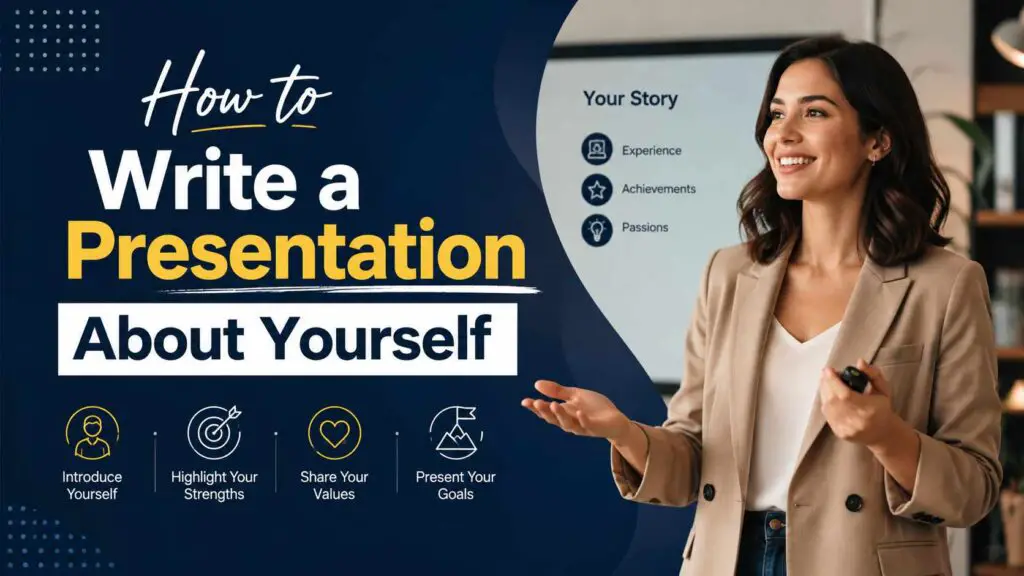
Presenting yourself can feel awkward at first. However, a strong personal presentation can open doors. It can help in school, at work, during interviews, at networking events, or even in community settings.
A presentation about yourself is not just a list of facts. It is a clear story about who you are, what matters to you, what you have done, and where you are going. Therefore, the goal is not to impress people with everything you know. The goal is to help them understand you quickly and remember you clearly.
To do that well, you need structure. You need the right details. You also need a tone that feels confident, natural, and honest.
What to Include in a Presentation About Yourself
A Clear Opening
Start with a simple introduction. State your name and give the audience a quick reason to listen. You can mention your role, background, interest, or purpose.
For example, instead of saying only, “My name is Alex,” you could say, “My name is Alex, and I am a marketing student interested in how brands use storytelling to connect with people.”
This gives your audience immediate context.
Personal Background
Next, include a short background. Talk about where you are from, what you study, what work you do, or what shaped your journey.
However, keep this part focused. You do not need to share your entire life story. Choose details that support the main message of your presentation.
Education or Professional Experience
Mention your education, work experience, training, or major projects. This helps the audience understand your skills and credibility.
You can talk about your degree, current job, internship, volunteer work, or important achievements. In addition, explain why those experiences matter.
Skills and Strengths
A good presentation about yourself should highlight your key strengths. These may include communication, leadership, creativity, problem-solving, teamwork, organization, or technical skills.
Do not just list them. Instead, give a short example. For instance, say how you used teamwork to complete a project or how your creativity helped solve a problem.
Interests and Passions
Your interests make your presentation more human. They also help people connect with you.
You can mention hobbies, causes, subjects, industries, or activities that excite you. However, choose interests that fit the setting. A classroom presentation can be more personal. A job interview presentation should stay more professional.
Achievements
Include achievements that support your message. These could be awards, completed projects, leadership roles, certifications, personal milestones, or challenges you overcame.
Again, avoid sounding like you are bragging. Present achievements as part of your journey.
Goals for the Future
Your future goals give your presentation direction. They show that you are thoughtful and motivated.
Talk about what you want to learn, where you want to grow, or what kind of impact you want to make. This helps your audience see where your story is heading.
A Memorable Closing
End with a strong final thought. You can summarize your main message, share a lesson, or connect your story to the purpose of the presentation.
A good closing leaves the audience with one clear idea about you.
How to Write a Presentation About Yourself
#1. Understand the Purpose of the Presentation
Before writing anything, ask yourself why you are giving this presentation.
Is it for a class? A job interview? A networking event? A professional introduction? A personal development activity?
The purpose changes what you include. For example, a school presentation may allow more personal stories. However, a workplace presentation should focus more on skills, experience, and goals.
Once you know the purpose, choose one main message. This message should answer the question: “What do I want people to remember about me?”
#2. Know Your Audience
Next, think about who will listen to your presentation.
Your audience affects your tone, examples, and level of detail. If you are speaking to classmates, you can sound friendly and relaxed. If you are speaking to employers, use a more polished and professional tone.
Ask yourself what your audience needs to know about you. Then, remove details that do not help them understand your story.
#3. Choose a Simple Structure
A clear structure makes your presentation easier to follow. You can use this simple order:
First, introduce yourself. Then, share your background. After that, explain your experience, skills, interests, and goals. Finally, close with a strong final statement.
This structure works because it feels natural. It moves from who you are to what you have done and where you are going.
#4. Write a Strong Opening
Your opening sets the tone. So, avoid starting with a boring or uncertain sentence.
Instead of saying, “I don’t really know what to say about myself,” begin with confidence.
You could write:
“Good morning, everyone. My name is Daniel, and today I want to share a little about my background, my interests, and the goals that guide me.”
This opening is simple, direct, and clear.
#5. Share the Most Relevant Parts of Your Background
After the opening, give your audience useful background information.
Mention where you are from, what you study, what you do, or what experiences shaped your path. However, do not include random facts just to fill time.
For example, if your presentation is about your career goals, focus on the experiences that led you toward that career. If your presentation is for a class, you can include personal interests and academic background.
#6. Highlight Your Skills With Examples
Skills become stronger when you prove them with examples.
Instead of saying, “I am a good leader,” explain a moment when you led something. For example:
“One experience that helped me grow as a leader was organizing a group project where I had to divide tasks, manage deadlines, and keep everyone focused.”
This sounds more believable. It also helps the audience picture your ability in action.
#7. Add Personal Details That Make You Memorable
A presentation about yourself should not sound like a resume read aloud. Add a few personal details to make it more engaging.
You can mention a hobby, passion, value, or experience that shaped your personality. However, connect it to your larger message.
For example, if you love sports, you might explain how sports taught you discipline and teamwork. If you enjoy reading, you might explain how it developed your curiosity.
#8. Explain Your Goals Clearly
Your goals show ambition and direction. They also help your audience understand what motivates you.
Be specific, but realistic. Instead of saying, “I want to be successful,” say what success means to you.
For example:
“My goal is to build a career in software development where I can create tools that make everyday tasks easier for people.”
This goal is clear and meaningful.
#9. Keep the Language Natural
Write the way you would speak. Use clear sentences. Avoid complicated words that make you sound stiff.
A personal presentation should feel polished, but not robotic. Therefore, read your draft aloud. If a sentence sounds unnatural, rewrite it.
Simple language often sounds more confident than overly formal language.
#10. End With a Strong Closing
Your closing should not fade out. Instead, bring your message together.
You can summarize your journey, restate your goal, or leave the audience with a meaningful thought.
For example:
“In the end, my story is about curiosity, growth, and the desire to keep learning. I am excited about the path ahead, and I look forward to using my skills to make a positive impact.”
This ending feels complete and confident.
#11. Practice Before Presenting
After writing your presentation, practice it several times.
Read it aloud. Time yourself. Notice where you pause, rush, or sound unsure. Then, improve those parts.
Also, practice eye contact and body language. A good presentation depends not only on your words but also on how you deliver them.
#12. Edit for Clarity and Flow
Finally, revise your presentation. Remove repeated ideas. Shorten long sentences. Add transitions where needed.
Words like “first,” “next,” “also,” “therefore,” and “finally” help guide your audience through the presentation.
Before you finish, ask one final question: “Does this presentation give people a clear and memorable picture of who I am?”
If the answer is yes, your presentation is ready.
Closing Thoughts
Writing a presentation about yourself becomes easier when you stop trying to include everything. Instead, focus on the details that matter most.
Start with a clear introduction. Share your background, skills, interests, achievements, and goals. Then, connect everything into one simple story.
Most importantly, be honest and confident. A strong presentation about yourself does not need to sound perfect. It needs to sound clear, thoughtful, and real.