
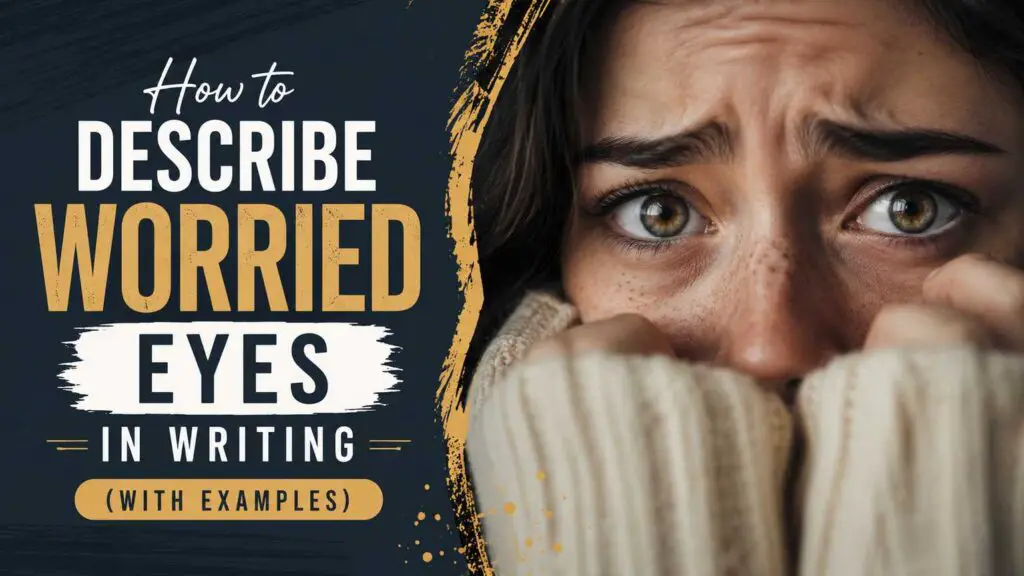
Worried eyes can reveal fear, tension, uncertainty, or quiet distress before a character says a single word. They often communicate emotions that a character is trying to suppress, making them one of the most expressive features to describe in fiction. Whether someone is anxious about an upcoming event, fearful for another person’s safety, or overwhelmed by uncertainty, their eyes often betray what their words cannot.
Because readers naturally pay attention to facial expressions, describing worried eyes can deepen emotional scenes and strengthen character development. Rather than simply telling readers that a character is worried, effective descriptions allow them to witness the emotion through subtle physical details. The movement of the eyes, the way they focus—or fail to focus—their shape, and their interaction with the rest of the face all contribute to creating a vivid picture.
The key is not simply saying “his eyes looked worried.” Strong description shows the emotion through movement, focus, shape, surrounding facial expressions, and the character’s reactions to the situation. The following techniques will help bring worried eyes to life in a way that feels authentic and memorable.
How to Describe Worried Eyes in Writing
#1. Describe the Shape of the Eyes
The shape of the eyes often changes when someone is worried, even if they are trying to remain calm. Their eyes may widen slightly in response to fear or surprise, narrow as they concentrate on a troubling situation, or appear tense from emotional strain. These subtle physical changes help readers recognize the character’s emotional state without explicitly naming it. Focusing on the shape of the eyes also creates more visual variety than repeatedly stating that someone “looked worried.”
Examples:
Her eyes widened just enough to betray the fear she was trying to hide.
His eyes narrowed with anxious focus, searching her face for an answer.
A tight, worried look pulled at the corners of her eyes.
#2. Show Restless Eye Movement
People who are worried often struggle to keep their attention fixed on one thing. Their eyes may dart around the room, repeatedly check the time, scan for danger, or constantly return to whatever is causing their concern. Describing this restless movement communicates nervous energy and builds tension within the scene. It also allows readers to experience the character’s anxiety through their actions instead of direct explanation.
Examples:
His eyes flicked from the clock to the window, then back again.
She kept glancing over her shoulder, her eyes sharp with unease.
His gaze darted across the room as if every sound carried bad news.
#3. Use Eyebrows to Support the Emotion
The eyes rarely work alone when expressing emotion. The eyebrows naturally reinforce what the eyes are communicating, making the overall expression more believable. Furrowed brows, raised brows, or a deep crease between them can intensify the appearance of worry and help readers visualize the character’s face more clearly. Combining details from both the eyes and eyebrows creates richer and more realistic descriptions.
Examples:
Her brows drew together, deepening the worry in her eyes.
His eyebrows lifted in helpless concern, his eyes fixed on the letter.
A crease formed between her brows as her eyes searched his face.
#4. Describe Moisture or Shine in the Eyes
Worry often creates emotional pressure that becomes visible through the eyes before tears actually fall. A slight gloss, watery appearance, or subtle shimmer can suggest that the character is struggling to maintain control of their emotions. These details add vulnerability without requiring an emotional breakdown, making them especially effective in quieter or more restrained scenes.
Examples:
Her eyes shone with worry, though no tears fell.
A glassy fear settled in his eyes as he read the message again.
Her worried eyes glimmered under the kitchen light.
#5. Show the Character Avoiding Eye Contact
Worry can make people reluctant to meet another person’s gaze. They may look toward the floor, stare into the distance, or repeatedly break eye contact because they feel anxious, guilty, embarrassed, or emotionally overwhelmed. Describing this avoidance helps readers understand the character’s emotional discomfort while adding depth to conversations and interpersonal interactions.
Examples:
He looked away, his worried eyes dropping to the floor.
She could not hold his gaze for long; her eyes kept slipping aside.
His eyes avoided hers, heavy with something he was not ready to say.
#6. Compare the Eyes to Something Fragile or Unsteady
Well-chosen comparisons can make worried eyes more vivid and memorable. Similes and metaphors allow readers to picture emotions through familiar images, especially those that suggest instability, vulnerability, or uncertainty. The comparison should fit the tone of the story while reinforcing the emotional atmosphere rather than distracting from it.
Examples:
Her eyes trembled like candlelight in a draft.
His gaze was fragile, as if one more word might break it.
Her worried eyes moved like trapped birds, searching for a way out.
#7. Use the Surrounding Face for Context
The eyes become even more expressive when they are described alongside the rest of the face. Features such as a clenched jaw, pressed lips, pale skin, or tense facial muscles reinforce the emotion and create a more complete image of the character. Looking beyond the eyes alone also prevents descriptions from becoming repetitive while making emotional moments feel more immersive.
Examples:
His eyes were worried, but it was the tightness in his jaw that made the fear unmistakable.
Her face had gone pale, and her eyes held a quiet, pleading worry.
She pressed her lips together, her eyes full of questions she was afraid to ask.
#8. Show What the Eyes Are Focused On
The object of a character’s attention often reveals the source of their worry. Instead of describing only the eyes themselves, show what continually draws their gaze. Whether they keep watching a hospital room door, staring at an unanswered phone, or following someone across a crowded room, their focus provides important context that makes the emotion more specific and meaningful. This technique also strengthens the connection between the character’s internal feelings and the external events unfolding around them.
Examples:
His worried eyes stayed on the phone, waiting for it to ring.
She watched the door with anxious eyes, hoping and dreading the next knock.
His gaze remained fixed on the empty road, worry darkening his expression.
Closing Thoughts
Worried eyes are best described through action, detail, and context. Instead of relying only on direct labels, show how the eyes move, what they avoid, what they search for, and how the rest of the face responds.
A strong description of worried eyes can reveal fear, uncertainty, love, guilt, or concern in a way that feels natural and emotionally powerful.