
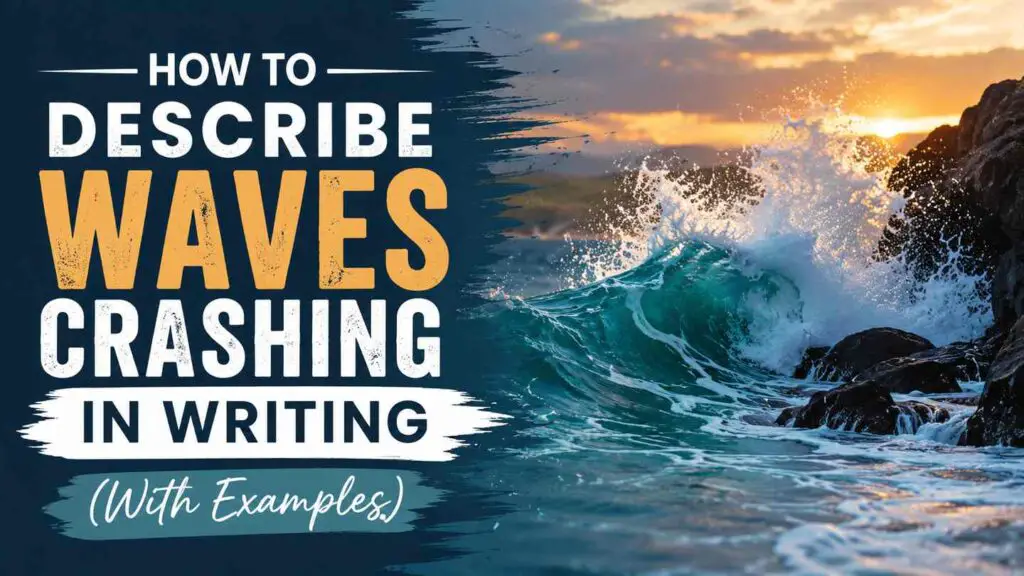
Waves have fascinated writers for centuries because they are constantly changing. They can appear calm and inviting one moment, then become fierce and destructive the next. A wave crashing against the shore is more than a visual image—it combines movement, sound, texture, power, and emotion into a single moment. Whether you’re writing a novel, short story, poem, or descriptive essay, learning to describe waves vividly can make coastal scenes feel immersive and memorable.
The way waves are described should match the atmosphere of the scene. Peaceful waves can create a sense of comfort, reflection, or romance, while violent waves can build suspense, danger, or emotional intensity. By choosing the right words and focusing on sensory details, you can help readers feel as though they are standing on the shoreline themselves.
How to Describe Waves Crashing in Writing
Waves can be described in many different ways depending on the scene. A calm beach scene requires a completely different style of description than a stormy coastline. Likewise, the waves in a romantic sunset scene should not sound or feel the same as the waves surrounding a sinking ship or crashing against jagged cliffs. Paying attention to the mood, setting, and purpose of the scene will help determine the most effective language to use. The following techniques will help make your descriptions richer, more engaging, and more realistic.
#1. Describe the Sound of the Waves
The sound of crashing waves is often the first thing people notice when they arrive at the coast. Describing these sounds helps readers imagine themselves in the setting before they even picture it. Waves can roar, thunder, hiss, slap, boom, rumble, whisper, or explode against the shore. Each verb creates a different emotional effect, so choosing the right one is important.
Gentle waves often produce soothing sounds that suggest peace and relaxation, while rough seas create loud, powerful noises that convey strength, danger, or chaos. Think about the location as well. Waves breaking on soft sand sound very different from waves smashing into rocky cliffs or wooden piers.
Examples:
The waves roared against the rocks, filling the air with a deep, endless thunder.
Each wave sighed as it reached the sand, then slipped back into the sea with a soft hiss.
The surf boomed in the darkness like a drumbeat from somewhere far below.
#2. Show the Movement of the Water
Waves are defined by movement, so describing how they travel is one of the best ways to bring them to life. Instead of simply saying the waves crashed, describe how they build, rise, curl, roll, surge, collapse, and retreat. This sequence of movement helps readers visualize the entire action from beginning to end.
Consider the size, speed, and rhythm of the waves. Some move in long, slow swells that gently wash onto the shore, while others rise suddenly into towering walls of water before crashing with tremendous force. Varying these descriptions makes every ocean scene feel unique.
Examples:
The wave rose in a dark green wall, curled at the top, and collapsed onto the shore in a rush of white foam.
Water rolled toward the beach in long silver lines, breaking gently before sliding over the sand.
A heavy wave surged forward, struck the rocks, and burst upward in a spray of cold mist.
#3. Use Strong Verbs
Strong verbs instantly make wave descriptions more vivid and energetic. Instead of relying on general words like “came” or “hit,” choose verbs that communicate the wave’s force and personality. Words such as crashed, slammed, pounded, tumbled, rushed, shattered, spilled, and exploded create much stronger mental images.
The best verb depends on the strength of the sea. A calm tide may lap quietly at the shoreline, while storm waves batter the coast relentlessly. Selecting precise verbs allows readers to immediately understand how calm or violent the water is without needing additional explanation.
Examples:
The waves smashed against the cliff and scattered into the air like broken glass.
Foam tumbled across the sand, chasing the footprints before the sea pulled it back.
The tide pounded the shore again and again, as if it were trying to break the land apart.
#4. Describe the Foam and Spray
The moment a wave crashes creates foam and spray, adding texture and detail to the scene. These elements make the description feel more realistic because readers can picture the white froth spreading across the shore or imagine cool droplets carried by the wind.
Foam can appear thick, frothy, delicate, swirling, glowing, or lace-like depending on the conditions. Spray may drift gently through the air on a calm day or blast outward during a violent storm. Including these smaller details helps transform a simple wave description into a complete sensory experience.
Examples:
White foam spread across the beach like torn lace, thin and delicate at the edges.
The wave struck the rocks, sending cold spray into the air and across his face.
Froth boiled around the stones before the water dragged it back into the gray sea.
#5. Connect the Waves to Emotion
The ocean often reflects or reinforces a character’s emotional state. Writers frequently use crashing waves as a form of symbolism, allowing the sea to mirror feelings such as anger, fear, loneliness, grief, excitement, or peace. This connection between the setting and the character makes scenes feel more emotionally powerful.
Instead of describing the waves as isolated natural events, think about how they interact with the story. Calm waves may accompany moments of healing or reflection, while relentless surf can heighten tension during conflict or emotional turmoil.
Examples:
The waves crashed with the same anger she felt inside, loud and relentless against the shore.
The ocean breathed in slow, gentle waves, and for the first time that day, his thoughts began to settle.
Every wave broke and vanished, leaving behind only foam, like all the words he had never said.
#6. Use Comparisons and Metaphors
Similes and metaphors can make wave descriptions more memorable by comparing them to familiar sights or experiences. Rather than describing only what the wave does, these comparisons help readers understand its size, power, or movement through vivid imagery.
A wave may rise like a wall, crash like thunder, claw at the rocks, or march toward the shore like an army. The most effective comparisons feel natural and fit the tone of the scene rather than drawing attention to themselves.
Examples:
The wave rose like a glass wall before shattering across the sand.
The sea clawed at the rocks, dragging white foam through every crack.
Waves marched toward the shore like an army, breaking one after another in bursts of white.
#7. Include the Setting Around the Waves
Waves rarely exist in isolation. Their surroundings influence both their appearance and the overall mood of the scene. Describing the sand, cliffs, shells, seaweed, driftwood, boats, piers, or coastal vegetation helps readers picture the entire environment instead of focusing only on the water.
The setting also affects how the waves behave. Water breaking gently across a sandy beach creates a very different impression from waves crashing into dark cliffs or swirling around abandoned docks. Combining the waves with nearby details creates richer, more immersive descriptions.
Examples:
Waves crashed against the black rocks below the cliff, throwing spray into the wind.
The tide washed over scattered shells, turning them briefly bright before burying them in sand.
Beyond the old pier, waves broke in uneven lines beneath a sky heavy with rain.
#8. Match the Description to the Scene’s Mood
Every wave description should support the emotional tone of the story. Even the same shoreline can feel completely different depending on the language used. Softer words create peaceful, reflective scenes, while sharper, heavier words build suspense, danger, or drama.
Pay attention to your word choices, sentence rhythm, and imagery. Calm scenes benefit from flowing descriptions and gentle vocabulary, while action scenes often use shorter sentences and stronger verbs to create urgency. Matching the description to the mood helps readers experience the scene exactly as intended.
Examples:
Soft waves folded over the shore, leaving the sand smooth and shining under the morning light.
Black waves slammed into the rocks, their white crests torn apart by the wind.
The ocean rolled in slowly, steady and patient, as if it had all the time in the world.
Closing Thoughts
Describing waves crashing in writing is about much more than stating that water hit the shore. Effective descriptions combine sound, movement, texture, setting, and emotion to create a scene that readers can easily imagine. Small details such as the roar of the surf, the sting of sea spray, or the slow retreat of white foam can make a coastal setting feel vivid and believable.
The strongest descriptions are also purposeful. A wave can whisper, roar, pound, curl, shatter, or sigh depending on the story you want to tell. It can represent peace, danger, hope, grief, or determination. By carefully selecting descriptive language that fits both the setting and the mood, you can transform waves from simple background scenery into a memorable and meaningful part of your writing.