
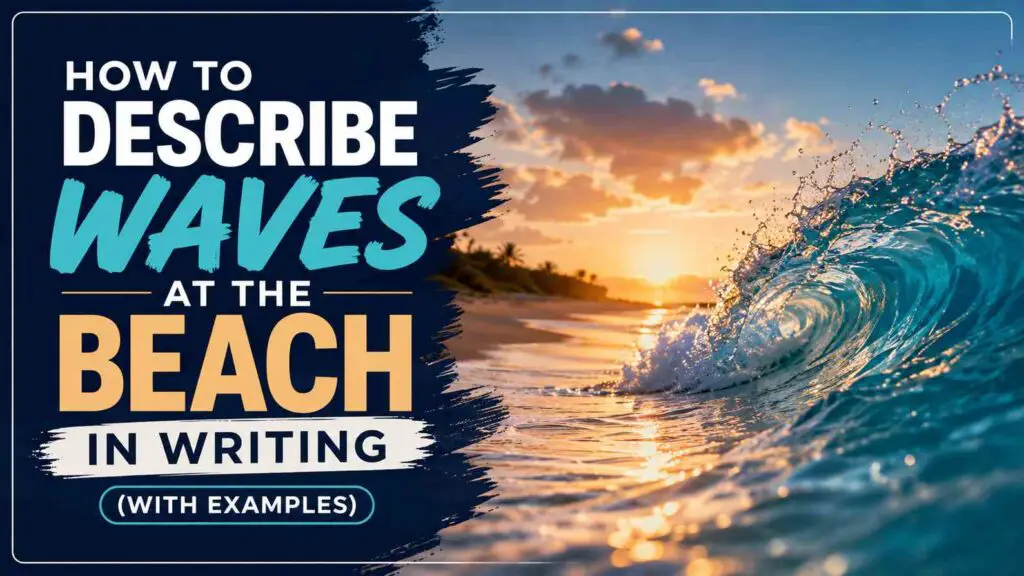
Waves are one of the most powerful details in beach writing. They can instantly shape the atmosphere of a scene, making it feel peaceful, wild, romantic, lonely, mysterious, or dangerous. Whether they are gently lapping at the shoreline or crashing against jagged rocks, waves bring movement and emotion to a setting in a way that few other natural elements can.
Strong descriptions of waves do more than tell readers what the ocean looks like. They engage the senses by capturing the sounds, colors, textures, and rhythms of the water. They can also reflect a character’s emotions, reinforce the mood of a scene, or create vivid imagery that stays with the reader long after they finish reading.
To describe waves effectively, look beyond simply calling them “big” or “beautiful.” Consider how they move, how they sound, how they interact with the shore, and the feelings they evoke. The following techniques will help make descriptions of beach waves more vivid and memorable.
How to Describe Waves at the Beach in Writing
#1. Describe the Sound of the Waves
The sound of waves is often the first thing people notice when they arrive at the beach. It creates an immediate atmosphere that can influence how readers experience the scene. Depending on the weather and the size of the waves, the sound may be gentle, rhythmic, booming, or relentless.
Choosing precise verbs such as crash, roar, whisper, murmur, hiss, slap, or sigh helps readers hear the ocean in their imagination. Softer sounds usually create feelings of calm, reflection, or romance, while louder sounds can build tension, excitement, or a sense of danger. Varying the description of the sound keeps each beach scene fresh and distinctive.
The waves whispered against the shore, folding over the sand with a soft, steady hush.
The ocean roared as the waves crashed against the rocks, sending white spray high into the gray morning air.
#2. Describe the Movement of the Waves
Waves are constantly in motion, making movement one of the most important aspects to capture in a beach scene. Rather than simply stating that the waves were moving, describe how they rise, curl, roll, tumble, surge, collapse, or retreat. These details make the water feel alive and dynamic.
Comparisons and metaphors can make these movements even more vivid. Waves may move like dancers, breathing creatures, charging animals, or reaching hands. Paying attention to the speed and flow of the water also helps establish the mood. Slow, rolling waves often suggest peace, while fast, towering waves create excitement or danger.
The waves rolled toward the shore in long, silver lines, curling at the tips before spilling onto the sand.
Each wave reached forward like a hand, touched the beach for a moment, and slipped back into the sea.
#3. Describe the Color of the Waves
The color of waves changes throughout the day and under different weather conditions. Sunlight, clouds, water depth, and reflections from the sky all influence the shades that readers might imagine. Taking the time to describe these subtle differences creates richer and more realistic imagery.
Instead of relying only on the word blue, consider colors such as turquoise, emerald, sapphire, silver, steel gray, deep green, or nearly black. Describing how the light catches the surface or how the colors shift as the waves rise and fall adds another layer of realism to the scene.
The waves shimmered turquoise beneath the afternoon sun, their white crests sparkling like broken glass.
Under the stormy sky, the waves turned a deep iron gray, rolling toward the beach with a cold, restless power.
#4. Describe the Foam and Spray
Foam and spray add texture and detail to descriptions of the ocean. They show the energy of the waves and make readers feel closer to the scene. Even gentle waves often leave behind delicate ribbons of foam, while powerful breakers throw mist and spray high into the air.
Describing the appearance and feel of the foam helps readers picture the scene more clearly. Foam can resemble lace, whipped cream, bubbles, or freshly fallen snow, while ocean spray may sting the skin, cool the face, or fill the air with the scent of salt. These sensory details make beach descriptions more immersive.
White foam laced the edge of each wave, spreading across the sand before melting back into the sea.
A burst of salty spray flew into the air as the wave struck the rocks and shattered into mist.
#5. Describe the Rhythm of the Waves
One of the defining characteristics of the ocean is its rhythm. Waves arrive in an endless cycle, creating patterns that can feel soothing, hypnotic, or relentless depending on the conditions. Describing this rhythm helps readers experience not just what they see, but also the pace of the scene.
A slow, predictable rhythm often conveys peace and stability, making it ideal for reflective or romantic moments. An irregular or violent rhythm, however, can suggest chaos, urgency, or emotional conflict. Writers can also use the rhythm of the waves to mirror a character’s thoughts or emotional state, strengthening the connection between the setting and the story.
The waves came in a slow, steady rhythm, like the quiet breathing of the earth.
The tide beat against the shore again and again, impatient and uneven, as if the sea could not rest.
#6. Describe the Size and Strength of the Waves
The size of the waves dramatically influences how readers perceive the beach. Small waves often create a welcoming, playful atmosphere, while towering waves inspire awe or fear. Describing both the height and the force of the waves helps readers understand the power of the ocean.
Use strong, vivid verbs to communicate that power. Large waves can surge, pound, thunder, explode, or slam into the shore, while smaller waves may ripple, lap, skip, or gently roll across the sand. Combining descriptions of size with movement and sound creates especially memorable imagery.
Small waves skipped across the sand, playful and bright under the morning sun.
Huge waves surged toward the shore, rising like walls before collapsing with a thunderous crash.
#7. Describe How the Waves Affect the Shore
Waves do more than move across the water—they constantly reshape the shoreline. Every wave leaves behind small changes that can bring a beach scene to life. Paying attention to these effects helps create descriptions that feel authentic and dynamic.
Notice how waves smooth the sand, erase footprints, uncover shells, carry away seaweed, polish stones, or leave shimmering reflections behind. These details show the ongoing interaction between the ocean and the land, making the environment feel active rather than static.
The waves erased the footprints one by one, leaving the sand smooth and shining in the pale light.
Each wave pulled at the broken shells, rattling them softly as the water slipped back to the sea.
#8. Describe the Mood Created by the Waves
Waves can serve as more than a background detail—they can reinforce the emotional tone of an entire scene. The same stretch of ocean can appear comforting in one moment and threatening in the next, depending on how it is described. Using the waves to reflect the mood adds depth and emotional resonance to your writing.
Think about the feelings you want readers to experience. Calm waves can symbolize hope, healing, or peace, while rough seas may suggest fear, uncertainty, grief, or anger. Matching the description of the waves to the emotional context creates stronger, more memorable storytelling.
The waves sighed against the shore, gentle and patient, as if the ocean were trying to comfort her.
The waves attacked the beach in the darkness, fierce and relentless beneath the moonless sky.
Closing Thoughts
Describing waves at the beach is about combining sound, movement, color, texture, rhythm, and emotion into a vivid picture. The most memorable descriptions engage multiple senses, allowing readers to hear the surf, see the changing water, and almost feel the cool spray on their skin.
Rather than relying on generic descriptions, pay attention to the unique qualities of each wave and how it interacts with the surrounding environment. By focusing on specific details and choosing vivid language, you can create beach scenes that feel immersive, emotionally engaging, and unforgettable.