
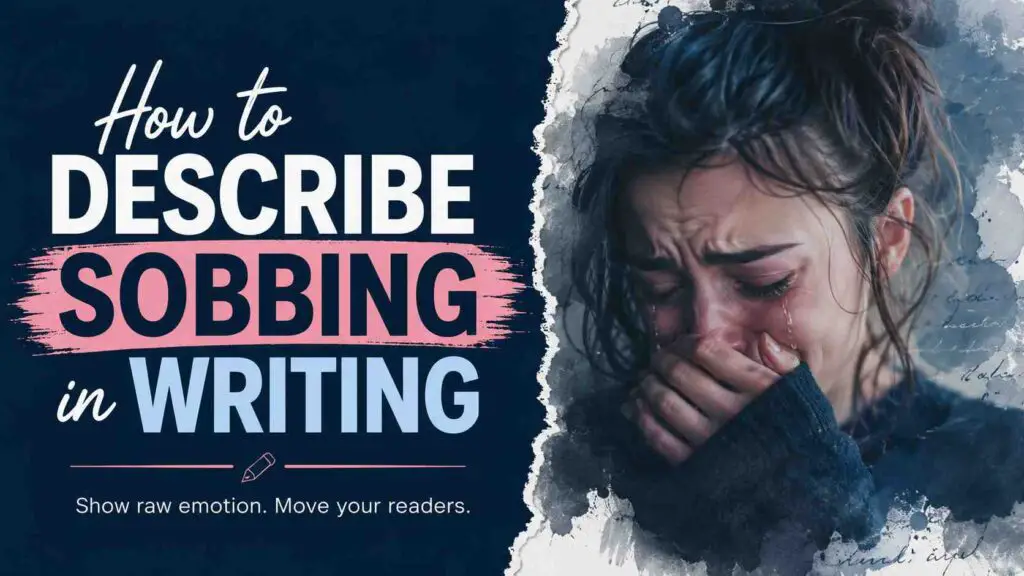
Sobbing is one of the strongest ways to show emotional pain in a story. It often marks a turning point in a scene, revealing emotions that a character can no longer hide or control. Whether the tears stem from grief, heartbreak, fear, relief, guilt, frustration, or overwhelming happiness, sobbing allows readers to witness the rawest side of a character’s emotional experience.
Simply writing “she sobbed” or “he began sobbing” communicates what is happening, but it does little to immerse readers in the moment. Memorable emotional scenes rely on vivid descriptions that engage the senses and reveal the physical and emotional effects of crying. By describing breathing, body language, facial expressions, sounds, surroundings, and the character’s internal struggle, writers can transform a simple emotional reaction into a scene that readers genuinely feel.
The best descriptions also fit the specific circumstances. Someone quietly sobbing after receiving tragic news will behave very differently from someone crying with relief after surviving danger or reuniting with a loved one. Matching the description to the cause helps create believable, emotionally rich scenes that resonate with readers.
Whether the character is grieving, overwhelmed with joy, exhausted by stress, or breaking under emotional pressure, there are many ways to describe sobbing that make the scene feel vivid and authentic. The following techniques will help bring emotional scenes to life while keeping your writing fresh and engaging.
How to Describe Sobbing in Writing
A convincing sobbing scene usually combines several elements rather than relying on a single verb. Instead of repeatedly telling readers that a character sobbed, consider describing how the sobs sound, how the body reacts, what physical sensations accompany the crying, and how other characters or the surrounding environment respond. Combining several of these techniques creates emotional scenes that feel natural, immersive, and memorable.
#1. Describe the Sound of the Sobs
The sound of sobbing often reveals the intensity and nature of a character’s emotions. Quiet, muffled sobs may suggest someone trying to hide their pain, while loud, uncontrollable wails often indicate complete emotional collapse. Sobs can also come out as broken gasps, choking breaths, hiccups, or uneven cries that interrupt normal speech. Paying attention to these sounds helps readers hear the emotion unfolding, making the scene feel more immediate and realistic.
“A broken sob escaped her lips before she could stop it, followed by another that shook her entire body.”
“His cries came in uneven bursts, each one catching painfully in his throat.”
#2. Focus on Shaking Shoulders
One of the most recognizable physical signs of sobbing is the trembling or shaking of the shoulders. This involuntary movement communicates emotional vulnerability even without directly mentioning tears. By describing the rhythm or intensity of the shaking, you can show how deeply the emotion affects the character while allowing readers to visualize the scene naturally.
“Her shoulders trembled as silent sobs rippled through her body.”
“His shoulders shook uncontrollably while he stared at the floor.”
#3. Show Tears Instead of Naming the Emotion
Rather than repeatedly stating that a character is sobbing, focus on what the tears are doing. Describe how they well up, stream down the face, blur vision, soak clothing, or drip onto the floor. These visual details communicate emotion without relying on direct emotional labels, making the writing feel more engaging and less repetitive.
“Tears poured down her cheeks until they dripped from her chin.”
“His vision blurred as tears spilled faster than he could wipe them away.”
#4. Describe Interrupted Speech
People who are sobbing often struggle to form complete sentences. Their words may come out in fragments, interrupted by gasps or cries as they fight to regain control. Broken dialogue reflects emotional overwhelm while making conversations sound authentic during highly emotional moments.
“I… I can’t…” she managed between ragged sobs.
“‘Please don’t leave,’ he whispered, every word interrupted by another choking cry.”
#5. Mention Ragged Breathing
Sobbing affects breathing just as much as it affects speech. Characters may gasp for air, struggle to inhale, hiccup between sobs, or breathe in short, uneven bursts. Including these physical details emphasizes the intensity of the emotional experience and reminds readers that strong emotions have noticeable physical consequences.
“She fought to breathe through the sobs that stole every steady breath.”
“His chest rose sharply as he gasped for air between cries.”
#6. Show Attempts to Hold Back the Tears
Many people try to suppress tears before finally breaking down. Showing this internal struggle often creates a more powerful emotional moment because readers witness the gradual loss of composure. Describing clenched jaws, forced smiles, rapid blinking, or tightly pressed lips builds anticipation before the emotional release.
“She pressed her lips together, but the first sob escaped anyway.”
“He blinked rapidly, determined not to cry until his composure finally collapsed.”
#7. Describe Facial Expressions
A person’s face changes dramatically while sobbing, often revealing emotions before any words are spoken. Trembling lips, clenched jaws, squeezed eyes, flushed cheeks, furrowed brows, and quivering chins all provide visual cues that strengthen the emotional impact. These subtle details help readers picture the character’s emotional state more clearly.
“His lower lip quivered before his face crumpled into tears.”
“She squeezed her eyes shut as another sob escaped.”
#8. Use Body Language
The entire body often reflects emotional distress during sobbing. Characters may curl into themselves, collapse into a chair, clutch another person, wrap their arms around themselves, or bury their faces in their hands. Strong body language conveys vulnerability and emotional exhaustion without relying solely on dialogue or emotional labels.
“She folded forward, burying her face in her hands as the sobs overtook her.”
“He wrapped his arms around himself as if trying to keep from falling apart.”
#9. Describe Physical Sensations
Strong emotions frequently produce noticeable physical sensations that make sobbing feel more believable. A burning throat, aching chest, stinging eyes, trembling hands, headaches, or tight muscles all remind readers that emotional pain often has physical effects. Including these sensations deepens immersion in the scene.
“Her throat burned with every painful sob.”
“His chest tightened until each breath felt like a struggle.”
#10. Show the Character Losing Control
Sobbing often represents the point where a character can no longer maintain emotional composure. Instead of simply stating that they cried, show how their carefully maintained self-control gradually slips away. This emotional unraveling often carries more weight than the sobbing itself because readers experience the moment alongside the character.
“Every attempt to stop crying only made the sobs come harder.”
“The carefully built wall around his emotions shattered in an instant.”
#11. Contrast Silence with Sudden Emotion
Silence can make the first sob feel even more dramatic. A quiet room, a long pause, or a moment of emotional restraint creates tension that magnifies the impact when the character finally breaks down. This contrast makes the emotional release feel more powerful and memorable.
“The room remained silent until one quiet sob broke the stillness.”
“She stood perfectly still for several seconds before collapsing into tears.”
#12. Show Other Characters Reacting
The reactions of surrounding characters often strengthen the emotional impact of a sobbing scene. A comforting touch, silent embrace, awkward hesitation, or shared tears can communicate empathy and deepen relationships between characters. Sometimes what others do—or choose not to do—speaks as loudly as the sobbing itself.
“He quietly placed a hand on her shoulder, saying nothing as she cried.”
“Nobody spoke. They simply waited while his sobs slowly faded.”
#13. Use Metaphorical Descriptions Sparingly
Well-chosen metaphors can add emotional depth and create memorable imagery, but they work best when used sparingly. Simple comparisons often feel more natural than elaborate poetic language, especially during emotionally intense scenes. The metaphor should support the emotion rather than distract from it.
“The sobs broke free like a dam that could no longer hold.”
“Her grief poured out in waves she could no longer resist.”
#14. Match the Sobbing to the Cause
Not every sob looks, sounds, or feels the same. Someone grieving a loved one may cry very differently from someone overwhelmed by relief, joy, fear, or guilt. Tailoring the description to the underlying emotion creates more believable characters and prevents emotional scenes from feeling generic or repetitive.
“She laughed through her tears, sobbing with overwhelming relief after hearing the good news.”
“His grief came in deep, exhausted sobs that seemed to empty everything inside him.”
#15. Let the Environment Reflect the Moment
The setting can quietly reinforce the emotional atmosphere without directly describing the sobbing itself. Rain, darkness, empty rooms, flickering lights, distant thunder, or complete silence can all amplify the emotional tone. When the environment complements the character’s emotional state, the entire scene becomes more immersive and emotionally resonant.
“Rain tapped softly against the window while her quiet sobs filled the room.”
“Only the ticking clock interrupted the sound of his uneven crying.”
Closing Thoughts
Describing sobbing effectively means going beyond a single dialogue tag or emotion word. The strongest scenes combine sounds, body language, breathing, facial expressions, physical sensations, and the surrounding environment to create an emotional experience readers can picture clearly. By varying your descriptions and matching the sobbing to the character’s situation, you can write emotional scenes that feel genuine, memorable, and deeply moving without becoming repetitive.