
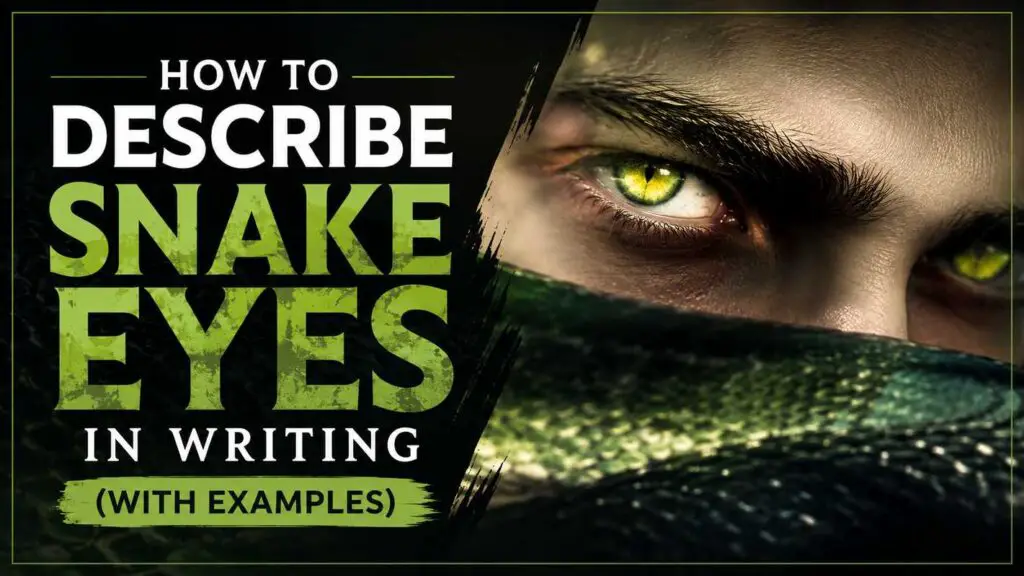
Snake eyes are one of the most distinctive eye features a writer can describe. Unlike ordinary human eyes, they immediately suggest something unusual, whether the character is supernatural, monstrous, magical, or simply intimidating. They can communicate danger without a single word being spoken, making them a powerful descriptive tool in fiction.
Depending on the context, snake eyes can evoke many different emotions. They may appear cold and calculating in a villain, mesmerizing in a mythical creature, or strangely beautiful in a fantasy hero. Their narrow pupils, glossy appearance, and unwavering gaze naturally create tension and intrigue, allowing readers to form a vivid mental image of the character.
The most effective descriptions go beyond physical appearance. Instead of simply stating that someone has snake eyes, describe the details that make them memorable and the emotions they inspire in others. By focusing on shape, color, movement, texture, and the reactions they provoke, you can create descriptions that feel immersive and believable. The following techniques will help bring snake eyes to life in your writing.
How to Describe Snake Eyes
Snake eyes are usually described through shape, color, movement, shine, and emotional effect. The key is not only to say what they look like, but also how they make others feel. A single detail, such as an unblinking stare or a pair of narrow pupils, can dramatically change how readers perceive a character. Here are several ways to describe snake eyes effectively.
#1. Slitted Pupils
The vertical pupils of a snake are perhaps its most recognizable feature. Unlike the round pupils of humans, these narrow slits immediately create an image of a predator. They can make a character seem alert, calculating, or unnervingly in control. Whether the pupils are barely visible in bright light or widen in darkness, mentioning this detail instantly gives the eyes a reptilian quality. This description works especially well for fantasy creatures, shapeshifters, villains, or anyone meant to appear slightly inhuman.
His pupils narrowed into thin black slits, cutting through the gold of his eyes like cracks in polished stone.
Her gaze held the strange stillness of a serpent, with pupils drawn tight and vertical in the dim light.
#2. Unblinking Stare
One of the most unsettling traits associated with snakes is their inability to blink. A character with an unblinking stare can appear patient, relentless, or emotionally detached. The constant gaze creates discomfort because it feels unnatural to human observers. Writers can use this quality to build suspense, establish dominance, or make another character feel watched and vulnerable.
He watched without blinking, his eyes fixed on her with the patience of something waiting to strike.
Her stare did not flicker or soften. It remained still, glassy, and reptilian.
#3. Glassy Shine
Snake eyes often have a smooth, glossy appearance that catches and reflects light. Describing this shine can make the eyes seem beautiful, eerie, or almost lifeless depending on the situation. The reflective quality can also emphasize their lack of warmth, making the character appear emotionally distant or completely unreadable. Comparing the shine to polished stone, wet glass, or freshly shed scales can make the description even more vivid.
His eyes shone with a slick, glassy brightness, like wet scales under moonlight.
There was a polished gleam in her gaze, too smooth and cold to feel human.
#4. Golden or Green Color
Many snakes are associated with vivid eye colors such as amber, gold, emerald, or bright green. Using these striking colors can instantly separate a character from ordinary humans while adding beauty and intensity to the description. Rich colors often symbolize mystery, power, wisdom, or danger, making them especially effective for magical beings or ancient creatures.
His amber eyes glowed like trapped sunlight, bright and sharp beneath his dark lashes.
Her green eyes had the deep, poisonous beauty of a viper hidden in leaves.
#5. Predatory Focus
Snakes rarely appear distracted. Their attention often seems entirely fixed on a single target, giving the impression of patience and deadly precision. Describing snake eyes as focused, measuring, or tracking someone can make the character seem like a hunter waiting for the perfect moment to act. This technique is particularly effective during moments of confrontation or rising tension.
His gaze slid over the room, slow and deliberate, as if measuring every weakness.
She looked at him the way a snake looks at a bird, silent, still, and certain.
#6. Cold Emotionless Gaze
Snake eyes can also suggest emotional distance. Instead of revealing kindness, fear, or compassion, they may appear empty, detached, or impossible to read. This lack of visible emotion often makes the character more intimidating because readers cannot predict what they are thinking. A cold reptilian gaze can communicate cruelty, confidence, or complete indifference with very little description.
There was no anger in his eyes, no fear, no pity. Only a cold, reptile calm.
Her gaze was flat and chilling, empty of mercy and almost empty of life.
#7. Hypnotic Beauty
Not every description of snake eyes needs to emphasize fear. They can also be captivating and strangely attractive. Their unusual colors, reflective surface, and unwavering gaze can draw people in despite the sense of danger they create. This contrast between beauty and menace is especially effective for enchantresses, dragons, vampires, and other supernatural beings whose appearance is both alluring and unsettling.
His eyes were beautiful in a dangerous way, bright and still, holding her attention like a spell.
She could not look away from the golden rings around his pupils, though every instinct warned her to.
#8. Sudden Narrowing
The movement of snake-like pupils can become a powerful storytelling detail. A sudden narrowing of the eyes can reveal suspicion, anger, irritation, or the moment before an attack. Instead of describing the character’s emotions directly, showing the pupils tighten creates a subtle but vivid visual cue that increases tension within the scene.
His eyes narrowed to slits, and the warmth in the room seemed to vanish.
At the sound of the lie, her pupils tightened, sharp as black needles.
#9. Reptilian Stillness
Stillness is one of the defining characteristics of many snakes. They can remain completely motionless for long periods while observing their surroundings. Applying this quality to a character’s eyes creates an atmosphere of patience, control, and quiet menace. A motionless gaze often feels more unsettling than one filled with obvious anger because it leaves readers wondering what the character is planning.
His face remained calm, but his eyes stayed fixed on her with reptilian stillness.
Nothing moved in his expression except the faint shimmer of his snake-like eyes.
#10. Dangerous Intelligence
Snake eyes can also symbolize intelligence hidden beneath a calm exterior. Rather than appearing wild or aggressive, they may suggest a character who carefully studies every situation before making a move. This combination of patience, calculation, and confidence makes snake-like eyes ideal for master manipulators, powerful rulers, ancient beings, and highly strategic villains.
His eyes glittered with quiet intelligence, cold and patient as a serpent in tall grass.
Behind her narrow pupils, something clever and cruel seemed to be waiting.
Closing Thoughts
To describe snake eyes well, focus on more than appearance. Mention the vertical pupils, glossy surface, strange colors, stillness, and emotional effect. The best descriptions show how the eyes change the atmosphere of the scene. Snake eyes should not simply look unusual. They should make the reader feel danger, mystery, beauty, or fear.