
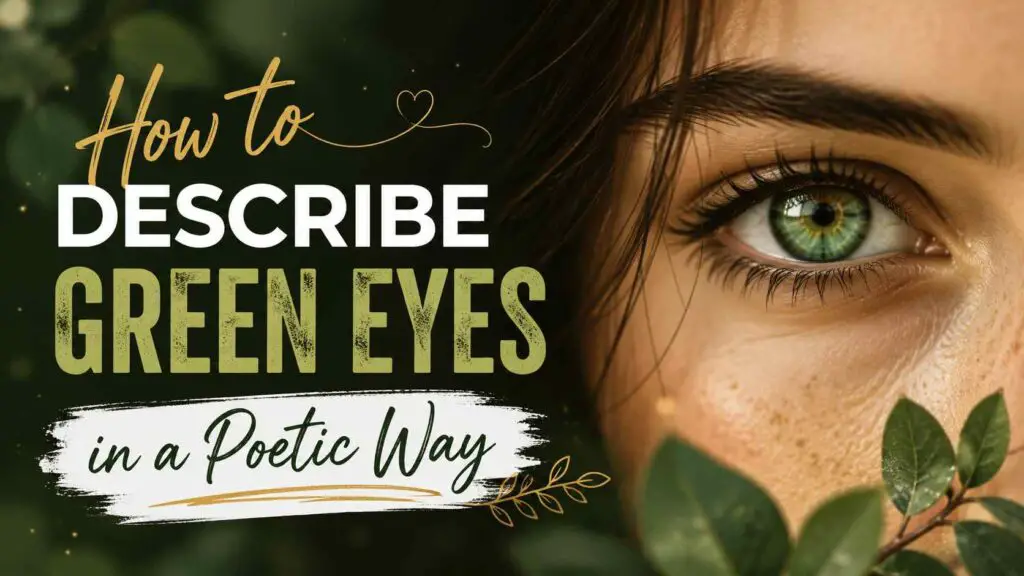
Green eyes have long fascinated poets, novelists, and storytellers because they are among the rarest eye colors in the world. Their unique appearance makes them especially memorable, and they often seem to change depending on the light, the surroundings, and the emotions of the person wearing them. In one moment, green eyes may appear soft and gentle like fresh spring leaves. In another, they may seem deep and mysterious like an ancient forest or shimmer with golden flecks in the sunlight.
Because of this ever-changing quality, green eyes lend themselves beautifully to poetic language. Rather than simply stating their color, writers often use vivid imagery, symbolism, and metaphors to capture the emotions and atmosphere they evoke. A well-crafted poetic description allows readers to imagine not only what the eyes look like but also the personality, mood, or hidden depth they seem to reveal.
Whether you’re writing a novel, poem, short story, love letter, or character description, using creative comparisons can transform an ordinary description into one that lingers in the reader’s mind. The following poetic descriptions offer a variety of ways to portray green eyes with beauty, elegance, and imagination.
How to Describe Green Eyes in a Poetic Way
Green eyes can be described in many poetic ways, depending on whether the tone is romantic, mysterious, gentle, dramatic, or dreamy. Here are some beautiful ways to describe them.
#1. Compare Them to Nature
Nature offers some of the richest inspiration for describing green eyes because the color itself is so closely associated with forests, meadows, leaves, moss, and growing things. These comparisons create a sense of freshness, life, and tranquility while helping readers picture the eyes more vividly. Depending on the image you choose, green eyes can appear peaceful like a quiet woodland, vibrant like new spring growth, or wild like an untamed landscape. Nature-based metaphors also help establish the emotional tone of a scene without directly stating it.
Examples:
Her eyes were the color of rain-washed leaves after a storm.
His gaze held the quiet green of a forest untouched by footsteps.
Her eyes bloomed like spring fields beneath the morning sun.
#2. Compare Them to Precious Stones
Gemstones have long symbolized beauty, rarity, and value, making them excellent poetic comparisons for green eyes. Emeralds, jade, peridot, and other green stones each carry slightly different associations, ranging from elegance and wisdom to mystery and luxury. Comparing green eyes to precious stones gives them a luminous, polished quality and suggests that they are something extraordinary worth admiring.
Examples:
Her eyes shone like emeralds hidden in candlelight.
His jade-green gaze carried a quiet kind of royalty.
Her eyes were polished stones of green fire.
#3. Use Light and Shadow
One of the most captivating qualities of green eyes is how dramatically they change under different lighting conditions. Bright sunlight may reveal flecks of gold or amber, while cloudy skies can make them appear darker and more subdued. Describing this interplay of light and shadow creates movement within your writing and makes the eyes feel dynamic rather than static. It also reflects how emotions can subtly alter the way someone’s eyes are perceived.
Examples:
In the sunlight, her green eyes turned gold at the edges.
His eyes were shadowed green, like leaves beneath a heavy sky.
Her gaze flickered between moss and flame.
#4. Make Them Mysterious
Green eyes have often been associated with mystery, enchantment, and the unknown in literature and folklore. Their uncommon color naturally lends itself to descriptions that hint at hidden secrets, ancient wisdom, or magical qualities. Using mysterious imagery can make a character feel intriguing and unforgettable, encouraging readers to wonder what thoughts or emotions lie behind that captivating gaze.
Examples:
Her eyes were green doors to a secret world.
His gaze held the mystery of deep woods at dusk.
Her green eyes looked as though they knew every secret the stars had forgotten.
#5. Connect Them to Emotion
The most memorable eye descriptions go beyond appearance by revealing emotion. Green eyes can communicate warmth, affection, sorrow, determination, jealousy, hope, or countless other feelings. Instead of merely describing the color, show how the eyes reflect the character’s inner world. This creates stronger emotional connections with readers and gives the description greater depth and meaning.
Examples:
Her green eyes softened like grass bending under rain.
His gaze burned green with quiet anger.
In her eyes, sorrow gathered like mist over a meadow.
#6. Use Water Imagery
Water imagery adds elegance, movement, and serenity to descriptions of green eyes. Depending on the comparison, the eyes might resemble calm lakes, flowing rivers, deep oceans, shimmering sea glass, or gentle waves. These images suggest depth and constant change, making green eyes feel alive and emotionally expressive. Water-based metaphors also create a soothing, lyrical quality that fits naturally into poetic writing.
Examples:
Her eyes were sea-green, restless and shining.
His gaze was the color of deep water under a cloudy sky.
Her eyes glimmered like sea glass worn smooth by time.
#7. Describe Their Contrast
Sometimes the beauty of green eyes becomes even more striking because of the features surrounding them. Dark hair, pale skin, freckles, dramatic eyelashes, or certain clothing colors can all intensify the vividness of green eyes. By describing these contrasts, writers naturally draw the reader’s attention to the eyes and make them stand out as one of the character’s defining features.
Examples:
Against her dark hair, her green eyes burned like lanterns in the woods.
His pale face made his green eyes seem even brighter.
Her eyes flashed green beneath the black sweep of her lashes.
#8. Make the Description Romantic
Green eyes have inspired romantic poetry for centuries because they can seem gentle, inviting, mysterious, or irresistibly captivating. Romantic descriptions often focus on the emotions they awaken in another person rather than simply their appearance. By emphasizing admiration, longing, tenderness, or fascination, you can make green eyes feel unforgettable and emotionally powerful within the scene.
Examples:
Her green eyes were the kind a heart could get lost in.
His gaze was soft as moss and impossible to forget.
She looked at him with eyes like spring after a long winter.
Closing Thoughts
Describing green eyes in a poetic way is about more than naming a color. It is about creating an image that feels alive. Green eyes can be emerald-bright, forest-dark, sea-soft, or full of mystery. The strongest descriptions connect the eyes to nature, emotion, light, and atmosphere so the reader does not just see them, but feels them.