
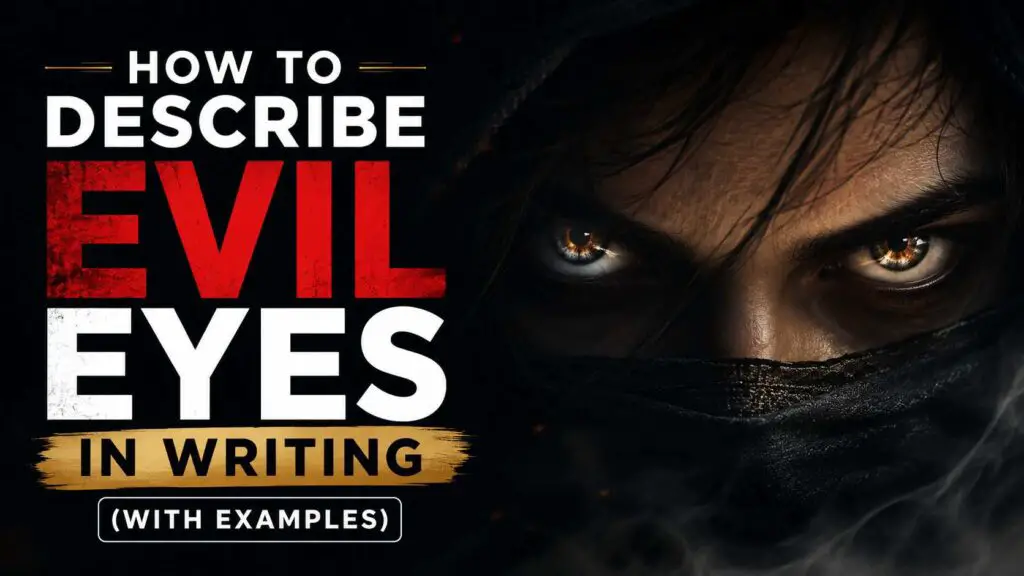
Evil is one of the most compelling traits a writer can give a character, and the eyes are often the first place readers notice it. Long before a villain commits an unforgivable act or reveals their true intentions, their eyes can hint at the darkness within. A single glance can communicate cruelty, malice, hatred, manipulation, or an unsettling absence of humanity.
Because eyes naturally draw attention in both real life and fiction, they are a powerful storytelling tool. Instead of simply telling readers that a character has “evil eyes,” descriptive writing allows readers to experience the feeling for themselves. The right details can make a character appear threatening, emotionally detached, predatory, or even supernatural without directly stating that they are evil.
The most memorable descriptions combine physical appearance with emotional impact. They focus not only on what the eyes look like but also on how they move, what emotions they reveal, and how other characters react to them. This approach creates stronger imagery and allows readers to draw their own conclusions about the character.
Below are several effective ways to describe evil eyes in writing, along with detailed explanations and examples that can inspire your own descriptions.
How to Describe Evil Eyes in Writing
#1. Describe Their Coldness
Cold eyes often suggest a complete lack of empathy or compassion. Rather than expressing warmth or understanding, they create the impression that the character is emotionally detached and incapable of caring about the suffering of others. This type of description works particularly well for calculating villains, ruthless leaders, and characters who view people merely as tools to achieve their goals. Comparing cold eyes to winter, ice, stone, or frozen landscapes can strengthen the image and make the description more vivid.
His eyes were pale and cold, like stones pulled from the bottom of a winter river.
She looked at him with eyes that held no pity, no anger, and no trace of kindness.
#2. Describe Their Sharpness
Sharp eyes create the feeling that a character is constantly observing, analyzing, and searching for weaknesses. Instead of offering comfort, their gaze feels invasive and dangerous. These descriptions are especially effective for intelligent villains, master manipulators, assassins, or anyone whose greatest weapon is their ability to read others. Comparing the eyes to knives, blades, needles, or predators helps reinforce the sense of precision and menace.
His eyes cut across the room like a blade finding soft skin.
She studied them with narrow, gleaming eyes, as if choosing where to strike first.
#3. Describe Their Darkness
Dark eyes can symbolize hidden evil, corruption, or secrets that lie beneath the surface. The darkness may refer to their color, their depth, or the emotions concealed within them. Rather than simply appearing black, the eyes can seem to absorb light or reveal an endless void that unsettles anyone who looks into them. This approach works especially well in horror, gothic fiction, fantasy, and psychological thrillers where mystery and fear play an important role.
His eyes were black and depthless, swallowing the candlelight before it could reflect back.
There was something buried in her gaze, something dark enough to make the room feel smaller.
#4. Describe Their Emptiness
Empty eyes often suggest that something essential is missing from the character. They may lack empathy, remorse, joy, or even humanity itself. Unlike angry or hateful eyes, empty eyes can be more disturbing because they show no emotion at all. Readers may interpret this emptiness as evidence of psychopathy, emotional numbness, or complete moral corruption. Descriptions that emphasize stillness, blankness, or lifelessness can make this effect even stronger.
His eyes were open, but there was nothing behind them.
She smiled warmly, but her eyes remained empty, as blank as a window in an abandoned house.
#5. Describe Their Hunger
Hungry eyes convey an intense desire that goes beyond ordinary ambition. They suggest greed, violence, obsession, or an appetite for power, suffering, or control. Instead of merely looking at people, the character seems to consume them with their gaze. This technique works well for villains driven by insatiable desires, whether they seek wealth, revenge, domination, or literal prey. Comparing the eyes to predators or describing them as feeding on fear can heighten the sense of danger.
His eyes lingered too long, hungry and shining, as though everything in the room belonged to him already.
She watched the fear spread across his face, and her eyes brightened with appetite.
#6. Describe Their Unnatural Shine
An unnatural shine immediately suggests that something is not quite human. Whether the eyes glow, shimmer, reflect light in unusual ways, or seem almost alive, they can make readers suspect supernatural forces at work. This description fits demons, ghosts, cursed individuals, monsters, or characters possessed by dark powers. Even in realistic fiction, an unusual gleam can symbolize hidden madness or overwhelming malice.
His eyes glimmered in the dark with a wet, unnatural light.
For a moment, her pupils seemed to catch fire, glowing with a cruel and secret joy.
#7. Describe Their Effect on Others
Sometimes the strongest description of evil eyes focuses less on the eyes themselves and more on how people respond to them. Fear, uneasiness, silence, or an instinctive desire to look away can communicate evil more effectively than any physical description. Showing the emotional or physical reactions of other characters allows readers to experience the same discomfort without being directly told what to think. This technique also adds realism because people often judge others by the emotions they inspire rather than by their appearance alone.
When his gaze settled on her, she felt the sudden urge to step back.
No one met her eyes for long. There was something in them that made courage feel foolish.
Closing Thoughts
Evil eyes are powerful because they reveal character without explanation. They can show cruelty, emptiness, hunger, or hidden danger in a single glance. The strongest descriptions do not simply label the eyes as evil. They create a feeling. They make the reader sense that something is wrong before the character ever proves it.