
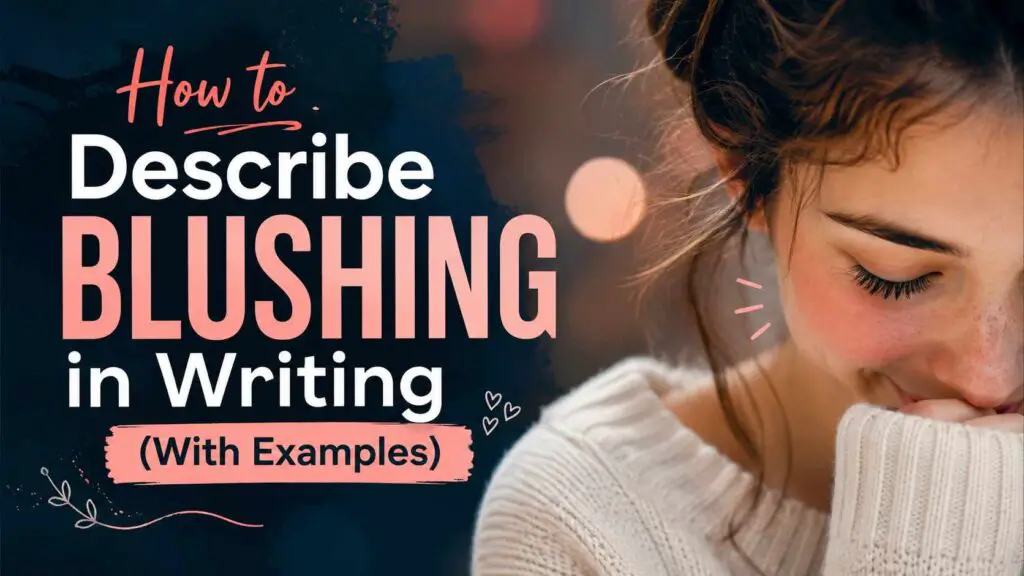
Blushing is one of the most expressive physical reactions a character can have. It instantly communicates emotion without requiring a single word of dialogue. Whether a character is embarrassed, attracted, ashamed, flattered, nervous, or even angry, a blush can reveal what they are trying to hide. Because it is an involuntary response, it often exposes emotions that the character would rather keep private.
When describing blushing, it is important to go beyond simply saying that a character’s face turned red. Strong descriptions combine the physical reaction with the emotion, body language, and context that caused it. This creates richer, more believable scenes that help readers connect with your characters. Below are several effective ways to describe blushing in writing, along with explanations and examples for each approach.
How to Describe Blushing in Writing
#1. Describe the Color Change
One of the simplest ways to describe blushing is to focus on the visible change in skin tone. A character’s cheeks may become pink, rosy, scarlet, crimson, or deeply flushed depending on the intensity of the emotion. Choosing the right color helps communicate how strongly the character is reacting.
The specific shade can also match the situation. A faint pink blush may suggest shyness or quiet affection, while a deep crimson face often signals overwhelming embarrassment, humiliation, or intense emotion. Varying your word choice also prevents descriptions from becoming repetitive throughout a story.
Examples:
A faint pink rose across her cheeks before she looked away.
His face turned a deep crimson, and he suddenly found the floor very interesting.
A warm flush spread from her cheeks to the tips of her ears.
#2. Show the Heat of the Blush
Blushing is not only something that can be seen—it is also something the character often feels. Many people experience warmth spreading across their cheeks, neck, or ears before they even realize they are blushing. Including these physical sensations allows readers to experience the moment alongside the character.
This approach is especially effective when writing from a close third-person or first-person perspective because it lets readers experience the character’s internal reactions. Describing the sensation of heat can make emotional moments feel more immediate and immersive.
Examples:
Heat climbed into his cheeks before he could stop it.
Her face burned as every eye in the room turned toward her.
A rush of warmth flooded his neck and ears.
#3. Connect the Blush to Embarrassment
Embarrassment is one of the most common reasons people blush. Rather than simply stating that a character was embarrassed, show how the blush appears alongside their behavior. Their facial color, posture, and actions can work together to reveal their emotional state.
Characters may avoid eye contact, laugh nervously, stumble over their words, cover their face, or suddenly become interested in something else nearby. These accompanying actions make the blush feel natural and help readers understand the character’s discomfort without needing direct explanation.
Examples:
Her cheeks went pink, and she quickly busied herself with the papers on her desk.
He gave a nervous laugh as red crept across his face.
She lowered her eyes, the blush on her cheeks saying what her mouth refused to admit.
#4. Use Blushing to Show Attraction
Blushing is often a subtle but powerful way to reveal romantic interest. A character may blush after receiving a compliment, making eye contact, being touched, or simply standing near someone they admire. Since blushing is difficult to control, it can expose feelings the character is trying to keep hidden.
This technique is especially useful in romance and relationship-driven stories because it builds emotional tension without requiring explicit dialogue. A small blush can often communicate attraction more effectively than a direct confession.
Examples:
When he smiled at her, color bloomed softly across her cheeks.
She tried to answer, but the warmth in her face betrayed her first.
His ears turned red the moment her hand brushed his.
#5. Describe the Blush Spreading
Instead of presenting a blush as an instant event, describe how it develops over time. Color may creep upward from the neck, spread across the cheeks, or slowly deepen as the situation becomes more uncomfortable. Showing this gradual progression creates movement within the description.
Verbs such as crept, spread, rose, bloomed, and deepened make the blush feel alive. They also increase tension because readers can watch the character lose control of their emotional response one moment at a time.
Examples:
Color crept up his neck and settled in his cheeks.
A blush bloomed across her face, delicate at first, then impossible to hide.
The red spread slowly, betraying him inch by inch.
#6. Show the Character Trying to Hide It
Many characters become even more uncomfortable once they realize they are blushing. Instead of accepting it, they may instinctively try to conceal the reaction. Showing these attempts can reveal both their personality and their emotional vulnerability.
A character might turn away, cover their face, adjust their hair, clear their throat, pretend to be busy, or quickly change the subject. These subtle actions add realism while making the blush itself feel even more noticeable.
Examples:
She turned toward the window, hoping the sunlight would hide the color in her cheeks.
He cleared his throat and looked away, but the red tips of his ears gave him away.
She pressed a hand to her face as if she could push the blush back down.
#7. Use Blushing to Reveal Shame or Guilt
Not every blush is caused by romance or simple embarrassment. Characters may also blush because they feel guilty, ashamed, or deeply humiliated. In these situations, the blush often carries a heavier emotional weight and reflects an internal struggle.
Stronger verbs and adjectives such as burned, flamed, reddened, or stained can reinforce the intensity of these emotions. Pairing the blush with silence, hesitation, or avoidance makes the scene even more emotionally powerful.
Examples:
His face reddened as the accusation settled over him.
A shameful heat burned across her cheeks.
Color stained his face, and for once, he had no clever answer.
#8. Describe Blushing Through Another Character’s View
Blushing does not always need to be described from the perspective of the person experiencing it. Sometimes another character notices the blush first. This allows readers to observe the emotional reaction from the outside while also revealing how obvious the character’s feelings have become.
Using another character’s perspective can strengthen relationships within the story. A blush noticed by someone else may lead to teasing, sympathy, romantic tension, or the realization that hidden feelings have become impossible to conceal.
Examples:
She noticed the faint blush on his cheeks before he turned away.
The compliment left him red-faced and silent.
A small smile touched her lips when she saw the color rise in his face.
#9. Avoid Overusing the Same Words
While words like blushed, red, and flushed are useful, relying on them too often can make your writing repetitive. Instead, vary your descriptions by focusing on physical sensations, body language, facial expressions, or the emotional meaning behind the blush.
Sometimes the best description never mentions the word blush at all. Showing warmth rising in the cheeks, ears turning red, or a character’s face giving away their emotions can make the writing feel fresher while still communicating the same reaction.
Examples:
Warmth touched her cheeks, soft and sudden.
His face gave him away before his words could catch up.
A rosy glow appeared beneath her freckles.
Closing Thoughts
Blushing is powerful because it shows emotion without explanation. It can reveal embarrassment, attraction, guilt, anger, or vulnerability in a single physical reaction.
The best descriptions of blushing do more than mention red cheeks. They connect the blush to the character’s feelings, body language, and situation. When used carefully, a blush can make a scene feel more human, intimate, and emotionally honest.