
Old cars are more than machines that have survived for decades. They often become symbols of history, memory, resilience, or decline. Whether parked in a dusty barn, cruising down a country road, or sitting forgotten in a junkyard, an old car can instantly set the tone of a scene and reveal something about its owner or the world around it.
When describing an old car in writing, avoid relying on the simple word old. Instead, paint a vivid picture using details that appeal to the senses and suggest the vehicle’s personality. The scratches, faded paint, strange noises, and worn interior can all work together to create an image that readers can easily imagine.
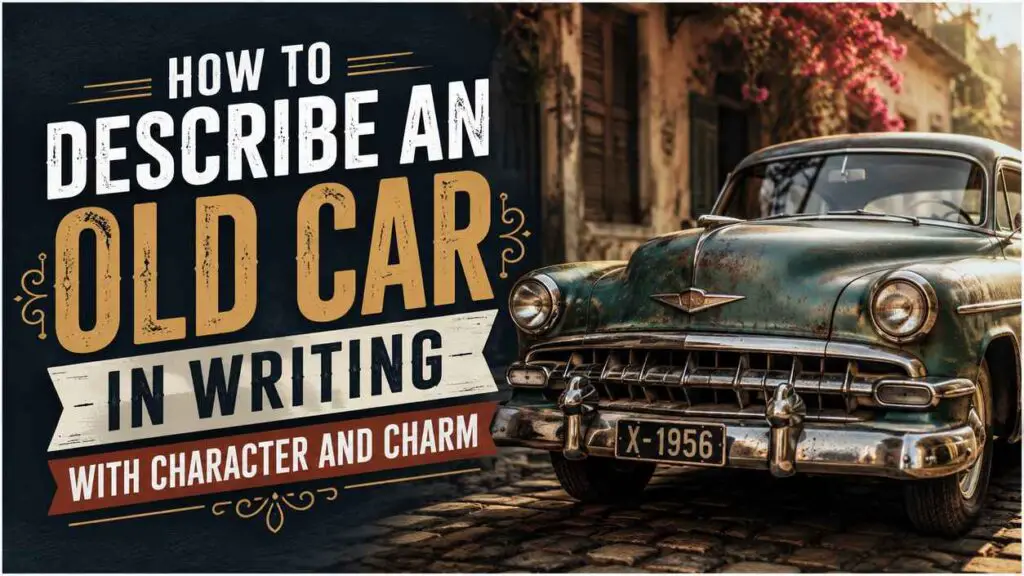
How to Describe an Old Car in Writing With Character and Charm
An old car can be charming, tired, elegant, ugly, dependable, forgotten, or full of life. The way you describe it should match its role in the story and the mood of the scene. Focus on details that reveal its age while also giving it character. The following techniques will help bring an old car to life on the page.
#1. Describe Its Exterior Condition
The exterior is often the first thing readers notice, making it an excellent place to establish the car’s age. Instead of simply saying it is rusty or worn out, describe the specific signs of time. Faded paint, chipped chrome, peeling trim, dented panels, cracked headlights, and weathered tires all help readers visualize the vehicle. Even small imperfections can suggest years of faithful service or long neglect.
The old blue sedan sat under the oak tree with sun-faded paint, a rusted bumper, and one headlight clouded like a tired eye.
Its once-red body had dulled to the color of dried brick, with silver scratches running along the doors like old scars.
#2. Focus on the Sound It Makes
Old cars often have distinctive sounds that immediately reveal their age. The engine may cough before starting, the exhaust may rumble unevenly, and loose parts may rattle with every bump. Including these sounds adds another layer of realism and helps readers experience the vehicle instead of simply seeing it. The noises can also hint at whether the car is dependable, unreliable, or surprisingly resilient.
The engine coughed twice, shuddered, and finally came alive with a deep, uneven growl.
Every turn of the key brought a tired whine, followed by a clatter that sounded like loose coins in a metal box.
#3. Show the Interior Wear
The inside of an old car often tells an even richer story than its exterior. Worn seats, cracked dashboards, faded upholstery, torn floor mats, and lingering smells all hint at countless journeys and years of use. Interior details also make the description feel more personal because they place the reader inside the vehicle alongside the characters.
The seats were split at the seams, the leather dry and cracked, but they still held the faint smell of tobacco, rain, and summer heat.
The dashboard was faded by decades of sunlight, and the steering wheel had been rubbed smooth by hands long gone.
#4. Give the Car a Personality
Treating an old car as though it has a personality can make it far more memorable. Readers naturally connect with descriptions that make objects feel almost human. A car can seem stubborn when it refuses to start, loyal because it keeps running despite its age, or proud because it still carries itself with dignity. This technique works especially well when the vehicle plays an important role in the story.
The car looked stubborn rather than broken, as if it had survived too many roads to be embarrassed by a little rust.
She was a proud old machine, dented and noisy, but still carrying herself like she belonged on the highway.
#5. Connect It to Memory
Old cars often carry emotional weight because they remind characters of earlier times. A single smell, scratch, or familiar seat can trigger memories of childhood, family road trips, first dates, or people who are no longer around. Using the car as a bridge to the past makes the description meaningful rather than purely visual.
To anyone else, it was just an old station wagon. To Daniel, it was every summer trip, every roadside sandwich, and every song his father used to sing badly from the front seat.
The car smelled like dust and old vinyl, and for a moment she was sixteen again, sitting barefoot in the passenger seat with the windows down.
#6. Use Color and Texture
Specific colors and textures make descriptions much more vivid than general adjectives. Instead of saying the car looked worn, describe faded paint, rough rust, peeling vinyl, dull chrome, dusty glass, or rough patches where the finish has disappeared. These visual details help readers imagine exactly what the vehicle looks and feels like.
Its pale green paint had softened with age, like a photograph left too long in the sun.
The chrome grille was pitted and dull, and the vinyl roof had begun to peel at the corners like old wallpaper.
#7. Describe How It Moves
The way an old car moves can reveal just as much about it as its appearance. Some old cars rattle, shake, and struggle uphill, while others glide with surprising elegance despite their years. Describing its movement adds energy to the scene and gives readers clues about its condition without directly stating it.
The car lurched forward with a reluctant jerk, then settled into a shaky rhythm as it rolled down the gravel road.
It glided with surprising grace, its heavy frame floating over the road like a memory that refused to fade.
#8. Highlight Its Imperfections
Imperfections are often what make an old car memorable. Missing hubcaps, squeaky doors, broken radios, cracked mirrors, or stubborn windows add personality and realism. Rather than making the vehicle seem worthless, these flaws often give it charm because they suggest a long history of use and adaptation.
The passenger door only opened from the inside, the radio worked when it felt like it, and the left window had to be pushed up by hand.
One hubcap was missing, the antenna leaned at a strange angle, and the rearview mirror trembled whenever the engine idled.
#9. Compare It to Something Familiar
Similes and metaphors help readers understand the feeling an old car creates. Comparing it to a loyal dog, a weary soldier, a faded photograph, or another familiar image adds emotion and personality while making the description more memorable. Choose comparisons that reinforce the tone of your scene.
The old truck sat in the driveway like a loyal dog, battered, patient, and unwilling to leave.
The coupe looked like a relic from a forgotten postcard, all rounded edges, dull chrome, and quiet dignity.
#10. Match the Description to the Mood
The same old car can create completely different impressions depending on the atmosphere of the scene. It can feel comforting in a nostalgic story, eerie in a mystery, humorous in a comedy, or heartbreaking in a tale of loss. Carefully choosing descriptive words that match the mood helps the vehicle contribute to the emotional impact of the scene instead of serving as simple background.
Under the streetlight, the abandoned car looked ghostly, its windows black and its rusted body half-swallowed by weeds.
The little yellow car rattled into town with cheerful confidence, honking once as if proud to have survived another morning.
Closing Thoughts
An old car becomes memorable when it feels like more than a worn-out vehicle. Its dents, sounds, smells, colors, and movements should suggest years of experiences, forgotten adventures, and countless miles traveled.
The strongest descriptions combine physical details with emotion. Show the rust, but also show the pride. Describe the cracked seats, but also the memories they hold. When readers can both picture the car and sense its history, it becomes a character in its own right rather than just another object in the background.