
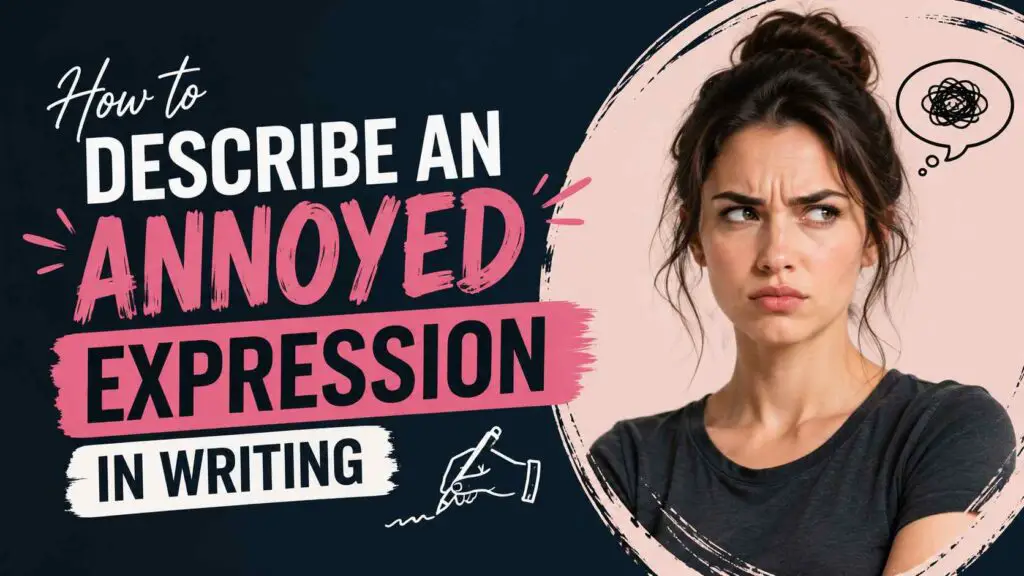
Describing an annoyed expression is about showing irritation through facial features, body language, and subtle actions rather than simply telling the reader how a character feels. A well-written description helps readers recognize annoyance instantly, making the scene feel more vivid and believable. Depending on the situation, an annoyed expression can range from mild impatience to barely controlled frustration, and the same character may display it differently in different circumstances.
The key is to choose details that match the intensity of the emotion and the personality of the character. Small facial movements, tense muscles, or restrained gestures often communicate annoyance more effectively than directly stating it. The following techniques will help bring annoyed expressions to life in your writing.
How to Describe an Annoyed Expression
An annoyed expression can be subtle or obvious. Sometimes it appears as a quick eye roll. Other times, it shows through a hard stare, clenched teeth, or a forced smile. The surrounding context also influences how readers interpret the expression. A brief glance may signal mild irritation, while several tense facial cues together can suggest someone is close to losing their patience. Here are effective ways to describe an annoyed expression in writing.
#1. Narrowed Eyes
Narrowed eyes are one of the clearest signs of annoyance. They often suggest that a character is becoming impatient, suspicious, or frustrated with someone or something. This expression naturally draws attention to whatever is causing the irritation and can make even a silent moment feel tense. It works especially well in dialogue-heavy scenes where a character is reacting without speaking.
The intensity of narrowed eyes can vary depending on the situation. A slight narrowing may indicate mild irritation or skepticism, while eyes that are tightly narrowed can suggest growing anger or open hostility. Pairing this expression with crossed arms, a stiff posture, or a prolonged stare makes the annoyance even more convincing. Writers can also use narrowed eyes as the first visible clue that a character’s patience is beginning to wear thin before stronger emotional reactions appear.
Examples:
Her eyes narrowed as he repeated the same excuse again.
He gave her a narrow-eyed look that made it clear his patience was running out.
#2. Tightened Jaw
A tightened jaw suggests someone is trying to keep their emotions under control. Rather than immediately reacting, the character is holding back harsh words or resisting the urge to argue. This small detail can create suspense because it hints that their annoyance may soon develop into open anger if the situation continues.
Because the jaw muscles tense automatically during moments of stress or frustration, this expression feels natural and believable. It works particularly well for characters who prefer to remain composed instead of expressing their emotions openly. Combined with silence, measured breathing, or clipped responses, a tightened jaw tells readers that the character is struggling to maintain self-control even if they appear calm on the surface.
Examples:
His jaw tightened, but he said nothing.
She smiled politely, though the tension in her jaw gave away her annoyance.
#3. Pressed Lips
Pressed lips are a simple but powerful way to show restrained irritation. The expression often suggests that a character has something they want to say but chooses to remain silent instead. It is particularly effective in professional, formal, or social settings where openly expressing annoyance would be inappropriate.
The shape of the lips can also communicate different levels of emotion. A slight press may indicate quiet disapproval, while lips compressed into a thin line can signal intense frustration. This expression pairs naturally with other restrained gestures such as folded arms, a slow exhale, or avoiding eye contact. It emphasizes the effort a character is making to keep their emotions from spilling out into words.
Examples:
She pressed her lips into a thin line and looked away.
His mouth flattened, the only sign that the comment had annoyed him.
#4. Eye Roll
An eye roll is one of the most recognizable expressions of annoyance. It communicates impatience, disbelief, sarcasm, or frustration in an instant. Because it is such a familiar gesture, readers immediately understand what the character is feeling without additional explanation. It is most effective when the annoyance is obvious rather than hidden.
This expression often appears when a character believes another person is being unreasonable, repetitive, or foolish. Depending on the context, an eye roll can feel playful, disrespectful, or openly confrontational. It also reveals something about the character’s personality, showing confidence, impatience, or a lack of concern about hiding their true feelings from others.
Examples:
She rolled her eyes before turning back to her book.
He gave an exaggerated eye roll, making his annoyance impossible to miss.
#5. Raised Eyebrow
A raised eyebrow can communicate mild annoyance while also expressing disbelief or skepticism. Rather than showing explosive frustration, it conveys a quiet judgment that questions another person’s words or actions. This subtle expression is especially useful for calm or emotionally controlled characters.
Because it is understated, a raised eyebrow often encourages readers to pay closer attention to the dialogue that follows. It suggests that the character is silently evaluating what they have just heard rather than reacting emotionally. Used sparingly, this expression can create humor, tension, or quiet disapproval while allowing the character to remain composed and in control.
Examples:
One eyebrow lifted as she waited for him to finish his weak explanation.
He raised an eyebrow, clearly unimpressed by the excuse.
#6. Sharp Stare
A sharp stare can make annoyance feel much more intense. Instead of looking away or ignoring the problem, the character focuses directly on the source of their frustration. This expression often creates an uncomfortable silence and can make other characters immediately aware that something is wrong.
Unlike a casual glance, a sharp stare is deliberate and sustained. It can communicate warning, disappointment, or impatience without a single word being spoken. Writers can strengthen the effect by describing how long the stare lasts, how the other character reacts to it, or how the silence surrounding it becomes increasingly uncomfortable.
Examples:
She fixed him with a sharp stare.
His annoyed stare cut across the room before anyone could speak again.
#7. Forced Smile
A forced smile is a useful way to show annoyance that must remain hidden. The character may appear polite on the surface while struggling to conceal irritation underneath. This contrast between outward behavior and inner emotion can add realism and tension, particularly in workplace, family, or public settings.
A forced smile often looks incomplete or unnatural. It may never reach the eyes, disappear quickly, or be accompanied by stiff facial muscles. Describing these details helps readers recognize that the smile is simply a mask rather than a genuine expression of happiness. This approach works especially well in scenes involving conflict that cannot yet be expressed openly.
Examples:
She gave him a tight, forced smile and nodded.
His smile stayed in place, but his eyes showed how annoyed he really was.
#8. Flared Nostrils
Flared nostrils are often a physical sign that annoyance is becoming stronger. As emotions build, breathing may become heavier, making this subtle detail an effective indicator that a character is close to losing their composure. It pairs well with other tense expressions such as clenched jaws or narrowed eyes.
Although readers may not consciously notice this expression in real life, they immediately recognize its meaning when it appears in fiction. It is particularly effective during arguments, stressful conversations, or moments when a character is trying hard not to lash out. Used alongside changes in breathing or posture, flared nostrils help create a vivid picture of rising frustration.
Examples:
Her nostrils flared as she listened to the complaint.
He inhaled sharply, nostrils flaring with annoyance.
#9. Heavy Sigh
A heavy sigh is a natural reaction to frustration and impatience. It can suggest that a character feels exhausted by someone’s behavior or has simply reached the end of their patience. This small action is relatable and can effectively communicate annoyance without requiring any dialogue at all.
Sighs can also reveal the emotional state behind the annoyance. A slow, quiet sigh may indicate disappointment or resignation, while a loud, exaggerated sigh often signals obvious irritation meant for others to notice. Pairing the sigh with gestures like rubbing the forehead, closing the eyes, or shaking the head makes the emotional impact even stronger.
Examples:
She let out a heavy sigh and rubbed her forehead.
He sighed loudly enough for everyone at the table to hear.
#10. Blank Look
A blank look can communicate a different kind of annoyance—one that is tired, resigned, or emotionally drained. Instead of reacting dramatically, the character seems unwilling to waste energy responding. This understated expression often carries more impact than an angry outburst because it shows complete frustration or disappointment.
This expression is especially effective after repeated arguments, constant interruptions, or ongoing frustration. Rather than displaying active anger, the character has emotionally checked out of the situation. Readers often interpret a blank look as a sign that the character has reached the limit of their patience, making it a powerful way to show annoyance without dramatic gestures or emotional dialogue.
Examples:
She stared at him with a blank expression, too annoyed to answer.
His face went flat, as if he had heard enough nonsense for one day.
Closing Thoughts
An annoyed expression is best described through small, specific details. Instead of simply writing that a character looked annoyed, show the irritation through their eyes, mouth, jaw, posture, or actions.
The right description depends on how strong the annoyance is. A slight eyebrow raise may show mild irritation, while a clenched jaw or sharp stare can suggest deeper frustration. By choosing precise facial details, writing becomes more vivid, natural, and emotionally clear.