
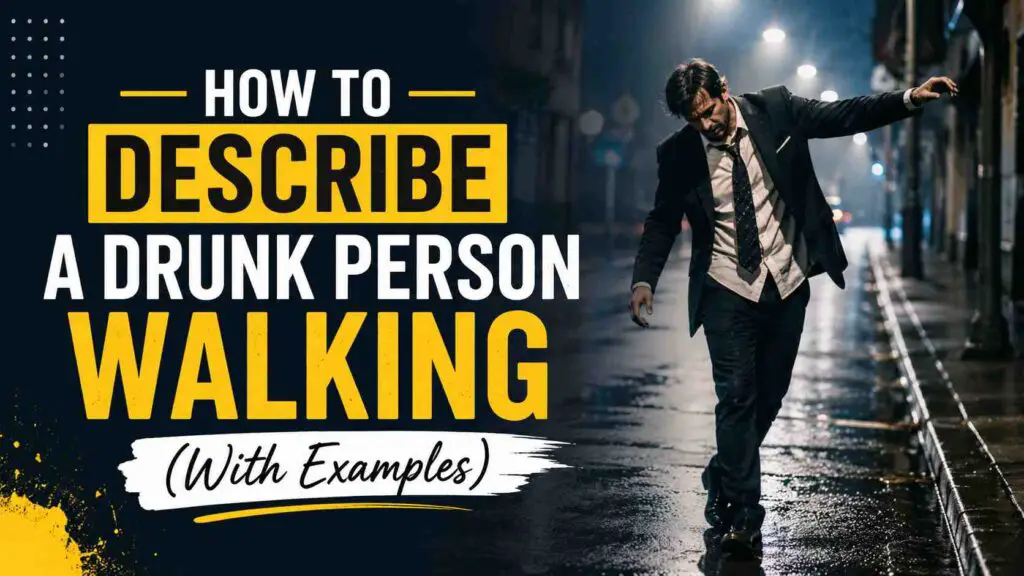
Drunk walking is rarely smooth or predictable. Instead, it tends to be uneven, unsteady, and difficult to control, with movements that can range from subtle swaying to obvious stumbling. A person under the influence might drift from side to side, misjudge their steps, drag their feet, or move as though the ground itself is shifting beneath them. How you choose to describe this kind of movement depends on the tone of your scene, as it can come across as humorous, awkward, tense, or even dangerous.
How to Describe a Drunk Person Walking
A strong description should show the person’s lack of balance without simply repeating the word “drunk.” Focus on their feet, posture, speed, direction, and how other people react. Here are different ways to describe a drunk person walking, with examples.
#1. Staggering
To stagger means to walk in an unsteady way, often with sudden side-to-side movements. It is one of the most common and effective words for describing a drunk person because readers immediately associate it with impaired balance. Use staggering when the person appears to struggle to stay upright, repeatedly corrects their course, or seems only one step away from falling. It works equally well in humorous scenes and in more serious situations where intoxication has become dangerous.
He staggered down the sidewalk, bumping one shoulder against the wall before pushing himself forward again.
She staggered toward the door, laughing as if the floor had moved without warning.
#2. Swaying
Swaying describes a slow, side-to-side movement of the body while walking or standing. Unlike staggering, the movement is often smoother and more continuous, making it useful when the person is intoxicated but not yet falling over. This description emphasizes poor balance and gives readers the impression that the person is constantly trying to regain control with each step.
He swayed with every step, his body leaning one way while his feet tried to go another.
She moved across the room in a lazy sway, one hand stretched out to steady herself.
#3. Stumbling
To stumble is to trip, misplace a foot, or nearly lose balance while walking. This word is ideal when you want to show that alcohol has affected the person’s coordination. Stumbling creates a vivid image of someone who keeps making small mistakes with their footing, whether they catch themselves at the last moment or actually fall. It also adds tension because readers never know if the next step will end in a crash.
He stumbled over the curb and caught himself on a parked car.
She stumbled through the doorway, blinking as if the room were spinning around her.
#4. Lurching
Lurching describes sudden, awkward movements in which a person unexpectedly throws themselves forward, sideways, or backward. It suggests a complete lack of smooth control over their body. Use this word when you want the walk to feel chaotic or unpredictable, as though each step sends the person in a direction they never intended to go.
He lurched forward, stopped too late, and grabbed the table before he fell.
She lurched across the hallway, knocking her hip against the wall.
#5. Weaving
To weave means to drift from side to side instead of following a straight path. Rather than taking direct steps toward a destination, the person wanders unpredictably across the ground. This description is especially effective when portraying someone walking along a sidewalk, hallway, or street because it highlights their inability to maintain a steady course.
He weaved along the pavement, stepping left, then right, as though following an invisible path.
She weaved between the chairs, somehow missing one and crashing into the next.
#6. Shuffling
Shuffling refers to walking with short, dragging steps instead of lifting the feet properly. A drunk person may shuffle because they feel exhausted, dizzy, or too uncoordinated to walk normally. This description slows the pace of the scene and suggests that every step requires concentration and effort rather than coming naturally.
He shuffled toward the taxi, his shoes scraping against the wet pavement.
She shuffled across the kitchen, moving slowly and carefully, as if each step required thought.
#7. Reeling
To reel is to move as though dizzy, shocked, or about to collapse. When used to describe intoxication, it suggests that the person feels disoriented and unable to judge distance or direction correctly. Reeling often conveys a stronger sense of instability than swaying because it implies the person is constantly on the verge of losing their balance completely.
He reeled away from the bar, one hand pressed against his forehead.
She reeled into the streetlight and clung to it, laughing under her breath.
#8. Tottering
Tottering describes walking with small, shaky steps while looking as though a fall could happen at any moment. The word often creates the image of someone trying desperately to remain upright despite poor balance. It can be used for both comedic and serious scenes, depending on the surrounding context, and is especially useful when the person’s legs seem weak or unreliable.
He tottered across the room with the confidence of a man who had no idea he was about to fall.
She tottered on her heels, arms spread wide for balance.
#9. Wobbling
Wobbling refers to unstable movement in which the body rocks or shakes from side to side. It paints a clear visual picture without sounding overly dramatic, making it an excellent choice for everyday descriptions of drunkenness. Wobbling suggests the person is constantly correcting their balance but never fully regains it.
He wobbled toward the counter, smiling at everyone and no one.
She wobbled down the steps, holding the railing with both hands.
#10. Zigzagging
Zigzagging describes walking in sharp or repeated changes of direction instead of moving in a straight line. It emphasizes poor coordination and impaired judgment, making it obvious that the person has little control over where they are going. This description works particularly well in outdoor settings where the person wanders across sidewalks, roads, or parking lots.
He zigzagged across the sidewalk, forcing strangers to step out of his way.
She zigzagged through the parking lot, searching for a car she had already passed twice.
Closing Thoughts
To describe a drunk person walking, choose words that match the scene’s tone. “Staggering,” “stumbling,” and “lurching” create a strong image of poor balance. “Swaying,” “wobbling,” and “tottering” can feel lighter or more humorous. “Shuffling” and “reeling” can make the moment feel slower, sadder, or more serious.
The best descriptions do more than label the person as drunk. They show the body losing control, the feet missing their rhythm, and the world around the person becoming harder to navigate.