
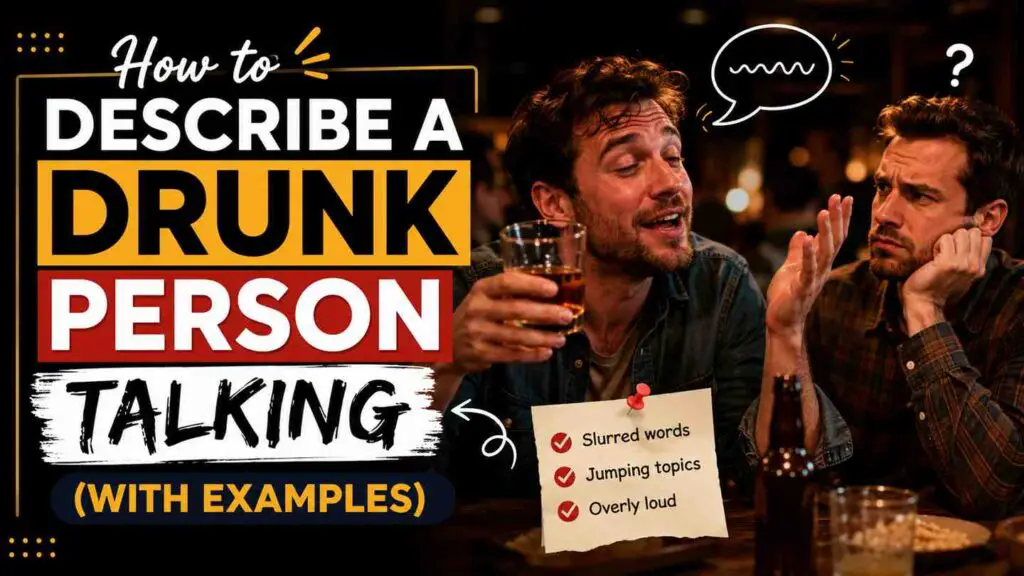
When someone is drunk, their speech often changes in noticeable ways, and these changes can vary depending on how intoxicated they are. At lower levels, the differences might be subtle—slightly slower responses, a bit more laughter, or a relaxed tone. As intoxication increases, however, the effects become more obvious. They may slur words, repeat themselves, speak too loudly, lose their train of thought, or say things with less control than usual. Their pronunciation may become uneven, their pacing irregular, and their ability to form clear, logical sentences may weaken.
Describing this kind of speech well can make writing feel more realistic and immersive, whether it appears in fiction, dialogue, a scene description, or character analysis. It can also help reveal important details about a character’s emotional state, personality, or situation. For example, a character who becomes loud and overconfident when drunk may come across very differently from one who becomes quiet, withdrawn, or tearful.
The key is to describe the sound, rhythm, clarity, and emotional tone of the person’s speech, rather than simply stating that they are drunk. Paying attention to how their words come out, how they interact with others, and how their speech affects the mood of the scene will make the description more vivid and believable. Here are useful ways to describe a drunk person talking, with examples.
How to Describe a Drunk Person Talking
#1. Slurred Speech
Slurred speech is one of the most common ways to describe a drunk person talking. This means their words run together, sound unclear, or come out with softened consonants. They may sound like they are struggling to shape the words properly. Depending on how intoxicated they are, only a few words may be slurred, or nearly every sentence may become difficult to understand. Writers can also describe the listener’s reaction, such as asking the speaker to repeat themselves or struggling to understand what was said. Mentioning specific sounds that blur together or words that become nearly unrecognizable can make the description feel more authentic.
“I’m not drunk,” he mumbled, though the words came out thick and tangled.
Her speech was so slurred that half her sentence seemed to melt into the next.
#2. Rambling
A drunk person may talk in a long, wandering way without getting to the point. Their thoughts may jump from one subject to another. This can make their speech sound confusing or unfocused. They often begin one story, interrupt themselves with an unrelated memory, and never return to the original topic. Rambling dialogue can reveal that the speaker has lost the ability to organize their thoughts logically. It may also create humor, frustration, or sympathy depending on the context of the scene.
He rambled about his old job, his childhood dog, and the meaning of life, all in the same breath.
She kept talking in circles, drifting from one story to another without finishing any of them.
#3. Repeating Words or Phrases
Alcohol can make someone repeat the same idea several times. They may not realize they have already said it. This can make the conversation feel awkward, funny, or sad depending on the scene. Repetition often happens because the person loses track of what they have already said or believes a point is more important than it actually is. Writers can show this by having the character repeat entire sentences, favorite expressions, or key emotions throughout the conversation. This repetition can also highlight the person’s emotional state, such as excitement, guilt, or affection.
“You’re my best friend,” he said for the fifth time, pointing unsteadily across the table.
She kept repeating, “No, listen, listen,” even though everyone was already listening.
#4. Speaking Too Loudly
A drunk person may lose awareness of volume. They might shout in a quiet room or speak with unnecessary force. This can show that they are uninhibited or unaware of their surroundings. They may believe they are speaking normally while everyone else hears them across the room. Loud speech often attracts attention from other characters and can make the speaker appear confident, disruptive, or oblivious. Describing people’s reactions—such as turning to stare or asking them to quiet down—can strengthen the realism of the scene.
His voice boomed across the restaurant, drawing stares from nearby tables.
She leaned in close but still spoke as if she were calling across a crowded street.
#5. Mumbling
Mumbling happens when someone speaks too quietly or unclearly. A drunk person might mumble because they are tired, dazed, emotional, or physically unsteady. Instead of speaking clearly, they may trail off at the end of sentences or keep their head lowered so that their words become difficult to hear. Mumbling often forces other characters to ask for clarification or guess what was said. Combining mumbling with slow speech or slurred pronunciation can make the dialogue feel especially convincing.
He mumbled something into his glass, too low for anyone to understand.
Her words faded into a sleepy mumble as her head sank against the couch.
#6. Overly Emotional Speech
Alcohol can make emotions stronger or harder to hide. A drunk person may speak with sudden affection, anger, sadness, or dramatic intensity. Their words may feel exaggerated or uncontrolled. Someone who normally hides their feelings may suddenly confess deep emotions or react intensely to minor events. Their tone may shift quickly from laughter to tears or from friendliness to irritation. Showing these emotional swings can reveal important aspects of the character while making the dialogue feel believable.
“I just love everybody here,” she said, wiping her eyes with the back of her hand.
His voice cracked as he said, “Nobody ever understands me.”
#7. Incoherent Speech
Incoherent speech means the person’s words are difficult or impossible to understand. The sentence may not make sense, or the words may be jumbled together. At higher levels of intoxication, the speaker may abandon one sentence halfway through and begin another without any logical connection. Grammar, word choice, and sentence structure may all break down. Writers should use incoherent dialogue sparingly, however, because if too much of it is unreadable, it can become frustrating for readers. Often, a few broken phrases are enough to suggest the effect.
He tried to explain what happened, but the sentence collapsed into a string of broken words.
What she said sounded important to her, but none of it made sense to anyone else.
#8. Delayed Responses
A drunk person may take longer to answer. Their reactions can seem slow because they are struggling to process what was said. This can make dialogue feel heavy, awkward, or comedic. Long pauses, confused facial expressions, or blank stares before answering can all suggest intoxication without directly mentioning alcohol. Sometimes the person answers a completely different question because they have forgotten what was asked. These delayed responses can also slow the pace of a scene, emphasizing the character’s impaired thinking.
He blinked at the question for several seconds before answering.
She opened her mouth, paused, frowned, and then said, “Wait, what were we talking about?”
#9. Overconfident Talking
Some drunk people speak with boldness they would not normally have. They may make big claims, interrupt others, or talk as if they know everything. Alcohol can reduce self-consciousness, causing people to exaggerate their abilities or express opinions more forcefully than usual. They might boast about accomplishments, insist they are perfectly sober, or volunteer for tasks they are clearly unable to perform. Showing this misplaced confidence can create humor while also revealing the character’s lack of self-awareness.
“Trust me,” he said, swaying slightly. “I know exactly what I’m doing.”
She gave a confident speech about politics, though she could barely pronounce half the words.
#10. Giggly or Silly Speech
Drunk speech can also sound playful, silly, or full of laughter. The person may laugh at their own words, mispronounce things, or find ordinary ideas hilarious. They might make childish jokes, invent nicknames, or become amused by events that others consider completely ordinary. Their speech may be interrupted by uncontrollable laughter or frequent giggles. This type of dialogue often works well in lighthearted scenes, although excessive silliness can also hint that the character has lost control of their behavior.
She tried to say “refrigerator” three times and burst into laughter each time.
He giggled through the whole sentence, making it impossible to tell what the joke was.
Closing Thoughts
Describing a drunk person talking is about more than saying they “sounded drunk.” Strong writing shows the details. Focus on how the words come out, how the person behaves while speaking, and how others react to them.
A drunk person might slur, ramble, repeat themselves, mumble, shout, or speak with exaggerated emotion. The best description depends on the tone of the scene. A funny scene might focus on silly mistakes and loud confidence. A serious scene might focus on incoherence, sadness, or loss of control.