
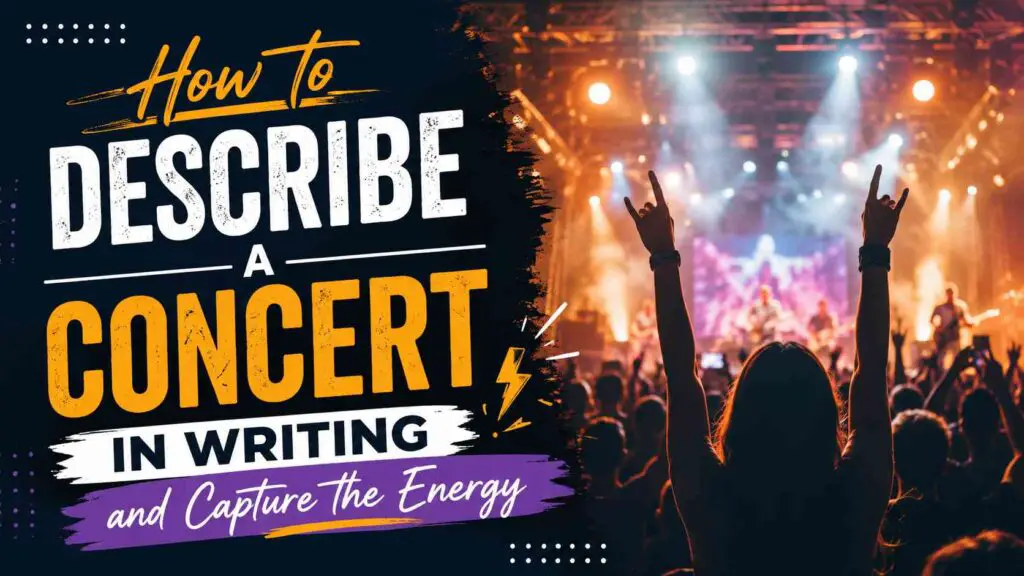
A concert is more than music played on a stage. It is sound, movement, light, emotion, crowd energy, and atmosphere all unfolding at the same time. Whether it is an intimate acoustic performance in a small venue or a massive stadium show with dazzling effects, every concert creates a unique experience that can leave a lasting impression on those who attend.
When describing a concert in writing, the goal is not only to tell readers what happened. The goal is to make them feel as if they were standing in the crowd, hearing the first note, watching the lights flash, and feeling the excitement build with every song. Strong concert writing immerses readers in the moment by combining sensory details with vivid descriptions of the performers, the audience, and the emotions that fill the venue.
Strong concert writing uses sensory detail, emotional language, vivid verbs, and careful pacing. It captures both the big moments and the small details that make the experience memorable, helping readers experience the concert through your words.
How to Describe a Concert in Writing
To describe a concert well, focus on the entire experience rather than simply listing what happened on stage. The music is the centerpiece, but the atmosphere, the performers, the audience, the venue, and the emotions all work together to create the event. Paying attention to these different elements allows you to write descriptions that feel lively and immersive. The following techniques will help bring any concert scene to life.
#1. Describe the Atmosphere Before the Music Starts
The energy of a concert begins long before the first song is played. The anticipation in the venue sets the tone for everything that follows. Describe the waiting crowd, conversations, stage setup, lighting, sounds, and even the smells of the venue. These details build suspense and help readers feel that they are waiting alongside the audience for the performance to begin.
The crowd buzzed with restless excitement as the lights dimmed. Phones rose into the air, voices blended into one loud hum, and the empty stage seemed to pulse with possibility.
Fans pressed against the barrier, chatting excitedly while stagehands made final adjustments. Every glance toward the curtain seemed to increase the feeling that something unforgettable was about to happen.
#2. Use Sound Details to Bring the Music Alive
Music is at the heart of every concert, so your writing should make readers almost hear it. Instead of simply saying the music was loud or enjoyable, describe the different instruments, the rhythm, the volume, and the way the sound filled the space. Explain how the music affected both the audience and the atmosphere. Rich sound descriptions make the performance feel much more vivid.
The first drumbeat cracked through the arena like thunder. The bass rolled beneath the floor, deep and heavy, while the guitar cut through the noise with a sharp, electric cry.
Each piano note drifted gently through the hall before the orchestra swelled into a rich wave of sound that wrapped around the audience like a warm embrace.
#3. Show the Crowd’s Reaction
The audience is just as important as the performers because their reactions reveal the emotional impact of the concert. Describe cheering, singing, dancing, clapping, laughter, tears, or moments of complete silence. Showing how different people respond helps readers understand the excitement and shared experience that concerts create.
When the chorus began, thousands of voices rose together. Strangers threw their arms around each other, singing every word as if the song belonged to them.
The audience erupted into applause after the final note, their cheers echoing through the venue as people leaped to their feet in a standing ovation.
#4. Capture the Movement on Stage
Concerts are full of movement that adds excitement and personality to the performance. Describe how the musicians move across the stage, interact with each other, or connect with the audience. Their gestures, expressions, and body language can reveal confidence, passion, or emotion, making the performance feel dynamic rather than static.
The singer raced across the stage, pointing the microphone toward the crowd. The guitarist leaned back under the spotlight, fingers flying over the strings as the audience roared louder.
The violinist swayed with every phrase while the drummer lifted each stick high before striking with perfect precision, their movements matching the music’s intensity.
#5. Describe the Lighting and Visual Effects
Visual elements often transform a concert into a complete sensory experience. Lighting, video screens, lasers, smoke, pyrotechnics, and stage design all contribute to the mood of each song. Describe how these visual effects change throughout the performance and how they complement the music to create unforgettable moments.
Blue lights washed over the stage like moonlight, then exploded into gold as the beat dropped. Smoke curled around the performers, making them look almost unreal.
A curtain of sparkling lights shimmered behind the band while beams of crimson and violet swept across the audience, turning the entire arena into a sea of color.
#6. Focus on Emotion
A memorable concert is remembered not only for the songs but also for the emotions it creates. Think about how the music made people feel and how those emotions spread through the crowd. Whether the atmosphere is joyful, nostalgic, hopeful, or emotional, describing those feelings helps readers connect with the scene on a deeper level.
For a few minutes, the entire room seemed to breathe with the song. People closed their eyes, held up their lights, and stood completely still, caught in the same quiet feeling.
As the final ballad filled the room, smiles softened into tears, and even the loudest fans fell silent, overwhelmed by the emotion of the moment.
#7. Use Strong Verbs and Specific Language
Word choice has a major impact on how energetic your writing feels. Replace weak or general words with vivid verbs that show action and intensity. Specific language paints a clearer picture and helps readers imagine both the movement and the sound of the performance without relying on vague descriptions.
The drums pounded, the lights flashed, and the singer’s voice soared above the crowd until the whole venue seemed to shake with sound.
The spotlight swept across the audience as the guitarist launched into a blistering solo that electrified every corner of the stadium.
#8. Include Small, Memorable Details
The little details often make a concert description feel authentic. Notice the objects, expressions, and moments that many people overlook. These small observations add realism and help readers picture themselves inside the venue rather than simply reading about it from a distance.
By the final song, the floor was scattered with paper cups and silver confetti. My hands stung from clapping, and my voice had faded into a rough whisper.
A forgotten guitar pick rested near the edge of the stage while glowing wristbands flickered across the audience like tiny stars in the darkness.
#9. Build the Scene Toward a High Point
Most concerts gradually build excitement as they progress. Your writing should reflect that natural rise in energy by showing how the atmosphere changes from one moment to the next. Highlight the increasing excitement until it reaches a memorable climax, whether during the biggest hit, a surprise performance, or the encore.
Each song pulled the crowd higher. By the encore, everyone was on their feet, shouting for one more chorus as the band returned under a storm of white lights.
The energy climbed steadily until the final performance exploded with fireworks, confetti, and thunderous applause that seemed to continue long after the music stopped.
#10. End With the Afterglow
The concert experience continues even after the final note has faded. Describe what remains once the music ends—the lingering emotions, exhausted voices, ringing ears, smiling faces, and the slow departure of the crowd. Ending with these details gives readers a satisfying sense of closure while emphasizing the lasting impact of the performance.
Outside, the night felt strangely quiet. People walked away smiling, still singing pieces of the final song, carrying the rhythm with them into the street.
As the lights came on, the audience slowly drifted toward the exits, reluctant to leave behind the excitement that had filled the venue only moments before.
Closing Thoughts
Describing a concert in writing means capturing more than what was played. It means showing the sound, movement, emotion, lights, crowd, and atmosphere that make the experience unforgettable. The best concert descriptions help readers feel the anticipation before the first note, the rush of energy during the performance, and the lingering excitement after the final song fades.
When writing about a concert, use vivid details, strong verbs, and emotional moments. Make the reader hear the music, see the lights, and feel the crowd’s excitement. That is how concert writing becomes powerful, memorable, and full of life.