
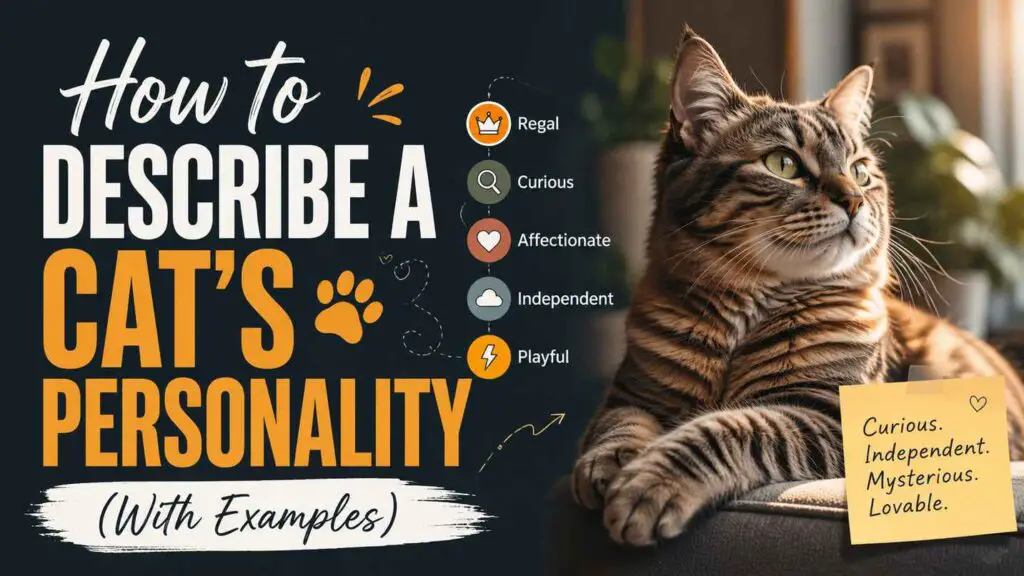
Cats have unique personalities that make each one memorable in its own way. While two cats may look similar, their behavior, preferences, and interactions with people can be completely different. Some cats are outgoing and affectionate, while others are quiet observers who prefer their own space. Their personalities are shaped by factors such as breed, early experiences, environment, and individual temperament.
Knowing how to describe a cat’s personality can help you communicate what makes a particular cat special. Whether you’re writing a pet adoption profile, telling a story, creating a social media post, or simply sharing information about your own pet, using specific personality traits makes your description much more vivid and engaging. Instead of relying on general words like “cute” or “sweet,” you can paint a clearer picture by explaining how the cat behaves in everyday situations.
Below are many helpful ways to describe a cat’s personality.
How to Describe a Cat’s Personality
Cats can be described through their habits, moods, social behavior, energy level, and unique quirks. The best descriptions often combine personality traits with specific examples of behavior. Here are some clear and expressive ways to describe a cat’s personality.
#1. Affectionate
An affectionate cat loves attention and enjoys being close to people. This kind of cat may rub against your legs, curl up in your lap, follow you from room to room, or purr when touched.
Affectionate cats often develop deep emotional bonds with their owners and actively seek companionship throughout the day. They may greet family members at the door, sleep beside them at night, or gently ask for pets by nudging a hand or climbing onto a lap. Their loving nature makes them comforting companions who enjoy spending as much time as possible with the people they trust.
Milo is an affectionate cat who loves curling up beside his owner every evening and purring softly whenever he is stroked.
#2. Playful
A playful cat is full of energy and curiosity. It enjoys toys, games, chasing objects, climbing furniture, and pouncing on anything that moves.
Playful cats stay mentally and physically active by turning ordinary objects into exciting adventures. They often enjoy interactive toys, laser pointers, climbing trees, and games that challenge their hunting instincts. Even adult cats with playful personalities frequently retain the enthusiasm and excitement of kittens, making them entertaining companions who bring life to any home.
Luna is a playful cat who spends her mornings chasing toy mice across the floor and leaping after feather wands.
#3. Independent
An independent cat enjoys affection but also values personal space. This cat may not constantly seek attention, but it still feels comfortable and secure in the home.
Independent cats are confident enough to entertain themselves for long periods and do not rely on constant interaction with their owners. They often decide when they want affection and when they would rather relax alone. Although they may seem distant at times, they often build strong bonds with their families while maintaining their own routines and preferences.
Oliver is an independent cat who likes sitting by the window for hours, quietly watching the world outside.
#4. Curious
A curious cat wants to explore everything. It investigates bags, boxes, new furniture, open cupboards, and unfamiliar sounds.
Curious cats constantly observe their surroundings and rarely ignore something new. They enjoy investigating unfamiliar smells, climbing into unexpected places, and carefully inspecting anything that changes within their environment. Their inquisitive nature keeps them mentally stimulated and often leads to amusing discoveries around the house.
Cleo is a curious cat who inspects every grocery bag, climbs into every box, and watches every movement with bright, alert eyes.
#5. Gentle
A gentle cat has a soft, calm, and kind nature. It may move carefully, respond quietly, and interact peacefully with people or other pets.
Gentle cats usually avoid rough play and respond to people with patience and tenderness. They often approach others slowly, tolerate handling well, and remain relaxed even in busy households. Their calm disposition makes them excellent companions for families, seniors, and anyone looking for a peaceful pet.
Bella is a gentle cat who approaches people softly, rests beside them quietly, and rarely uses her claws during play.
#6. Shy
A shy cat is cautious around people, places, or sounds. It may hide when visitors arrive or take time to trust someone new.
Shy cats often need additional time to feel safe in unfamiliar situations. Rather than immediately approaching strangers, they prefer observing from a distance until they feel comfortable. With patience, consistency, and gentle care, many shy cats gradually become affectionate companions who develop deep trust with the people they know best.
Nora is a shy cat who hides under the sofa when guests visit but slowly comes out when the house becomes quiet again.
#7. Confident
A confident cat moves through the world with ease. It is not easily frightened and often takes charge of its environment.
Confident cats are comfortable exploring new places, meeting unfamiliar people, and adapting to changes in their surroundings. They typically carry themselves with relaxed body language and rarely hesitate to investigate something interesting. Their self-assured personality often makes them natural leaders among other pets.
Leo is a confident cat who walks into every room like he owns it and calmly greets every visitor at the door.
#8. Vocal
A vocal cat communicates often through meows, chirps, trills, or other sounds. It may “talk” when hungry, excited, lonely, or simply wanting attention.
Vocal cats use a wide range of sounds to express their emotions and needs. Some carry on conversations with their owners throughout the day, while others announce mealtimes, greet family members, or comment on birds outside the window. Their expressive communication often makes them feel especially interactive and engaging.
Simba is a vocal cat who meows every morning for breakfast and chirps happily whenever someone speaks to him.
#9. Mischievous
A mischievous cat enjoys getting into trouble in a funny or harmless way. It may knock things off shelves, steal small objects, open drawers, or hide in unexpected places.
Mischievous cats are usually intelligent, curious, and highly motivated to explore their surroundings. They often create their own entertainment by testing boundaries or discovering clever ways to reach places they probably shouldn’t. Although they can cause occasional frustration, their playful antics are often amusing and become favorite family stories.
Toby is a mischievous cat who knocks pens off the desk, hides socks under the bed, and looks innocent afterward.
#10. Calm
A calm cat has a relaxed and peaceful personality. It does not get excited easily and often enjoys quiet spaces, slow movements, and regular routines.
Calm cats tend to handle everyday life with patience and composure. They enjoy comfortable resting places, gentle affection, and predictable routines rather than constant excitement. Their relaxed personality often creates a soothing atmosphere in the home, making them wonderful companions for quieter households.
Sophie is a calm cat who spends most afternoons sleeping in a sunny spot and quietly watching the house around her.
#11. Loyal
A loyal cat forms a strong attachment to its favorite person. It may follow that person around, sleep near them, and seek comfort from them.
Loyal cats build lasting relationships based on trust and familiarity. While they may not seek attention from everyone, they often remain close to the person they love most. Their devotion is shown through consistent companionship, quiet affection, and a desire to stay nearby throughout the day.
Max is a loyal cat who follows his owner from room to room and waits outside the bedroom door every morning.
#12. Dramatic
A dramatic cat reacts strongly to small events. It may make loud sounds, flop onto the floor, stare intensely, or act offended when ignored.
Dramatic cats have expressive personalities that make even ordinary moments feel entertaining. They often exaggerate their reactions to delayed meals, closed doors, or interrupted naps. Their theatrical behavior can be both humorous and endearing, making them unforgettable members of the household.
Ruby is a dramatic cat who throws herself onto the floor when dinner is late and stares at everyone as if she has been deeply wronged.
#13. Social
A social cat enjoys being around people or other animals. It may greet visitors, sit near conversations, and involve itself in household activity.
Social cats thrive on interaction and usually enjoy participating in family life. They are often eager to meet new people, investigate visitors, and spend time wherever activity is happening. Their outgoing personalities make them adaptable companions who enjoy being included in everyday routines.
Charlie is a social cat who greets guests at the door and always finds a place in the middle of every family gathering.
#14. Reserved
A reserved cat is quiet and selective. It may not show affection openly, but it can still be loving in subtle ways.
Reserved cats often express their affection through quiet companionship rather than constant attention-seeking. They may choose to sit nearby instead of on someone’s lap or silently observe family activities from a comfortable distance. Once they trust someone, their loyalty and affection can be just as strong as that of more outgoing cats.
Ivy is a reserved cat who rarely seeks attention, but she quietly sits beside her owner every evening.
#15. Adventurous
An adventurous cat enjoys exploring, climbing, and discovering new spaces. It may love high shelves, open doors, gardens, or window views.
Adventurous cats are naturally brave and eager to experience new environments. They enjoy climbing, investigating hidden corners, and finding creative ways to reach places that seem impossible. Providing them with safe opportunities to explore helps satisfy their curiosity while keeping them mentally and physically engaged.
Oscar is an adventurous cat who climbs every shelf, investigates every open door, and turns the house into his personal kingdom.
Closing Thoughts
Describing a cat’s personality is about noticing the little details that make the cat unique. A cat may be affectionate but independent, playful but gentle, shy but loyal, or calm with a mischievous streak. The strongest descriptions combine clear personality words with real behavior.
Instead of simply saying a cat is “nice,” describe how it acts. Does it follow people around? Hide from strangers? Chirp at birds? Demand attention? Sleep beside its owner? These small details help create a vivid and memorable picture of the cat’s true character.