
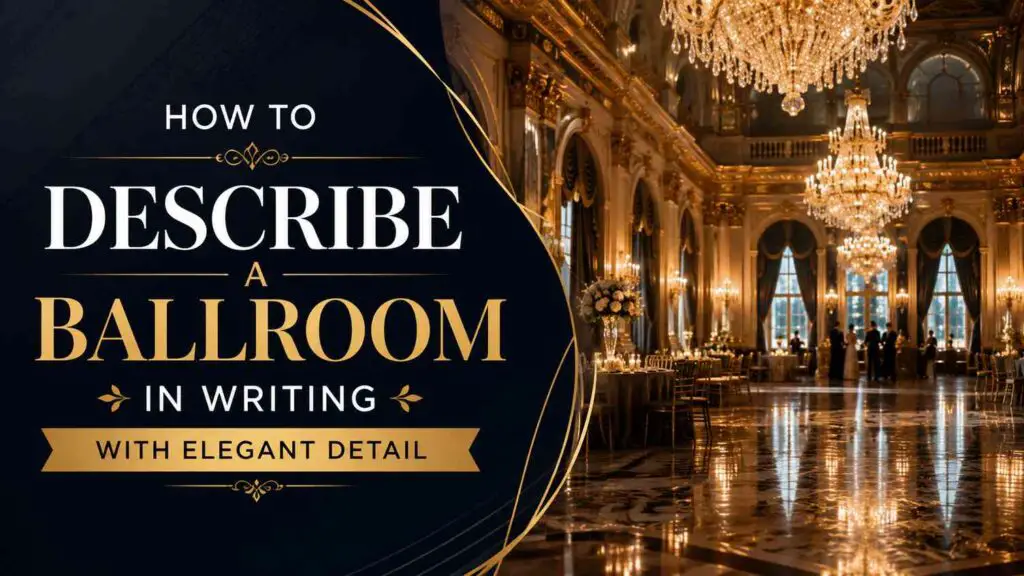
A ballroom is more than a large room with polished floors and glittering chandeliers. In fiction, it can become the backdrop for romance, political intrigue, celebration, heartbreak, or life-changing encounters. Whether your story takes place in a royal palace, a grand hotel, or a historic manor, the way you describe the ballroom shapes the reader’s impression of both the setting and the events unfolding within it.
The most memorable ballroom descriptions go beyond listing decorative features. They immerse the reader in the atmosphere by combining vivid sensory details with the emotions of the characters. Light, music, movement, texture, and mood all work together to transform an elegant hall into a scene that feels vibrant and unforgettable. The following techniques will help you describe a ballroom with elegance, depth, and realism.
How to Describe a Ballroom in Writing With Elegant Detail
#1. Describe the Size and Grandeur
One of the first things readers should notice is the scale of the ballroom. Grand ballrooms are designed to impress, and their size often reflects the wealth, power, or prestige of those who own them. Instead of simply stating that the room is large, describe the soaring ceilings, sweeping dance floor, towering columns, or expansive walls. Comparing the room to familiar images can also help readers appreciate its immense proportions.
Examples:
The ballroom stretched before her like a golden lake, its polished floor reflecting the chandeliers that floated high above like captured stars.
The ceiling rose so far overhead that every whisper seemed to climb into the shadows before returning as a soft echo.
#2. Focus on Light and Reflection
Lighting is one of the defining features of an elegant ballroom. Chandeliers, candles, tall windows, and mirrors create layers of light that constantly shift as people move across the room. Reflections can make the ballroom appear even larger while adding sparkle and warmth to the scene. Describing how light dances across polished surfaces helps readers experience the beauty rather than simply visualize it.
Examples:
Candlelight trembled across the mirrors, multiplying the dancers until the room seemed filled with ghosts of silk and jewels.
The chandeliers poured warm light over the ballroom, turning every glass, gem, and silver button into a tiny flame.
#3. Show the Movement of the Dancers
A ballroom rarely feels alive without movement. The graceful motion of dancers is often what transforms an elegant room into a living, breathing setting. Describe the way couples glide across the floor, gowns swirl through the air, and dancers weave effortlessly around one another. Smooth, flowing language can mirror the rhythm of the dance itself, helping readers feel as though they are watching the scene unfold.
Examples:
The dancers moved in graceful circles, their gowns brushing the floor like petals caught in a slow current.
Couples turned beneath the chandeliers, their steps so smooth they seemed to drift rather than dance.
#4. Use Sound to Build Atmosphere
A ballroom is filled with layers of sound that contribute to its atmosphere. Music often takes center stage, but quieter sounds can be just as important. The rustle of expensive fabrics, the click of polished shoes, soft laughter, whispered conversations, and the gentle clink of crystal glasses all combine to create a rich auditory experience. Including these subtle sounds helps readers feel immersed in the environment.
Examples:
The music rose from the far end of the room, bright and delicate, weaving through laughter and the soft scrape of slippers on marble.
Every step, every whisper, every clink of crystal seemed polished by the grandeur of the room.
#5. Mention Textures and Materials
The finest ballrooms are built with luxurious materials that immediately communicate elegance and refinement. Marble floors, carved wood, silk draperies, velvet curtains, gold accents, and crystal chandeliers all contribute to the room’s visual richness. Instead of naming these materials in a list, describe how they look, feel, or interact with light to create a more vivid and immersive description.
Examples:
Velvet curtains framed the tall windows, their deep folds heavy as midnight against the pale marble walls.
Gold trim curled along the panels, and beneath it the floor gleamed with the smooth perfection of polished wood.
#6. Capture the Mood of the Scene
A ballroom’s appearance may stay the same, but its emotional atmosphere can change dramatically depending on the story. The room may feel joyful during a celebration, romantic during a first dance, intimidating during a royal gathering, or tense when hidden conflicts simmer beneath polite smiles. Allow the emotional tone of the moment to influence every part of the description so that the setting supports the narrative rather than simply decorating it.
Examples:
Though the room glittered with laughter and music, she felt alone beneath its brilliance, as if the chandeliers exposed every secret she carried.
The ballroom shone with celebration, but beneath the music ran a quiet tension, sharp as a blade hidden under silk.
#7. Describe the People as Part of the Setting
The guests themselves are an essential part of the ballroom’s elegance. Their clothing, posture, expressions, and interactions help define the atmosphere just as much as the architecture does. Rather than treating people as separate from the setting, weave them naturally into the description. Their movements, conversations, and appearance reveal social customs, wealth, relationships, and hidden tensions within the room.
Examples:
Lords and ladies gathered beneath the painted ceiling, their jewels flashing as they traded smiles too perfect to be trusted.
The guests moved like ornaments brought to life, dressed in satin, lace, and polished black, each one carefully placed within the glittering scene.
#8. Add Small, Specific Details
Sometimes the smallest details make a ballroom feel the most believable. A single wilted flower, a crack in an ornate mirror, a forgotten glove, or a chandelier that sways ever so slightly can make the setting feel lived in rather than perfectly staged. These carefully chosen details also help reinforce the mood, whether it is joyful, mysterious, nostalgic, or foreboding.
Examples:
A single rose petal lay crushed near the edge of the dance floor, bright red against the pale marble.
Above the musicians, one crystal on the chandelier trembled with each deep note of the cello.
Closing Thoughts
To describe a ballroom well, focus on more than its beauty. Show its scale, light, sound, movement, textures, and emotional atmosphere. A ballroom should not feel like a static room. It should feel alive with music, elegance, secrets, and motion.
The best descriptions make the reader sense both the luxury of the space and the meaning it holds in the scene. Whether the ballroom is romantic, tense, joyful, or lonely, every detail should serve the mood of the story.