
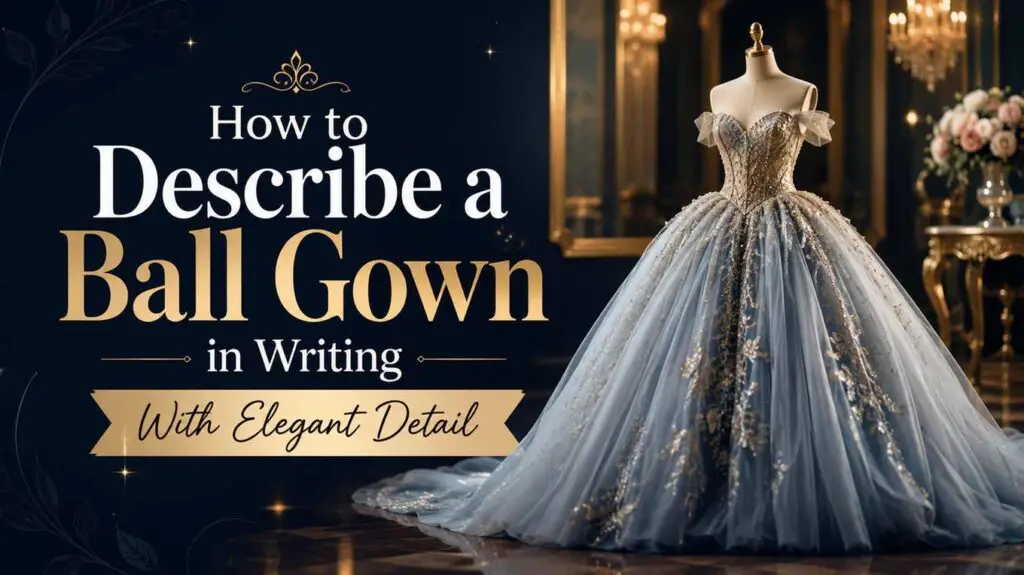
A ball gown is one of the most dramatic garments a character can wear. It carries beauty, status, movement, history, and emotion all at once. In writing, describing a ball gown is not only about naming the fabric or color. It is about showing how the dress looks, how it moves, how it changes the room, and how it makes the character feel.
A strong description should help the reader see the gown clearly without slowing the story down. The best details are elegant, specific, and connected to the mood of the scene. Rather than overwhelming readers with every feature, choose the details that matter most to the moment. Those details should reveal something about the setting, the character, or the atmosphere surrounding the event.
The following techniques will help create vivid, memorable descriptions that make a ball gown feel like an important part of the story instead of just another piece of clothing.
How to Describe a Ball Gown in Writing With Elegant Detail
#1. Describe the Silhouette
The silhouette is the overall shape of the gown, and it is often the first feature readers notice. Before they picture the fabric, the embroidery, or the color, they instinctively imagine the outline of the dress. A classic ball gown usually has a fitted bodice and a dramatically full skirt, but there are many variations depending on the setting, time period, and fashion style.
When describing the silhouette, focus on how the dress occupies space. Is it grand enough to fill a ballroom? Does it have graceful curves or sharp, structured lines? Does it appear soft and flowing or formal and regal? Comparing the silhouette to familiar objects such as flowers, clouds, bells, or waves can make the image more vivid without becoming overly complicated.
The silhouette can also reflect the personality of the character. A dramatic, sweeping gown may suggest confidence or high social status, while a softer, simpler shape may communicate elegance, innocence, or quiet refinement.
The gown narrowed at her waist before blooming into a vast skirt of ivory silk, as though the moon itself had unfolded around her.
Her dress held the classic shape of a queen’s portrait, fitted through the bodice and expanding into a magnificent sweep of satin that followed her every step.
#2. Focus on the Fabric
Fabric gives a ball gown much of its personality because different materials interact with light and movement in unique ways. Simply naming the fabric can help readers picture the dress, but explaining how the material behaves creates a much stronger image.
Silk and satin often appear smooth, glossy, and luxurious. Velvet conveys richness, warmth, and weight. Tulle creates softness and volume, while chiffon gives the impression of lightness and graceful motion. Lace introduces delicacy and intricate craftsmanship, while brocade suggests wealth and historical elegance.
As the character moves, the fabric can ripple, rustle, shimmer, drape, float, or fold in distinctive ways. These qualities make the gown feel tangible and help readers imagine not only how it looks but also how it behaves throughout the scene.
Layers of pale blue tulle floated around her like mist, softening each movement until she seemed less to walk than to drift.
The gown was made of deep emerald velvet, rich and heavy, catching the candlelight in quiet flashes of green.
#3. Show the Color With Atmosphere
Color does much more than identify the appearance of the gown. It establishes mood, reinforces symbolism, and shapes the reader’s emotional response. Rather than stating that a dress is simply blue or red, connect its color to something meaningful that readers can immediately picture.
Natural imagery works especially well. Colors can resemble moonlight, autumn leaves, fresh snow, polished gemstones, ocean waves, or blooming flowers. These comparisons make descriptions richer while avoiding repetitive color words.
Color can also reveal character traits or hint at the emotional tone of the scene. White may symbolize innocence or celebration, black may suggest mystery or authority, crimson often communicates passion or confidence, while gold naturally conveys luxury and prestige.
Her gown was the color of winter dawn, a soft silver-blue that shimmered whenever she turned beneath the chandeliers.
The dress glowed in a shade of wine-dark red, rich enough to make every candle in the room seem dimmer.
#4. Describe the Bodice
The bodice is one of the most detailed areas of a ball gown and often serves as the visual centerpiece. Because it frames the face and upper body, readers naturally notice it during introductions, conversations, and dances.
When describing the bodice, pay attention to its shape, neckline, sleeves, decorations, and construction. It may be tightly corseted, softly draped, embroidered with flowers, covered in lace, or decorated with pearls, gemstones, or metallic thread. Even small details can communicate elegance and craftsmanship.
The style of the bodice can also reveal aspects of the character. A modest neckline may suit a reserved personality, while an elaborate beaded design might emphasize wealth, confidence, or royal status. By selecting only a few carefully chosen details, the description remains vivid without becoming excessive.
The bodice was shaped close to her figure, embroidered with tiny silver vines that curled toward her shoulders.
Pearls traced the edge of the sweetheart neckline, each one catching the light like a drop of morning dew.
#5. Bring Attention to the Skirt
The skirt is usually the most dramatic feature of a ball gown. Its size, movement, and layers often dominate the visual impression and become especially noticeable as the character walks, dances, or enters a room.
Describe how full the skirt is, how many layers it appears to have, and how it reacts to movement. A skirt may billow outward, trail gracefully behind its wearer, swirl during a dance, or spread across a staircase like flowing water. These details help transform a static description into a living image.
You can also emphasize how the skirt interacts with its surroundings. It may brush polished marble floors, gather softly on carpet, or sweep through candlelit halls. These environmental details strengthen the atmosphere while making the gown feel naturally integrated into the setting.
The skirt swept across the marble floor in waves of cream satin, whispering softly with every step.
Beneath the outer layer of lace, the underskirts moved like hidden clouds, giving the gown its grand, weightless shape.
#6. Include Embellishments
Embellishments provide the finishing touches that distinguish an ordinary dress from an unforgettable ball gown. They demonstrate craftsmanship, wealth, tradition, and attention to detail, adding visual richness without requiring lengthy descriptions.
Common embellishments include pearls, crystals, sequins, embroidery, lace appliqués, ribbons, floral designs, metallic thread, gemstones, and delicate beadwork. Rather than listing every decorative element, focus on two or three features that stand out the most. Readers remember carefully selected details far better than exhaustive inventories.
Consider how the embellishments interact with light and movement. Tiny crystals may sparkle with every step, embroidered flowers may catch subtle shadows, and pearls may reflect soft candlelight. These interactions make the decorations feel alive within the scene.
Tiny crystals were sewn across the bodice and sleeves, so fine and scattered that they looked like frost.
Gold embroidery climbed the skirt in delicate branches, each thread gleaming against the pale ivory silk.
#7. Show How the Gown Moves
Movement transforms a ball gown from a static object into something dynamic and memorable. Since ball gowns are designed for walking, dancing, turning, and making grand entrances, describing their motion helps readers experience the elegance of the scene.
Instead of focusing only on appearance, describe how the dress responds to every action. The skirt may flare outward during a spin, ripple across the floor with each step, or settle gently after the character comes to a stop. Even subtle movements such as the swaying of sleeves or the whisper of fabric contribute to a realistic image.
Strong action verbs make these descriptions especially effective. Words like billowed, floated, glided, swirled, rustled, swept, and flowed create a vivid sense of motion without requiring lengthy explanations.
When she turned, the skirt followed a heartbeat later, circling her in a soft rush of satin and air.
The gown rustled as she crossed the hall, its layered hem brushing the floor like a secret being whispered.
#8. Connect the Dress to the Character
A memorable description does more than explain what the gown looks like. It reveals how the character experiences wearing it. This emotional connection turns clothing into an important storytelling device instead of a decorative detail.
Ask how the gown affects the character. Does it make them feel confident, nervous, elegant, trapped, powerful, or transformed? Perhaps the dress symbolizes a new beginning, a heavy responsibility, or an uncomfortable social expectation. These emotional layers make the description far more meaningful than physical details alone.
Showing the character’s reactions also helps readers connect emotionally with the scene. A magnificent gown can represent excitement for one character while symbolizing anxiety or isolation for another.
In the gown, she looked every inch a princess, though her hands trembled slightly against the jeweled bodice.
The dress was magnificent, but it wore her as much as she wore it, turning each breath into a performance.
#9. Use Light to Add Elegance
Light dramatically changes the appearance of a ball gown and often creates the most memorable visual moments. Whether illuminated by chandeliers, candles, moonlight, stained glass, or the morning sun, the same dress can appear entirely different depending on the lighting.
Describe how light interacts with the fabric, colors, and embellishments. Satin may gleam softly, velvet may deepen into richer shades, crystals may sparkle brightly, and sheer fabrics may appear almost translucent. These details give the description greater depth and realism.
Lighting can also reinforce the emotional atmosphere of the scene. Warm candlelight often creates romance and intimacy, while cool moonlight can make a gown seem mysterious, magical, or almost unreal.
Under the chandelier, the gown shimmered from white to silver, as if it had been woven from moonlight.
Candlelight slid across the satin folds, turning each movement into a quiet flash of gold.
#10. Keep the Description Balanced
One of the biggest challenges when describing a ball gown is knowing when to stop. Because these dresses contain countless beautiful details, it can be tempting to describe every fold, jewel, and stitch. In most stories, however, a focused description creates a stronger impact than an exhaustive one.
Choose the details that best support the scene. If the character is making a grand entrance, emphasize movement and silhouette. If the scene is intimate, highlight textures and emotional reactions. If status or wealth matters, focus on luxurious fabrics and intricate embellishments.
Remember that readers enjoy filling in small gaps with their imagination. By selecting only the most striking details, the description remains elegant, memorable, and easy to read while allowing the story itself to continue moving forward.
She entered in a gown of midnight satin, its full skirt sweeping behind her and its beaded bodice catching the light like a field of stars.
The dress was simple at first glance, pale rose silk with a wide flowing skirt, but every step revealed a hidden shimmer beneath the folds.
Closing Thoughts
Describing a ball gown in writing is about more than appearance. It is about creating a visual moment that feels elegant, emotional, and alive. The gown should have shape, texture, color, movement, and meaning.
The best descriptions do not list every detail. They choose the right details. A full skirt sweeping across marble, pearls shining at the neckline, velvet darkening in candlelight, or tulle floating like mist can say more than a paragraph of plain description.
When written well, a ball gown becomes part of the story. It can reveal status, beauty, discomfort, transformation, romance, or power. With the right words, the dress does not simply appear on the page. It enters the room.