
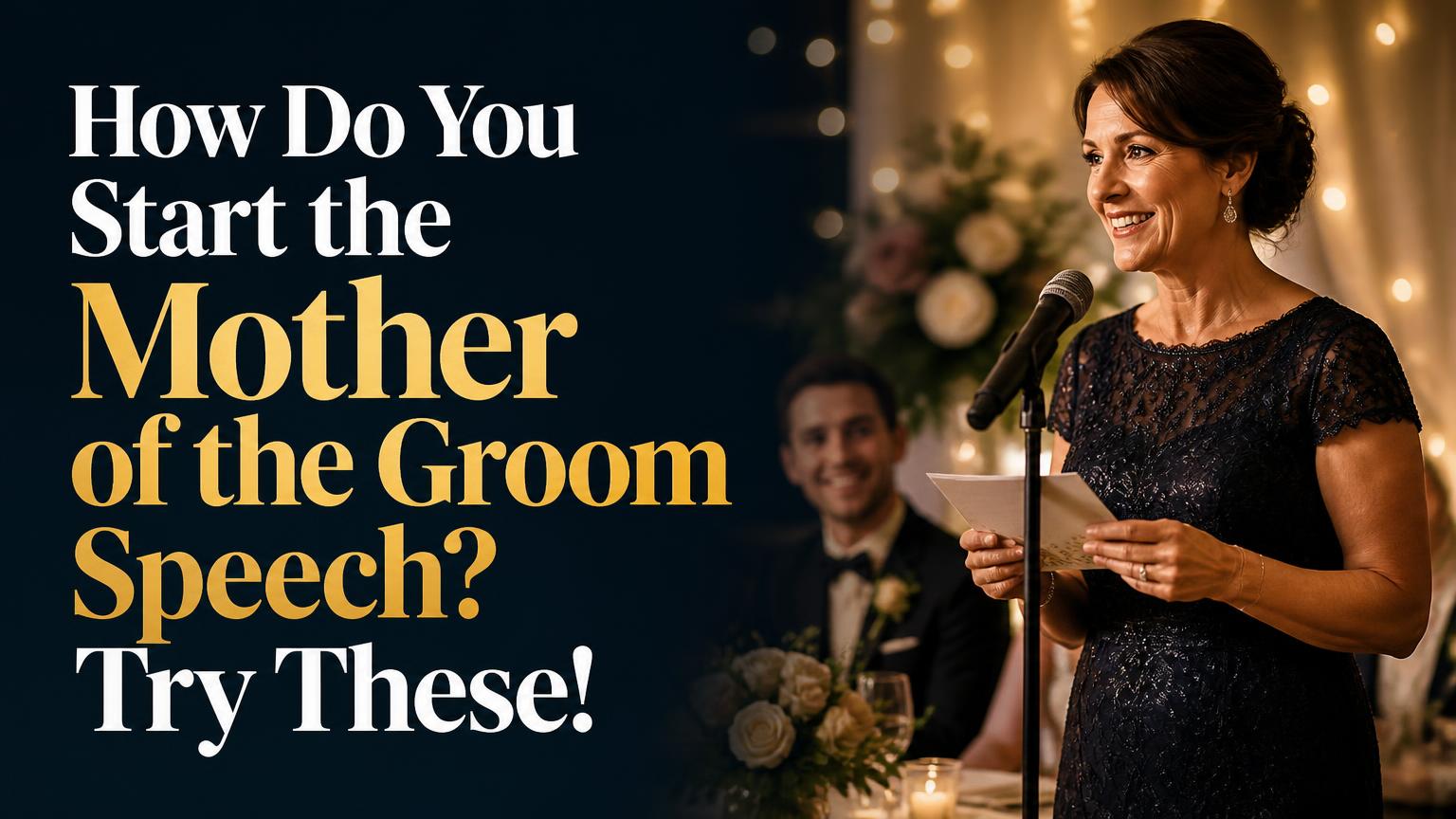
Starting a mother of the groom speech can feel more difficult than writing the rest of it. You want to welcome guests, honor the couple, acknowledge the bride or groom’s family, and express your feelings without making the speech entirely about your son. The best opening is warm, brief, and easy to deliver aloud. Below, you’ll find several ways to begin, along with sample wording, timing advice, and practical delivery tips you can adapt to your relationship, wedding style, and audience.
How Do You Start the Mother of the Groom Speech? A Practical Guide
The strongest opening usually combines four elements: a greeting, a brief introduction, thanks to the guests, and a warm statement about the couple. You do not need to include all four in a formal sequence, and you do not need to sound highly polished or ceremonial. A sincere, conversational beginning often feels more memorable than an elaborate one.
Choose the approach that best matches your personality. If you are naturally formal, begin with a gracious welcome. If you prefer a personal style, start with a feeling or short memory. If the wedding atmosphere is relaxed, a gentle observation may work well. Whatever you choose, move fairly quickly from your opening to the couple so the speech feels generous rather than self-focused.
Start With a Warm Welcome
A simple welcome is a reliable choice for almost any wedding. It acknowledges the people gathered in the room and creates a gracious tone without requiring a joke, dramatic story, or carefully crafted quotation. This approach works especially well for a formal reception or when you feel nervous and want wording that is easy to remember.
You might begin: “Good evening, everyone. It means so much to see so many family members and friends here to celebrate [Groom’s Name] and [Partner’s Name]. As his mother, I feel deeply grateful to share this day with all of you.” From there, introduce your central thought about the couple or the meaning of the occasion.
Thank the Guests for Being There
Thanking the guests gives your speech an immediate sense of purpose and recognizes the effort people have made to attend. You can mention those who have traveled, helped organize the wedding, or supported the couple over the years. Keep the acknowledgment inclusive rather than listing many individual names unless the couple or venue expects that.
A natural opening might be: “Thank you all for being here to celebrate this wonderful couple. Some of you have traveled a long way, while others have supported them through everyday moments that brought them to this day. Your presence says a great deal about how loved [Groom’s Name] and [Partner’s Name] are.” This leads smoothly into your thoughts about their relationship.
Introduce Yourself and Your Connection
If many guests do not know you, identify yourself early. You can say that you are the groom’s mother, but add one brief sentence about what it means to stand there. This helps the audience understand your perspective without turning the opening into a detailed family history.
For example: “For anyone I have not yet had the pleasure of meeting, I’m [Your Name], [Groom’s Name]’s mother. I have had the privilege of watching him grow from [brief, authentic reference] into the person standing here today, and I am delighted to see him begin this new chapter with [Partner’s Name].” Replace the bracketed detail with something specific but not overly private.
Welcome the Couple and Their Families
A mother of the groom can use the opening to recognize both partners and, where appropriate, welcome the other family. This is particularly useful when the families are meeting for the first time or when the wedding brings together people from different places and backgrounds. Avoid language that suggests one family is claiming or acquiring the other person.
You could say: “Today is a celebration of two people, but it is also a meeting of families and communities. [Partner’s Name], we are so happy to celebrate you and the happiness you and [Groom’s Name] have found together. To your family and friends, thank you for sharing this day with us.” Adjust “welcome” or “family” to suit your relationship and the couple’s preferences.
Share a Brief Personal Feeling
Beginning with an honest feeling can make the speech sound intimate without becoming overly emotional. Name the feeling and connect it to the couple rather than spending several minutes describing your own reaction. Happiness, gratitude, pride, affection, and fondness are all suitable when expressed simply.
Try: “When I look at [Groom’s Name] and [Partner’s Name] today, I feel proud, grateful, and very happy for them. A wedding day can seem like a single moment, but it reflects all the choices, conversations, and acts of care that brought two people here. I am thankful to witness the beginning of this next part of their life together.” This opening gives you a calm bridge into a memory or observation.
Use Light, Suitable Humor
A gentle observation can relax the room, especially if humor comes naturally to you. Keep the joke affectionate and connected to the wedding, your own perspective, or a harmless family detail. Avoid embarrassing stories, references to former partners, comments about children or money, and anything that could make the couple or their families uncomfortable.
For instance: “I had planned to begin with a very dignified speech, but then I remembered that [Groom’s Name] once gave me a detailed explanation of why he absolutely did not need advice. Fortunately, meeting [Partner’s Name] seems to have taught him that listening can be a very good idea. More seriously, we are all thrilled to see the two of them so happy together.” Only use this style if the story is true and the audience will understand the affection behind it.
How Long Should the Opening Be?
For most mother of the groom speeches, the opening can last roughly thirty seconds to one minute. That is enough time to greet the room, identify yourself if necessary, thank guests, and establish the feeling or theme of the speech. It does not need to contain your best story or explain the entire history of the couple’s relationship. The opening’s job is to welcome the audience and prepare them for what follows.
Let the venue’s schedule, the couple’s instructions, and the overall number of speeches guide your timing. If several people are speaking, a concise opening is considerate. If you have been asked to give a longer, more personal speech, you can take a little more time, but move from general welcomes to meaningful content without repeating the same greetings. Read your opening aloud with a timer so you know how it feels in real time.
Delivering the Opening With Confidence
A strong opening depends not only on the words but also on how comfortably you deliver them. You do not need to appear perfectly calm. Your goal is to be understandable, present, and sincere. A little emotion often makes a wedding speech feel genuine, while preparation prevents that emotion from taking over the first few sentences.
Rehearse the First Few Sentences
Memorize or thoroughly practice the first two or three sentences rather than trying to memorize the entire speech. The opening is often the moment when nerves feel strongest, so knowing exactly how to begin gives you a steady starting point. Practice standing up, holding your notes, and speaking at the volume you will use at the reception.
Say the words aloud several times, not just silently. Spoken language may reveal sentences that feel too formal, too long, or unlike your natural voice. If a phrase makes you stumble, replace it. A simple sentence you can deliver comfortably is more effective than an impressive sentence you cannot say with ease.
Use Notes Without Reading Every Word
A printed page or small set of cue cards can help you stay organized. Use large, readable type and leave enough space between paragraphs to find your place quickly. You may write the opening in full if that makes you feel secure, then use brief prompts for later sections such as “first meeting,” “quality I admire,” and “final toast.”
Look up regularly, especially after the greeting and before the main personal point. Reading every word with your eyes fixed on the page can make a warm speech feel distant. If you lose your place, pause, glance down, and continue. The audience is unlikely to notice a short pause as much as you will.
Pace Yourself and Use Pauses
Nervous speakers often rush through the opening without realizing it. Aim for a measured pace, and pause briefly after the greeting, after a humorous line, and before an emotional statement. These pauses give guests time to respond and give you time to breathe. They also make your words easier to understand in a busy reception room.
Mark pauses directly on your draft with a slash or extra space. Read the speech aloud while imagining background conversation, music, or room noise. If a sentence sounds crowded, divide it into two shorter sentences. Clear delivery matters more than fitting every idea into the opening.
Share Eye Contact With the Room
Begin by looking at the couple, then include the wider audience as you continue. Eye contact does not require staring at one person; you can look at several friendly faces for a sentence or two before returning to your notes. If looking directly at people makes you uncomfortable, focus just above their eyes or choose a few calm points around the room.
Make sure your attention includes both partners. A mother of the groom may naturally look at her son, but the speech should honor the couple together. Turning toward [Partner’s Name] when you welcome or praise them can make the opening feel more personal and balanced.
Plan for Emotion and Unexpected Moments
If you expect to become emotional, prepare a quiet recovery plan. Take a breath, pause, sip water, and look at your notes until you are ready to continue. It is perfectly acceptable to say, “I’m going to take a moment,” rather than pretending nothing is happening. You can also ask someone trustworthy to hold a backup copy of the speech.
Plan for practical interruptions as well. The microphone may squeak, guests may respond loudly, or someone may need to move through the room. Stop if necessary, wait for the room to settle, and resume from your last complete sentence. You are participating in a celebration, not taking an examination.
Closing Thoughts
The best way to start a mother of the groom speech is to choose language that sounds like you while making room for the whole couple. Begin with a welcome, a thank-you, a personal feeling, or a light observation, then move naturally toward the relationship you are celebrating. Keep the opening focused and kind, practice it aloud, and allow yourself to pause. A sincere beginning will give the rest of your speech a confident, generous foundation.