
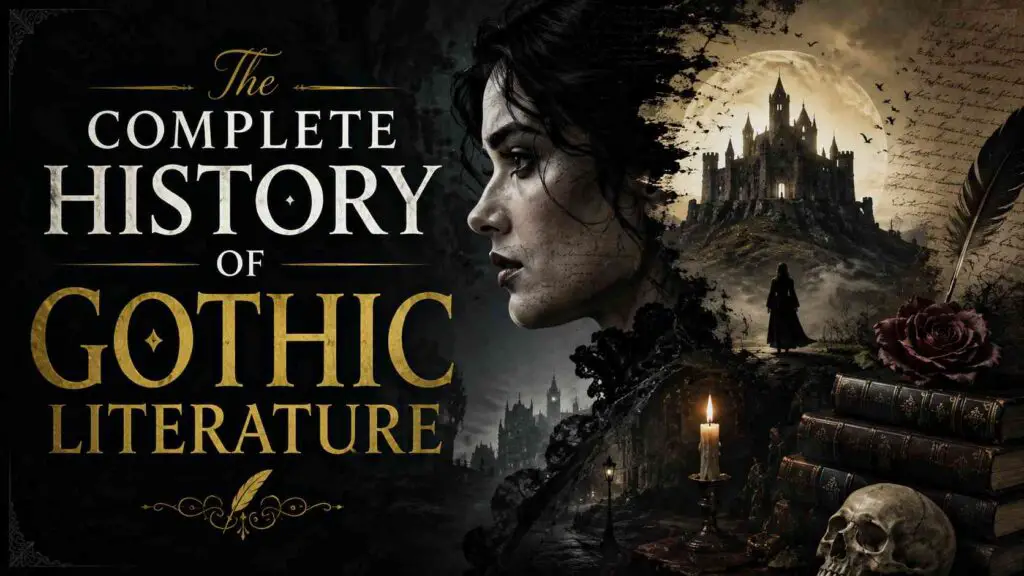
Gothic literature is one of the most influential and enduring literary traditions in history. Known for its dark atmospheres, mysterious settings, supernatural elements, and psychological tension, the genre has captivated readers for more than two centuries. Emerging in the late eighteenth century, Gothic literature reflected social anxieties, cultural changes, and a fascination with the unknown. From haunted castles and tragic heroes to tales of madness and terror, Gothic fiction has evolved while retaining its distinctive characteristics. Understanding the history of Gothic literature provides valuable insight into how the genre developed and why it continues to shape modern horror, fantasy, and popular culture.
The History of Gothic Literature
The Origins of Gothic Literature in the 18th Century
The history of Gothic literature begins during the late eighteenth century, a period marked by significant social, political, and intellectual change. The Age of Enlightenment emphasized reason, science, and rational thinking, but many writers and readers sought stories that explored emotion, mystery, and the supernatural. This desire gave rise to Gothic fiction.
The term “Gothic” originally referred to medieval architecture characterized by towering cathedrals, dark corridors, and elaborate designs. Writers borrowed these atmospheric settings to create stories filled with suspense, fear, and wonder. Gothic literature emerged as a reaction against strict rationalism, embracing imagination and emotional intensity instead.
These early works often featured isolated castles, ancient secrets, supernatural events, and characters confronting forces beyond their control. Such elements laid the foundation for a genre that would continue evolving for centuries.
Horace Walpole and the Birth of the Gothic Novel
Most literary historians identify Horace Walpole’s novel The Castle of Otranto (1764) as the first Gothic novel. Walpole combined medieval settings, supernatural occurrences, family curses, and dramatic conflicts into a unique narrative that differed from other literature of the time.
The novel introduced many conventions that became central to Gothic fiction. Readers encountered mysterious castles, hidden passages, supernatural interventions, and intense emotional experiences. Walpole intentionally blended realism with fantasy, creating a style that fascinated audiences.
Although some critics initially viewed the work as unusual or excessive, its popularity inspired numerous authors to experiment with similar themes and settings. As a result, The Castle of Otranto established the foundation upon which future Gothic literature would be built.
The Rise of Early Gothic Fiction
Following Walpole’s success, Gothic fiction rapidly gained popularity throughout Britain and Europe. Writers expanded upon the genre’s themes and developed new approaches to creating suspense and terror.
One of the most influential authors of this period was Ann Radcliffe. Her novels, including The Mysteries of Udolpho, emphasized atmosphere, psychological fear, and mysterious events that often received rational explanations. Radcliffe’s works helped define what became known as the “Female Gothic” tradition.
Another important figure was Matthew Lewis, whose novel The Monk pushed Gothic fiction toward darker and more shocking territory. Lewis incorporated explicit horror, supernatural forces, and moral corruption, demonstrating the genre’s capacity to explore disturbing themes.
By the end of the eighteenth century, Gothic fiction had become one of the most popular literary genres in Britain.
Gothic Literature During the Romantic Era
The Romantic movement significantly influenced the development of Gothic literature during the late eighteenth and early nineteenth centuries. Romantic writers valued imagination, emotion, individual experience, and the power of nature, all of which aligned closely with Gothic themes.
During this period, Gothic stories increasingly explored the inner lives of characters. Psychological conflict became as important as external threats. Writers examined obsession, guilt, loneliness, and the darker aspects of human nature.
Mary Shelley’s Frankenstein (1818) represents one of the most important Gothic works of the Romantic era. Combining Gothic atmosphere with scientific speculation, the novel explored themes of creation, responsibility, isolation, and humanity’s pursuit of forbidden knowledge.
The Romantic period expanded Gothic literature beyond haunted castles and supernatural events, transforming it into a vehicle for philosophical and psychological exploration.
The Victorian Expansion of Gothic Themes
The Victorian era witnessed a significant transformation of Gothic literature. While traditional Gothic settings remained popular, writers increasingly focused on fears associated with urbanization, scientific advancement, and social change.
Victorian Gothic fiction often explored the duality of human nature. Authors examined the contrast between public respectability and hidden corruption. This concern reflected broader societal anxieties about morality and identity.
Notable works from this period include Robert Louis Stevenson’s Strange Case of Dr. Jekyll and Mr. Hyde and Bram Stoker’s Dracula. Both novels used supernatural or extraordinary circumstances to investigate deeper questions about human behavior, temptation, and societal fears.
Victorian writers also incorporated emerging scientific theories and psychological ideas into their stories, creating a more complex and sophisticated form of Gothic fiction.
Gothic Literature in the Early 20th Century
The early twentieth century brought new directions for Gothic literature. Traditional supernatural themes remained important, but writers increasingly emphasized psychological horror and existential anxiety.
The devastating effects of industrialization, war, and social upheaval influenced literary themes. Fear often emerged not from ghosts or monsters but from the human mind itself.
Writers such as H.P. Lovecraft expanded Gothic traditions through cosmic horror. His stories portrayed humanity as insignificant within a vast and indifferent universe. This approach introduced a new form of terror rooted in uncertainty and existential dread.
At the same time, Gothic elements became integrated into mystery fiction, psychological thrillers, and modern horror literature.
The Gothic Revival in Modern Literature
A Gothic revival emerged during the mid-to-late twentieth century as authors rediscovered and reinterpreted classic Gothic themes. Rather than simply imitating earlier works, modern writers adapted Gothic conventions to contemporary concerns.
Shirley Jackson’s The Haunting of Hill House exemplified this revival by blending supernatural ambiguity with psychological complexity. Readers were left uncertain whether the horror originated from external forces or the characters themselves.
Authors increasingly used Gothic settings and imagery to explore social isolation, trauma, family dysfunction, and personal identity. This evolution allowed the genre to remain relevant while preserving its traditional atmosphere of mystery and unease.
Contemporary Gothic Fiction and Its Evolution
Today, Gothic literature continues to thrive in diverse forms. Contemporary authors draw upon centuries of Gothic tradition while incorporating modern themes and perspectives.
Modern Gothic fiction often addresses issues such as mental health, gender identity, cultural conflict, environmental concerns, and technological anxiety. Settings have expanded beyond castles and monasteries to include suburban neighborhoods, abandoned institutions, and modern cities.
Contemporary Gothic works demonstrate the genre’s remarkable adaptability. Although specific themes and settings have evolved, the central fascination with fear, mystery, and the unknown remains unchanged.
Major Periods in Gothic Literature
Early Gothic Period (1764–1820)
This period established the foundations of Gothic literature. Writers introduced many of the genre’s defining conventions, including haunted settings, supernatural events, family secrets, and emotional intensity. Stories often took place in remote castles, monasteries, or ruins, creating a sense of isolation and vulnerability. Authors such as Horace Walpole and Ann Radcliffe shaped the genre by blending suspense with mystery, often leaving readers uncertain about whether events were supernatural or rationally explained. The emphasis on atmosphere and dramatic tension made this period essential in defining what Gothic literature would become.
Romantic Gothic Period (1790–1850)
Romantic influences encouraged greater emphasis on imagination, individual experience, and psychological complexity. Gothic literature became increasingly concerned with the inner struggles of its characters. Writers explored themes such as obsession, alienation, and the consequences of unchecked ambition. Nature also played a significant role, often reflecting the emotional states of characters through storms, darkness, and wild landscapes. Works like Mary Shelley’s Frankenstein demonstrated how Gothic fiction could merge emotional depth with philosophical questions about science, creation, and human responsibility.
Victorian Gothic Period (1837–1901)
Victorian Gothic fiction explored social anxieties, scientific developments, and moral contradictions. Themes of duality, degeneration, and hidden corruption became especially prominent. Authors examined the tension between outward respectability and inner darkness, reflecting concerns about rapidly changing social structures. Urban settings became more common, replacing isolated castles with crowded cities that concealed danger beneath their surface. Novels such as Dracula and Dr. Jekyll and Mr. Hyde used supernatural or symbolic elements to explore fears related to identity, morality, and the unknown consequences of scientific progress.
Modern Gothic Period (1900–1950)
Writers shifted toward psychological and existential forms of horror. Traditional supernatural themes were often combined with modern concerns about identity, sanity, and humanity’s place in the universe. The horrors depicted in this period were frequently internal, focusing on mental instability, paranoia, and existential dread. Influenced by global conflicts and rapid technological change, authors explored the fragility of human understanding and the limits of rational thought. Figures like H.P. Lovecraft expanded Gothic traditions by introducing cosmic horror, emphasizing humanity’s insignificance in an incomprehensible universe.
Contemporary Gothic Period (1950–Present)
Contemporary Gothic literature continues to evolve by addressing modern social and cultural issues while preserving the genre’s enduring fascination with fear, mystery, and darkness. Writers experiment with new settings, including suburban homes, abandoned institutions, and digital spaces, while maintaining the genre’s atmospheric tension. Themes such as trauma, identity, gender, and societal alienation are frequently explored through Gothic frameworks. Authors like Shirley Jackson and later contemporary writers have blurred the line between psychological and supernatural horror, ensuring that Gothic literature remains relevant and adaptable in the modern literary landscape.
Common Themes Found Throughout Gothic Literary History
Fear of the Unknown
Many Gothic stories center on unexplained events, mysterious forces, and hidden truths. Fear often arises from uncertainty rather than direct confrontation. This theme is frequently expressed through dark, unfamiliar settings such as abandoned castles, remote landscapes, or shadowy corridors where danger is implied but not fully revealed. Authors use ambiguity to heighten tension, allowing readers to imagine threats that may be more terrifying than anything explicitly described. The unknown often represents deeper anxieties about death, the afterlife, or forces beyond human comprehension.
The Conflict Between Reason and Emotion
Gothic literature frequently explores tensions between rational thinking and emotional experience. Characters often struggle to reconcile logic with extraordinary events. This conflict reflects broader cultural debates, particularly during the Enlightenment and Romantic periods, about the limits of reason. Protagonists may attempt to explain supernatural occurrences through science or logic, only to find their understanding challenged by intense fear, passion, or irrational impulses. This tension creates psychological depth and highlights the fragility of human certainty when confronted with the inexplicable.
Corruption and Moral Decline
The genre commonly examines the destructive consequences of greed, obsession, ambition, and moral failure. Gothic narratives often depict characters who are consumed by their desires, leading to personal ruin or harm to others. This theme can be seen in villains who abuse power, as well as in protagonists who gradually succumb to temptation or guilt. Settings such as decaying mansions or crumbling institutions often symbolize this moral deterioration, reinforcing the idea that corruption affects both individuals and the environments they inhabit.
Identity and Duality
Questions of identity appear throughout Gothic history. Characters may possess hidden personalities, secret pasts, or conflicting desires that create internal conflict. This theme often explores the idea that individuals are not entirely what they seem, revealing darker aspects beneath outward appearances. Duality can manifest through literal doubles, split personalities, or symbolic contrasts between good and evil. By examining these divisions, Gothic literature raises questions about self-awareness, repression, and the complexity of human nature.
Humanity Versus the Supernatural
Many Gothic narratives place human beings in confrontation with supernatural forces, exploring themes of vulnerability, belief, and the limits of human understanding. Characters may encounter ghosts, monsters, or otherworldly entities that challenge their perception of reality. These encounters often force individuals to question their beliefs and confront their fears. The supernatural can serve as a metaphor for internal struggles or societal anxieties, while also emphasizing humanity’s limited control over the unknown forces that shape existence.
Conclusion
The history of Gothic literature spans more than 250 years, evolving from eighteenth-century tales of haunted castles into a diverse and influential literary tradition. Throughout its development, Gothic fiction has reflected cultural anxieties, explored psychological depths, and challenged readers to confront the unknown. Its influence can be seen across horror, fantasy, mystery, and popular culture. As society changes, Gothic literature continues to adapt while preserving its core themes of fear, mystery, and human vulnerability. The genre’s enduring popularity demonstrates its unique ability to captivate audiences and illuminate the darker corners of human experience.