
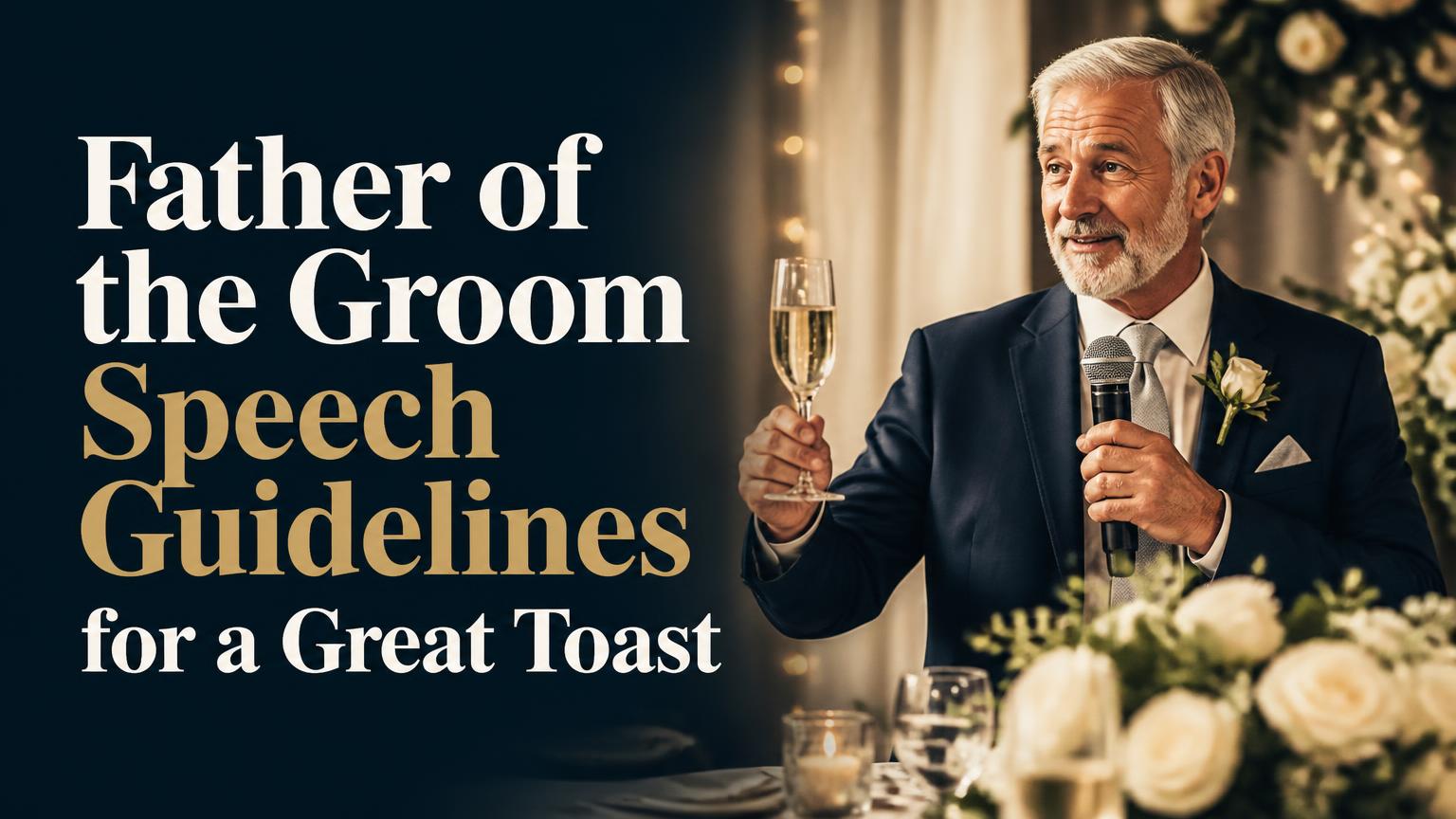
A father of the groom speech should welcome guests, honor the couple, and give the wedding a warm personal moment without becoming a history lesson about the groom. The best toast is usually brief, specific, and generous to both partners. These father of the groom speech guidelines explain what to include, how to organize your ideas, which subjects require care, and how to deliver your words with confidence while respecting the couple’s wishes and the character of the celebration.
Father of the Groom Speech Guidelines for Writing and Delivering a Great Toast
Step 1. Clarify Your Role and Purpose
Your role is usually to speak as the groom’s parent while also welcoming and honoring the person he is marrying. At many weddings, the father of the groom offers appreciation to guests, shares a few meaningful observations about the groom, acknowledges the couple’s families, and ends with a toast. These are common practices, not universal requirements, so confirm the couple’s plans before assuming a particular tradition applies.
Before writing, complete this sentence: “I want guests to leave this speech feeling…” Your answer might be “welcomed,” “happy for the couple,” or “aware of how proud I am.” That purpose will help you choose material. It will also prevent the speech from becoming a list of childhood stories, career accomplishments, or family jokes that do not connect clearly to the wedding.
Step 2. Choose One Central Message
A strong speech normally has one main idea rather than several unrelated themes. You might focus on how the groom’s character has developed, how well the couple supports each other, or how grateful you are to welcome a new member into the family. Choose a message that can guide every story and observation you include.
For example, your central idea might be: “I have always admired [Groom]’s loyalty, and it is wonderful to see him bring that same loyalty to his marriage with [Partner].” Once you have this focus, keep only material that supports it. A central message gives the toast shape and makes the ending feel earned rather than suddenly added.
Step 3. Open with a Warm, Direct Welcome
Begin by acknowledging the occasion and the people who have gathered. You do not need a dramatic quotation or an elaborate joke. A simple opening can be more effective: “Thank you all for being here to celebrate [Groom] and [Partner]. As his father, I am deeply pleased to see so many people who care about them gathered in one room.”
If appropriate, briefly introduce yourself, especially if many guests do not know you. Then move quickly toward the couple. Avoid spending the first minute apologizing for being nervous, explaining how difficult writing was, or describing the logistics of the day. Guests already understand that a wedding speech carries emotion; they are listening for your genuine connection to the couple.
Step 4. Speak About the Groom with Specificity
Choose one or two qualities you have seen in the groom over time, and illustrate them with concise examples. Qualities such as patience, reliability, curiosity, humor, or generosity become more meaningful when connected to an observable moment. You might recall how he looked after a younger sibling, supported a friend, pursued a difficult goal, or made time for family.
Keep the examples relevant to the person he is today. A childhood story can work well if it reveals a lasting quality, but it should not suggest that the groom has not matured since then. Do not invent details for the sake of a better anecdote. A modest, true memory will usually sound more touching than an exaggerated story.
Step 5. Give the Couple Equal Attention
Although you are speaking as the groom’s father, the occasion celebrates a marriage, not only one person. Mention the partner by name, say what you appreciate about the relationship, and describe what you have noticed about them together. You might speak about their kindness toward each other, their ability to laugh together, or the calm and confidence they bring out in one another.
Avoid treating the partner as someone the groom has merely “won” or “brought home.” That language can make the speech feel outdated or dismissive. Instead, express genuine welcome and respect. If you do not know the partner well, you can still say something sincere about the happiness, steadiness, or affection you see in the couple’s relationship without pretending to have a long personal history.
Step 6. Include Thanks Without Taking Over
A father of the groom speech may include thanks to guests, both families, the wedding party, or people who helped make the celebration possible. Keep these acknowledgments focused. Mention the people the couple or family specifically asked you to recognize, and check whether another speaker has already been assigned this responsibility.
Thanking the couple for the invitation, welcoming guests who traveled, and recognizing the joining of families can add warmth. However, do not turn the speech into a complete roll call. Long lists of names can lose the audience and create the risk of leaving someone out. A few thoughtful sentences are more memorable than formal thanks delivered without personal meaning.
Step 7. Use Humor That Protects the Couple’s Dignity
Gentle humor can make a wedding toast feel relaxed, but it should invite everyone into the moment rather than make one person uncomfortable. Good subjects include a harmless family habit, the groom’s former overconfidence, or a light observation about how his priorities have changed. The joke should be understandable to guests who do not know the family well.
Avoid stories involving former partners, private arguments, embarrassing behavior, drinking, sexual details, financial matters, health concerns, or anything the couple has asked you not to mention. Never rely on a surprise joke at the partner’s expense. If you are unsure whether a story is appropriate, ask the couple or choose a different story. A wedding speech is not the place to test the limits of the audience.
Step 8. End with a Clear and Generous Toast
The close should bring your main message back to the couple and make the transition to the toast unmistakable. Offer a wish for their marriage that sounds personal rather than copied. You might wish them patience during difficult seasons, delight in ordinary days, and the confidence to continue choosing each other.
A simple ending could be: “I am proud of you, [Groom], grateful to welcome you, [Partner], and very happy to see the life you are beginning together. Please raise your glasses to [Groom] and [Partner]. May your marriage be filled with trust, laughter, and many good years ahead.” Adjust the wording to suit your voice, then pause so guests have time to raise their glasses.
Step 9. Edit for Speaking Time and Natural Delivery
A practical target for a father of the groom toast is often three to five minutes, unless the couple or venue has given different instructions. At roughly 120 to 140 spoken words per minute, that equals approximately 360 to 700 words. Shorter is usually preferable if several people are speaking, while a larger formal reception may allow a slightly longer tribute.
Read the speech aloud several times. Remove sentences that are difficult to say, repeated compliments, extra explanations, and jokes that need too much background. Mark places to pause after emotional statements or laughter. Use a large, readable printout or cue cards with only a few words per line. Rehearsing is not about sounding memorized; it is about knowing where the speech is going when emotion or interruption affects your pace.
Wedding Etiquette Questions to Settle Before the Big Day
Step 1. Confirm the Speaking Time and Order
Ask the couple, wedding planner, or master of ceremonies how long you should speak and when you will be introduced. The order can affect your content. If several people are offering toasts, you may not need to welcome guests or thank every contributor. If you are speaking early, a warm acknowledgment of both families may be especially useful.
Do not assume that a traditional order applies to every wedding. Some celebrations include speeches before dinner, while others schedule them between courses or after the meal. Knowing the format will help you write an appropriate opening, avoid repeating another speaker, and prepare for practical details such as whether you will have a microphone or need to stand at your table.
Step 2. Learn the Couple’s Boundaries
Before finalizing your speech, ask the couple whether there are subjects, names, stories, or surprises they would prefer you to avoid. This is especially important when family histories are complicated, when guests have different relationships with one another, or when the couple has chosen a small and intimate celebration.
You do not need to show the couple every word if they want the speech to remain a surprise, but you should respect clear boundaries. At minimum, confirm whether humor, childhood stories, mention of absent relatives, religious language, or personal details are welcome. A thoughtful speaker protects the couple from avoidable embarrassment rather than treating surprise as more important than comfort.
Step 3. Include Both Families with Care
A wedding may bring together people with different customs, expectations, and levels of familiarity. If you mention the groom’s family, look for a natural way to acknowledge the partner’s family and the support surrounding the couple. This does not require a long formal tribute. A sincere welcome can be enough: “We are grateful to [Partner’s Family] for the love and care they have given [Partner], and we are happy that our families are celebrating together.”
Avoid implying that one family is giving the other a person, losing a son, or gaining ownership of the couple’s future. Marriage does not have to be described as a transaction between families. Use language of welcome, respect, and shared joy, while recognizing that each couple may define family and belonging differently.
Step 4. Handle Cultural, Religious, and Family Differences
Wedding customs vary widely among families, cultures, religions, and venues. Some couples want a faith-based blessing; others prefer secular language. Some families expect formal acknowledgments, while others value a relaxed and conversational toast. There is no single wording that is correct for every wedding.
Ask what language and traditions fit this celebration. If you include a prayer, blessing, cultural greeting, or ceremonial reference, make sure you understand its intended use and pronounce unfamiliar names or words correctly. When you are uncertain, choose inclusive language that honors the couple without making assumptions about their beliefs. Respectful preparation is more important than trying to sound traditionally formal.
Step 5. Decide What to Leave Out
The strongest wedding speeches are shaped as much by omission as by inclusion. Leave out material that could embarrass the couple, divide the audience, or make the partner feel like an outsider. Avoid detailed accounts of the groom’s dating history, family conflicts, reckless behavior, private conversations, and stories that depend on alcohol or insider knowledge.
Also leave out apologies for your writing, comments about the speech being too long, and repeated statements about how emotional you are. If you become tearful, a brief pause is perfectly acceptable; you do not need to explain it repeatedly. Edit with this question in mind: “Does this help guests understand, appreciate, or celebrate the couple?” If not, it probably belongs outside the toast.
Closing Thoughts
A successful father of the groom speech does not require theatrical performance or perfect wording. It needs a clear purpose, a few truthful details, generous attention to both partners, and an ending that brings everyone into the celebration. Write for the people in the room, confirm the couple’s boundaries, keep the timing under control, and practice aloud. When your words sound like you—and when they place the marriage at the center—they will feel appropriate, memorable, and sincere.