
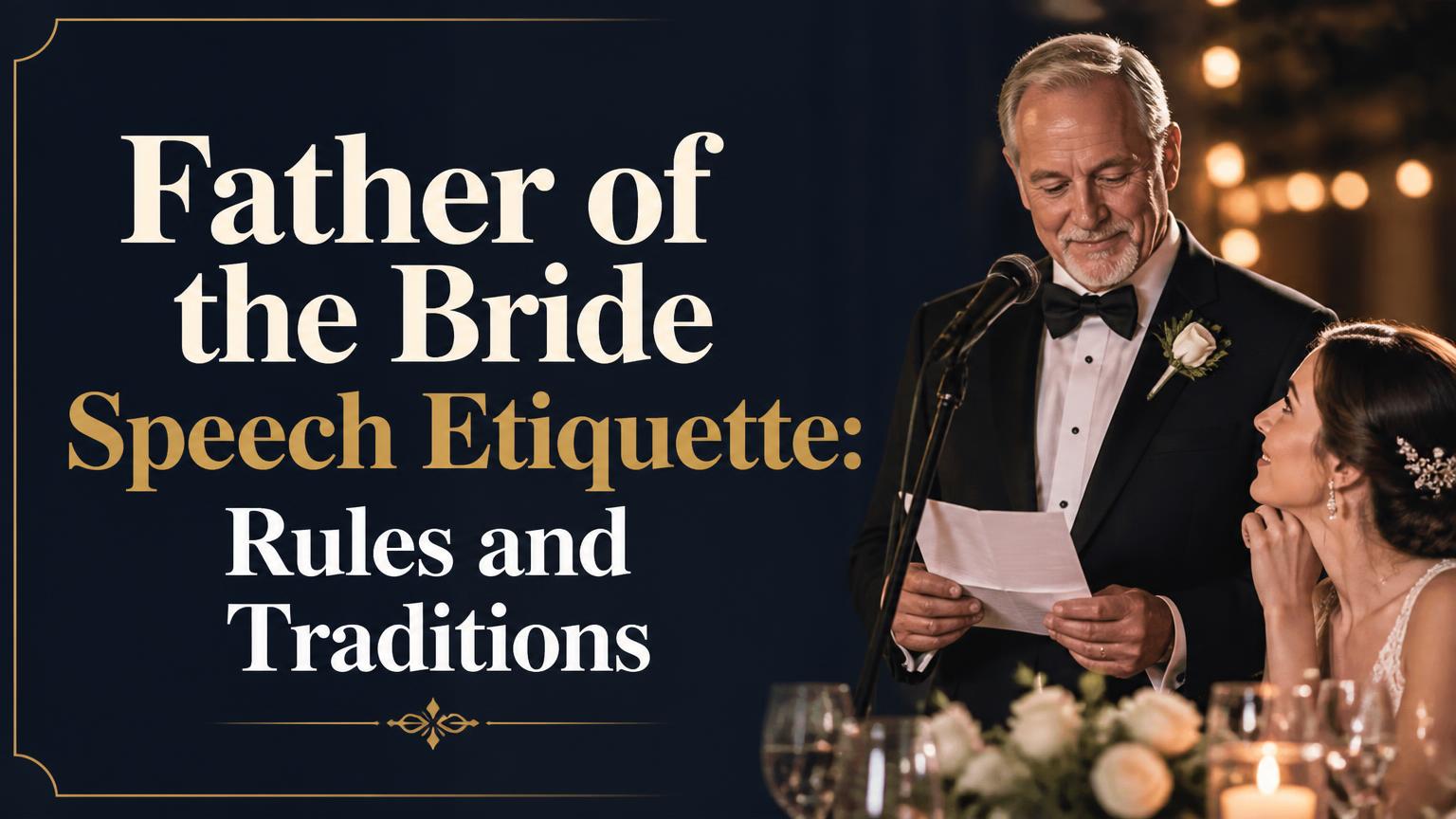
A father of the bride speech is traditionally warm, welcoming, and centered on the couple rather than on the father himself. Good etiquette matters because the speech often includes the first formal welcome to guests, a few personal reflections, thanks to those who helped, and a toast to the newly married couple. However, wedding customs vary widely. The father may be hosting, co-hosting, speaking alongside another parent, or taking part in a completely modern celebration. The guidance below explains established traditions while leaving room for the couple’s wishes, family circumstances, culture, and personality.
Father of the Bride Speech Etiquette: What Matters Most
The central rule is simple: honor the couple, respect the audience, and keep the speech personal without making it private. A father of the bride speech commonly welcomes guests, acknowledges the families and wedding party, shares a few appropriate memories of his daughter, recognizes her partner, and ends with good wishes and a toast. These are customary elements, not compulsory requirements. The couple may prefer a shorter speech, a shared family address, or no traditional father-of-the-bride role at all.
In most weddings, three to five minutes is a comfortable length, although the couple or wedding planner may set a different limit. A speech should be long enough to say something meaningful but short enough to preserve the pace of the reception. Speak about the bride with affection, but do not treat the marriage as her achievement alone. Include her spouse or partner as a full and valued part of the celebration, and avoid assuming that one family paid for the wedding, that the father is the host, or that traditional family roles apply.
How to Follow Father of the Bride Speech Etiquette
Choose the Couple’s Preferred Tone
Before writing, ask the couple what kind of speech they want. Some newlyweds welcome gentle humor and lively storytelling; others prefer a sincere, formal tribute. Their preference should guide your level of emotion, informality, and detail. A wedding reception may include children, older relatives, colleagues, and guests from different cultures, so material that seems harmless in a private family setting may not work in public.
The tone should feel like you, but it should also suit the occasion. Warm and conversational usually works better than stiffly ceremonial language. If the couple has asked for a brief welcome, do not turn it into a long personal address. If they have requested that certain family matters remain private, honor that request completely.
Plan a Clear, Moderate Length
A practical father of the bride speech often takes about three to five minutes when spoken at a natural pace. That usually allows time for a welcome, one or two personal memories, a few words about the couple, thanks, and a toast. The exact limit may depend on the reception schedule, the number of speakers, and the couple’s instructions.
Write for the time you have rather than trying to include every important memory. Choose one central idea, such as your daughter’s kindness, determination, humor, or ability to build strong relationships. Read the speech aloud with a timer. If it runs long, remove repeated compliments and secondary anecdotes before cutting the meaningful details that give the speech its personality.
Welcome Guests Without Claiming the Whole Occasion
Traditionally, the father of the bride may welcome guests and thank them for attending. This is especially natural when he is acting as a host, but it is not an assumption you need to make. Other parents, the couple, a celebrant, or a master of ceremonies may already have welcomed everyone.
A simple opening can acknowledge the gathering without suggesting that the wedding belongs to one family. You might thank guests for traveling, recognize those who could not attend, or express appreciation for the people who supported the couple. If the event has a specific cultural, religious, or family tradition, confirm the expected wording with the couple rather than relying on a general wedding script.
Speak About Both People in the Marriage
It is natural for a father to spend much of the speech describing his daughter, but the speech should also welcome and respect her spouse or partner. Mention what you have come to appreciate about them, a quality you admire, or the way they support one another. If you do not know the partner well, sincerity is more appropriate than exaggerated praise.
Avoid presenting the partner as someone who has “won permission” or “taken” your daughter. Those expressions may sound traditional, but they can make an adult relationship seem like a transfer of ownership. Focus instead on the couple’s shared qualities, their care for each other, and the life they are beginning together.
Select Memories That Belong in Public
The best stories reveal character and help guests understand the person you are honoring. A brief memory of your daughter helping someone, pursuing a goal, handling a challenge, or making the family laugh can be effective. Give the story enough context for people who were not there, and make sure it leads naturally to a quality you want to celebrate.
Avoid stories involving intoxication, sexual behavior, former partners, family conflict, serious embarrassment, or private medical information. Do not use the speech to settle an old disagreement or expose a secret. If you are unsure whether a story is appropriate, ask the bride or her partner before including it. Their wedding is not the right setting for a surprise disclosure.
Offer Thanks With Specificity and Balance
A father of the bride speech often includes thanks to guests, relatives, the wedding party, venue staff, vendors, and anyone who made the celebration possible. Keep these acknowledgments focused. A long list of names can lose the audience, while a brief specific sentence feels more genuine.
You do not need to imply that one person or family deserves exclusive credit. Weddings may be funded, organized, and supported by several people, or by the couple themselves. Thank those the couple wants recognized, pronounce names carefully, and coordinate with other speakers so that the same acknowledgments are not repeated several times.
End With a Toast to the Couple
The ending should give the speech a clear sense of completion. Express your hopes for the couple in language that reflects their actual relationship rather than relying on sweeping promises. You might wish them patience, laughter, companionship, courage during difficult seasons, and many ordinary happy days together.
Then invite the guests to raise their glasses if that suits the event. A toast does not need to make a claim about eternal perfection or prescribe how marriage should work. Keep it inclusive and direct: “Please join me in raising a glass to [Name] and [Name], and to the life they are building together.” If the couple has chosen a dry reception or a different ceremonial custom, follow that preference.
Traditional Elements and Modern Wedding Variations
The traditional father of the bride speech developed alongside customs in which the bride’s family hosted or financed much of the wedding. In some settings, the father formally welcomed guests, praised his daughter, thanked those involved, and proposed a toast. Today, those responsibilities are often shared among parents, relatives, friends, the couple, or a professional host. The older format can still be meaningful, but it should not be treated as a universal rule.
A father may be biological, adoptive, step, foster, or chosen family; the bride may ask another important person to speak; and the couple may not follow a bride-and-groom model. Some fathers speak jointly with a spouse or co-parent, while others offer a short welcome and leave the main tribute to someone else. The most respectful etiquette is to confirm the role directly with the couple, follow the event’s program, and avoid language that assumes a particular family structure, religion, gender arrangement, or financial arrangement.
Tradition can provide a helpful framework without dictating the content. A speech may include a welcome, a memory, appreciation for the partner, thanks, and a toast, but it does not need to follow those elements in a fixed order. Cultural and religious ceremonies may have their own expectations about who speaks, when speeches occur, and whether guests raise glasses. The couple, officiant, venue, or wedding coordinator can clarify any custom that is specific to the celebration.
What a Father of the Bride Should Avoid Saying
A wedding speech should not embarrass the couple, compete with the other speakers, or turn family history into public entertainment. Avoid jokes about the cost of the wedding, the bride’s appearance or weight, drinking, sex, dating history, former partners, in-laws, divorce, pregnancy, or the couple’s private disagreements. Even if the bride has laughed about these subjects with you before, a reception includes people who may not understand the context or know where the boundaries are.
Do not use the microphone to deliver criticism disguised as advice. Warnings about marriage, jokes about losing a daughter, or comments suggesting that the partner must earn your approval can create discomfort instead of warmth. Avoid saying that your daughter is “no longer your responsibility” or that the partner is “taking her away.” These phrases may be familiar, but they can undermine the equality and independence of the couple.
It is also wise to avoid exaggerated claims you cannot support, such as describing someone as perfect or insisting that the marriage will never face difficulty. A sincere observation is more powerful: perhaps the partner listens carefully, brings out your daughter’s confidence, or treats family members with generosity. Never reveal information the couple has intentionally kept private, and do not mention a guest who is absent unless the reference is welcome and appropriate.
Preparing and Delivering the Speech Respectfully
Confirm the Running Order
Find out when you will speak, who will introduce you, and whether the toast comes before or after dinner. Reception schedules vary, and the person coordinating the event may need you to keep to a precise limit. Ask whether a microphone, lectern, or designated speaking area will be available.
Knowing the order also helps you avoid repeating another speaker’s story or thanking the same people at length. If several family members are speaking, coordinate the general subjects without trying to make every speech identical. Your contribution can focus on your relationship with the bride while leaving other speakers room to offer their own perspectives.
Write for the Ear, Not the Page
Short sentences and natural transitions are easier to deliver than elaborate written prose. Read each paragraph aloud and replace phrases that sound formal, complicated, or unlike your everyday voice. Mark where you want to pause, especially after a meaningful memory or before the final toast.
A speech can be polished without sounding memorized. Use a complete draft at first, then create a large-print version or discreet cue cards with key phrases. Do not rely on a phone if notifications, dim lighting, or unfamiliar equipment could make reading difficult. Your notes should help you recover your place without forcing you to look down for the entire speech.
Rehearse the Emotional Parts
Practice the opening and ending several times because those moments carry the most pressure. Read the speech aloud to a trusted person who can tell you whether the jokes are understandable, the timing feels reasonable, and the partner receives enough attention. A rehearsal also reveals sentences that look fine on paper but are awkward to say.
If you expect to become emotional, plan a pause rather than trying to suppress every feeling. Keep water nearby, breathe slowly, and identify a line where you can stop briefly if necessary. It is perfectly acceptable to say, “I need a moment,” and continue when ready. If public speaking feels unmanageable, ask the couple whether someone else can read your words or share the role.
Use Humor With Permission and Restraint
Gentle humor can make a speech feel personal, but it should illuminate the relationship rather than make the couple defend themselves. Good wedding humor is usually affectionate, brief, and understandable to the whole room. A story about a harmless childhood habit or a family tradition may work better than a joke built around embarrassment.
Never assume that alcohol will make a risky joke acceptable. Avoid humor aimed at the partner, either family, the wedding budget, guests, or marriage itself. If you are uncertain about a line, show it to the couple before the wedding. Their comfort matters more than the possibility of a large laugh.
Respect Cultural and Family Differences
There is no single global rule for a father of the bride speech. In some families, a formal welcome or blessing may be expected; in others, speeches are informal, shared, or absent. Religious language, references to parents, and traditions surrounding the bride’s family may carry specific meaning.
Ask what the couple wants honored and what should be left out. Confirm the pronunciation of names and any words from another language. Do not present your family’s customs as the correct way to conduct every wedding. When the event brings together different traditions, a respectful acknowledgment of both can be more appropriate than assuming guests share the same expectations.
Check the Practical Details at the Venue
Arrive early enough to learn how the microphone works and where you will stand. If possible, test whether the sound system carries clearly to the back of the room. Hold the microphone a consistent distance from your mouth, and avoid tapping it or turning away while speaking.
Look up regularly so the speech feels like a shared moment rather than a reading exercise. Keep your glass on a nearby table until the toast, especially if you are nervous. If there is an interruption, wait for it to pass instead of competing with music or conversation. A calm pause usually appears more confident than rushing to finish.
A Practical Structure for a Father of the Bride Speech
A useful outline can keep the speech focused without making it sound formulaic. Begin by greeting the guests and acknowledging the significance of the day. If appropriate, thank people for attending and recognize those who helped create the celebration. Then move to a personal memory or observation that shows the bride’s character rather than simply listing compliments.
From there, speak about the partner and the couple’s relationship. Explain what you appreciate about the person your daughter has chosen or what you have noticed about the way they support one another. Keep this section genuine; one specific observation is better than a series of unsupported superlatives. If you have been asked to include a family or cultural tradition, place it where it feels natural rather than interrupting the emotional flow.
Finish by looking ahead. Offer a few grounded wishes for the couple, thank the audience for sharing the occasion, and invite a toast if that is part of the plan. Once you have written the basic version, remove anything that does not serve the central message. The final speech should sound like a father speaking with affection and respect, not like a collection of standard wedding phrases.
Closing Thoughts
Father of the bride speech etiquette is less about following rigid rules than about understanding the purpose of the moment. Welcome people when that role belongs to you, share memories that are safe and meaningful, recognize both partners, thank others with balance, and keep the speech within the agreed time. Traditions can offer a helpful starting point, but the couple’s wishes should guide the final result. A sincere, well-prepared speech will feel more memorable than one that tries too hard to sound perfect.