
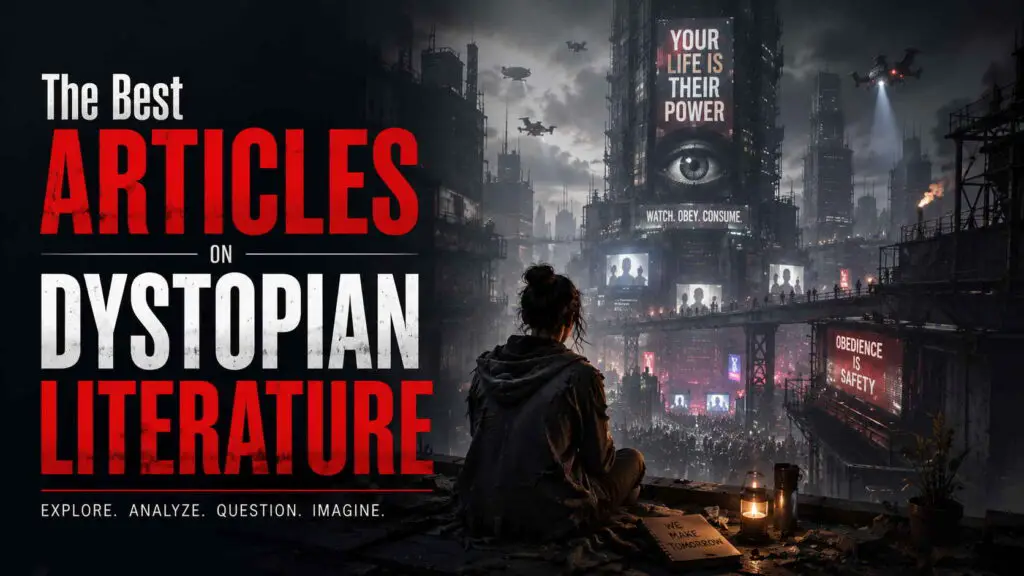
Dystopian literature has always had a strange power over readers. It shows us broken worlds, cruel governments, ruined societies, and futures that feel frighteningly possible. Yet people keep reading it because dystopian stories do more than imagine disaster. They reveal what can happen when power, technology, fear, greed, or social control go too far.
These stories are not only about the future. They are often about the present. A dystopian novel takes real anxieties and pushes them to the extreme. It asks hard questions about freedom, truth, justice, identity, and survival. That is why books like 1984, Brave New World, Fahrenheit 451, The Handmaid’s Tale, and The Hunger Games remain so widely discussed.
To understand this genre deeply, it helps to read not only the novels themselves but also strong essays and articles about them. The best articles on dystopian literature explain where the genre came from, why it matters, and how it continues to speak to modern fears.
What is Dystopian Literature?
Dystopian literature is a form of speculative fiction that imagines a society where life has become deeply oppressive, frightening, or dehumanizing. These imagined worlds may be controlled by authoritarian governments, destructive technology, environmental collapse, rigid social systems, or extreme inequality.
The word “dystopia” is often understood as the opposite of “utopia.” A utopia imagines an ideal society. A dystopia imagines a society that has gone wrong. But the most powerful dystopian stories are not just dark fantasies. They are warnings.
A dystopian novel usually presents a world where ordinary human freedom has been reduced. People may be watched constantly. They may be punished for independent thought. They may be trained to obey without question. They may live under propaganda, censorship, social engineering, or forced conformity.
This is why dystopian literature often feels political. It explores what happens when institutions gain too much control over human life. It also shows how people respond when truth becomes dangerous, love becomes rebellion, or memory becomes a threat.
Some dystopian works focus on government oppression. Others focus on consumerism, surveillance, climate disaster, artificial intelligence, reproductive control, war, or the collapse of community. The genre can be bleak, but it is rarely pointless. Even when the ending is tragic, dystopian literature asks readers to remain awake.
At its heart, dystopian literature is about the fragile line between civilization and control. It reminds us that a society can look organized, efficient, or peaceful while hiding deep injustice beneath the surface.
The Best Articles on Dystopian Literature
Many excellent articles have been written about dystopian literature, but a few stand above the rest because of their depth, insight, and influence. Some explore the history of the genre, while others examine its relevance in modern society. The following articles provide valuable perspectives for anyone interested in understanding dystopian fiction more deeply.
#1. A Golden Age for Dystopian Fiction
This influential article from The New Yorker examines the resurgence of dystopian fiction and explores why stories of societal collapse, authoritarianism, and despair continue to resonate with modern readers.
One of its greatest strengths is its historical perspective. The article traces the development of dystopian literature from early utopian works to modern novels, showing how dystopias often emerge as reactions to idealistic visions of society. It explains how classic works like We, Brave New World, and 1984 developed as warnings against political and social extremes.
The article also examines the cultural mood that fuels the popularity of dystopian fiction. Political polarization, technological change, economic uncertainty, and social anxiety all contribute to a climate in which readers find dystopian narratives especially compelling.
For anyone seeking a sophisticated exploration of the genre’s evolution and cultural significance, this article remains essential reading.
#2. Dystopian Novel
Britannica’s overview of the dystopian novel provides an excellent introduction to the genre and its major works.
The article offers a concise but authoritative history of dystopian literature, introducing readers to foundational texts and the authors who shaped the genre. It highlights the importance of novels such as We, Brave New World, and Nineteen Eighty-Four, explaining how these works established many of the conventions still used today.
A major strength of this article is its accessibility. Readers who are new to dystopian literature can quickly gain an understanding of the genre’s origins, themes, and significance without being overwhelmed by literary theory.
Because it combines historical context with clear explanations, this article serves as an excellent starting point for further exploration.
#3. Utopias and Dystopias
This Britannica article examines the relationship between utopian and dystopian literature, offering valuable insight into how the two genres are connected.
Many dystopian stories begin with noble intentions. Governments seek equality, stability, efficiency, or security. However, these ideals often become oppressive when pursued without regard for individual freedom. This article explains how dystopian fiction frequently emerges from the failure of utopian dreams.
The discussion helps readers understand why many dystopian societies initially appear attractive before revealing their darker realities. Works such as Brave New World become more meaningful when viewed through this lens.
Readers interested in the philosophical foundations of dystopian literature will find this article especially useful.
#4. Dystopian Fiction
Published by the International Anthony Burgess Foundation, this article explores the development of dystopian fiction throughout the twentieth century.
The article connects the rise of dystopian literature to historical events such as world wars, totalitarian regimes, and rapid technological change. It demonstrates how these developments influenced writers who feared the consequences of unchecked power and social engineering.
Particularly valuable is its discussion of how dystopian fiction evolved from earlier utopian traditions and how authors responded to changing political realities.
Readers interested in literary history will appreciate the article’s thoughtful treatment of the genre’s development.
#5. Why We Fear Real-Life Dystopia but Love Dystopian Fiction
This Literary Hub essay explores the psychological appeal of dystopian fiction and asks why readers are drawn to stories about terrible futures.
The article argues that dystopian narratives help people process anxiety by transforming abstract fears into understandable stories. Rather than overwhelming readers, these narratives provide structure and meaning to concerns about technology, politics, climate change, and social instability.
It also challenges the assumption that dystopian fiction promotes hopelessness. Instead, many dystopian stories feature characters who resist oppression and fight for truth, freedom, and dignity.
This makes the article especially valuable for readers interested in the emotional and psychological dimensions of the genre.
#6. What Is Dystopian Fiction? Definition and Characteristics
StudioBinder’s guide offers one of the clearest explanations of dystopian fiction available online.
The article identifies the defining characteristics of dystopian worlds, including surveillance, propaganda, social control, inequality, and environmental collapse. It also provides numerous examples from literature and film.
One of the article’s strengths is its practical approach. Writers can use it to understand how dystopian stories are constructed, while readers can use it to identify common themes and narrative patterns.
Its straightforward style makes it an excellent resource for students and newcomers to the genre.
#7. Utopian and Dystopian Fiction
This educational article offers a broad overview of both utopian and dystopian literature.
Rather than focusing on a handful of famous novels, it examines the larger literary tradition and shows how dystopian fiction intersects with science fiction, political commentary, satire, and social criticism.
The article is particularly useful for students because it places dystopian literature within a wider academic framework. Readers gain a better understanding of how the genre has evolved and why it remains relevant.
Its balanced and comprehensive approach makes it a valuable reference source.
#8. Dystopian Literature More Than Just the End of the World to Teens
This article focuses on the appeal of dystopian fiction among young adult readers.
It explains how popular novels such as The Hunger Games, Divergent, and The Maze Runner resonate with teenagers because they explore themes of identity, authority, belonging, and resistance.
The article argues that dystopian stories help young readers think critically about the world around them. By placing characters in extreme situations, these novels encourage reflection on social issues, personal responsibility, and moral choices.
Educators, parents, and librarians will find this article especially insightful.
#9. How Does Dystopian Fiction Relate to Real-Life Events?
This article explores the relationship between dystopian fiction and contemporary society.
Rather than treating dystopian stories as pure fantasy, it demonstrates how many of them reflect real-world concerns about surveillance, environmental degradation, political extremism, and social inequality.
The article emphasizes that dystopian literature often functions as a warning. By exaggerating existing trends, authors encourage readers to think critically about present-day challenges and possible future consequences.
Readers interested in the social relevance of dystopian fiction will find this article particularly valuable.
#10. 10 Devastating Dystopias
This Britannica reading list introduces readers to some of the most influential dystopian novels ever written.
The article discusses classic works that have shaped the genre and explains why they remain important today. Rather than offering lengthy literary analysis, it serves as a guide for readers looking to build a strong dystopian reading list.
The selections cover a range of themes, including authoritarianism, technological control, environmental collapse, and social inequality. As a result, readers gain a broader understanding of the many forms dystopian fiction can take.
For newcomers to the genre, this article provides an excellent roadmap for future reading.
Closing Thoughts
Dystopian literature continues to captivate readers because it transforms fear into reflection. These stories imagine societies where freedom, truth, and human dignity are under threat, forcing readers to consider the consequences of choices made today.
The articles featured above provide valuable insights into the genre’s history, themes, cultural relevance, and enduring appeal. Together, they reveal that dystopian fiction is far more than a collection of dark stories. It is a powerful literary tradition that challenges readers to think critically about society and the future.
Whether examining political power, technological change, environmental crisis, or social inequality, dystopian literature encourages vigilance. It reminds us that the future is not fixed and that the warnings found in fiction often have important lessons for the real world.