
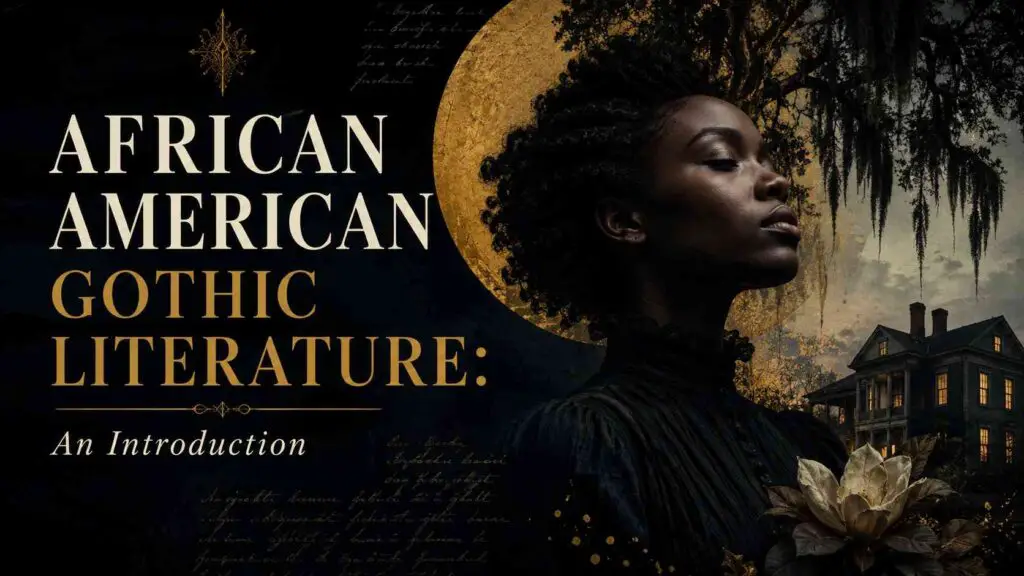
African American Gothic literature is a distinctive literary genre that combines the conventions of Gothic fiction with the historical experiences, cultural traditions, and social realities of African Americans. While traditional Gothic literature often focuses on haunted castles, supernatural creatures, and mysterious settings, African American Gothic literature explores deeper fears rooted in slavery, racism, oppression, and generational trauma. Through ghosts, haunted spaces, folklore, and psychological horror, these works examine the lasting impact of history on individuals and communities. The genre offers powerful insights into identity, memory, resistance, and survival while expanding the possibilities of Gothic storytelling in uniquely meaningful ways.
What Is African American Gothic Literature?
African American Gothic literature is a branch of Gothic fiction that examines the African American experience through themes of fear, haunting, horror, and the supernatural. It adapts traditional Gothic elements to explore racial injustice, historical trauma, cultural memory, and identity.
Unlike conventional Gothic stories that often feature remote castles or supernatural monsters, African American Gothic literature frequently portrays the horrors of slavery, segregation, systemic racism, and social exclusion. The genre uses Gothic conventions not merely to entertain but to confront painful realities and expose hidden histories.
The origins of African American Gothic literature can be traced to the blending of African storytelling traditions, slave narratives, spiritual beliefs, and American Gothic literary influences. Writers employ ghosts, mysterious events, unsettling settings, and psychological tension to reveal truths about both personal and collective experiences.
Fear and horror serve important functions within the genre. Rather than depicting purely fictional terrors, African American Gothic literature often presents historical realities as the true source of dread. The supernatural becomes a vehicle for exploring unresolved trauma, ancestral memory, and the enduring consequences of oppression.
The Origins of African American Gothic Literature
Early Influences
The roots of African American Gothic literature stretch back centuries and are deeply connected to African cultural traditions. Before the transatlantic slave trade, many African societies possessed rich storytelling traditions that included spirits, ancestral figures, supernatural events, and cautionary tales. These stories often explained the relationship between the living and the dead while emphasizing communal memory and moral responsibility.
As enslaved Africans were brought to the Americas, many of these traditions survived despite efforts to suppress them. Elements of folklore, spiritual beliefs, and oral storytelling became embedded within African American culture. Tales of ghosts, shape-shifting beings, and supernatural encounters continued to be passed from one generation to the next.
Slave narratives also played a critical role in shaping the genre. Accounts written by formerly enslaved individuals documented experiences of brutality, family separation, violence, and dehumanization. These narratives revealed a reality so horrifying that it often rivaled or surpassed fictional Gothic horror. The psychological scars left by slavery created themes that would later become central to African American Gothic literature, including haunting memories, fractured identities, and the inability to escape the past.
The Impact of American Gothic Traditions
African American writers inherited many conventions from the broader American Gothic tradition. Gothic literature in the United States often focused on dark secrets, moral corruption, isolation, psychological instability, and the hidden dangers lurking beneath civilized society. These themes provided useful tools for exploring complex social realities.
Writers adapted these conventions to address specifically African American experiences. Rather than focusing on decaying castles or supernatural monsters, they turned their attention to the horrors of slavery, racial violence, and systemic oppression. The Gothic emphasis on buried secrets proved especially effective for examining aspects of American history that were often ignored or deliberately forgotten.
This adaptation transformed the genre. Haunted houses became symbols of historical trauma. Ghosts represented the persistence of memory. Monsters became manifestations of racism and social injustice. By reworking traditional Gothic elements, African American authors created a literary form capable of confronting painful historical truths while challenging dominant narratives about race and identity.
Key Themes in African American Gothic Literature
Slavery and Historical Trauma
Slavery serves as one of the most important and enduring themes within African American Gothic literature. Even when stories are set long after emancipation, the legacy of slavery continues to influence characters, families, and communities. The institution’s violence, cruelty, and dehumanization often function as the invisible force driving the narrative.
Authors frequently portray slavery as a haunting presence that cannot be easily forgotten. Characters may struggle with inherited trauma, fragmented memories, or family histories shaped by enslavement. The past continually intrudes upon the present, creating tension and uncertainty.
By exploring slavery through Gothic imagery and symbolism, writers demonstrate how historical trauma persists across generations. The genre emphasizes that some wounds do not disappear simply because time has passed. Instead, they continue to influence identity, relationships, and cultural memory.
Haunting and Ghosts as Cultural Memory
Ghosts occupy a central place in African American Gothic literature, but they often serve purposes beyond creating fear. In many works, ghosts symbolize cultural memory, ancestral presence, and unresolved historical injustice. They represent voices that refuse to be silenced.
These supernatural figures frequently return to remind characters of forgotten histories or neglected responsibilities. Their presence forces confrontations with painful truths that society would rather ignore. In this way, haunting becomes a metaphor for remembrance.
The concept of haunting also reflects the broader idea that history remains alive in the present. Events from previous generations continue to shape contemporary experiences. Ghosts embody this connection between past and present, ensuring that important stories are not lost or erased.
Racial Violence and Oppression
Racial violence is often portrayed as one of the most terrifying forces within African American Gothic literature. Lynchings, segregation, police brutality, discrimination, and systemic inequality become sources of horror that rival supernatural threats.
Many authors depict racism as a pervasive presence that affects every aspect of life. Unlike fictional monsters, racial oppression is grounded in historical and contemporary realities. This makes its representation particularly powerful and unsettling.
By presenting racial violence through Gothic frameworks, writers expose its psychological and emotional consequences. Fear becomes a daily reality rather than an extraordinary event. The genre reveals how systems of oppression create lasting trauma while challenging readers to confront uncomfortable aspects of history and society.
Identity and Double Consciousness
Questions of identity frequently occupy the center of African American Gothic narratives. Characters often struggle to reconcile personal identity with societal expectations and racial stereotypes. This conflict creates emotional tension that drives many stories.
The concept of double consciousness is particularly relevant. Individuals may feel divided between how they view themselves and how they are perceived by others. This sense of fragmentation can produce feelings of alienation, uncertainty, and psychological distress.
Gothic techniques such as mirrors, doubles, hidden selves, and distorted realities effectively illustrate these struggles. Through these devices, authors explore the complexities of identity formation within a society shaped by racial inequality.
The Supernatural and Spiritual Traditions
Spirituality plays a significant role in many African American Gothic works. Authors frequently draw upon African spiritual traditions, Christianity, folk beliefs, and ancestral practices to create narratives that blur the boundaries between the natural and supernatural worlds.
The supernatural is often presented as an accepted part of reality rather than something extraordinary. Spirits, visions, dreams, and supernatural encounters can provide guidance, warnings, or connections to the past.
These spiritual elements add depth to the stories while reflecting cultural traditions that have endured across generations. They also offer alternative ways of understanding history, memory, and human experience.
Family Secrets and Generational Trauma
Family histories often contain hidden truths that shape the lives of future generations. Characters may discover long-concealed secrets involving violence, betrayal, loss, or survival. These revelations frequently become major turning points within the narrative.
The uncovering of family secrets often mirrors the broader process of confronting historical truths. Just as societies may suppress painful aspects of their past, families may hide experiences they find difficult to discuss.
Generational trauma emerges when unresolved pain is passed from one generation to the next. African American Gothic literature explores how these inherited burdens affect relationships, identity, and emotional well-being. By bringing hidden histories to light, characters may begin the difficult process of healing and understanding.
Common Elements of African American Gothic Literature
Haunted Spaces
Haunted spaces are among the most recognizable features of African American Gothic literature. Unlike the castles and mansions common in European Gothic fiction, these spaces are often rooted in the history of the United States. Plantations, abandoned homes, former slave quarters, cemeteries, and neglected communities frequently serve as settings where the past remains present.
These locations function as more than simple backdrops. They often symbolize the persistence of historical trauma and collective memory. Characters may encounter reminders of violence, oppression, or loss embedded within the landscape itself.
The physical environment becomes a witness to history. Buildings, roads, forests, and fields carry traces of events that continue to influence the present. As a result, haunted spaces often become powerful symbols of the relationship between place and memory.
Ghosts and Spirits
Ghosts and spirits appear throughout African American Gothic literature as manifestations of grief, remembrance, and unresolved history. They often represent individuals whose stories have been forgotten, ignored, or deliberately suppressed.
Unlike traditional horror stories in which ghosts exist primarily to frighten characters, these supernatural figures frequently serve deeper symbolic purposes. They may demand recognition, justice, or understanding. Their presence reminds characters that certain histories cannot be erased.
Through ghosts and spirits, authors explore themes of memory, accountability, and cultural continuity. The supernatural becomes a means of connecting generations and preserving important stories.
Monstrosity and Otherness
African American Gothic literature frequently redefines what it means to be monstrous. Instead of focusing on supernatural creatures, many works portray social institutions, racist ideologies, and systems of oppression as the true monsters.
Characters may also experience otherness as a result of exclusion, discrimination, or marginalization. Society labels them as different, creating feelings of isolation and vulnerability. This experience becomes a source of psychological tension and conflict.
By challenging traditional notions of monstrosity, the genre encourages readers to examine the structures of power that produce fear and suffering. It shifts attention away from fictional threats and toward real-world injustices.
Psychological Horror
Psychological horror occupies an important place within African American Gothic literature. Many stories focus less on physical danger and more on emotional and mental struggles. Characters often confront guilt, grief, anxiety, trauma, and uncertainty.
The horrors they face are frequently internal as well as external. Memories of past experiences may resurface unexpectedly, disrupting their sense of reality and stability. The boundary between memory and the present can become blurred.
This emphasis on psychological complexity allows authors to explore the lasting effects of historical and personal trauma. The resulting narratives are often deeply unsettling because they reveal how fear can shape the human mind.
Folklore and Mythology
Folklore and mythology enrich African American Gothic literature by providing a wealth of symbols, stories, and supernatural traditions. These cultural resources connect contemporary narratives to older forms of knowledge and storytelling.
Many works incorporate legends, folk beliefs, trickster figures, spirits, and supernatural creatures drawn from African and African American traditions. These elements add cultural depth while offering alternative ways of interpreting reality.
Folklore also serves as a means of preserving cultural memory. Through storytelling, communities pass down important lessons, values, and histories. African American Gothic literature continues this tradition while adapting it for modern audiences.
Major Authors in African American Gothic Literature
Toni Morrison
Toni Morrison is widely regarded as one of the most influential figures in African American Gothic literature. Her work demonstrates how Gothic techniques can be used to explore slavery, memory, trauma, and identity with extraordinary depth and complexity.
Perhaps her most famous contribution to the genre is Beloved, a novel that combines historical fiction with supernatural elements to examine the psychological legacy of slavery. The novel’s ghostly presence serves as both a literal and symbolic representation of unresolved trauma.
Across her body of work, Morrison repeatedly explores how the past continues to shape the present. Her ability to blend haunting imagery with profound emotional insight has made her a defining voice within the genre.
Ralph Ellison
Ralph Ellison is best known for Invisible Man, a novel that incorporates many Gothic themes despite not being classified as a traditional Gothic work. His exploration of identity, alienation, and invisibility resonates strongly with concerns found throughout African American Gothic literature.
The novel presents a surreal and often unsettling vision of American society. Underground spaces, distorted realities, and psychological uncertainty contribute to an atmosphere of tension and unease.
Ellison’s work demonstrates how Gothic techniques can illuminate social and racial realities. His influence continues to be felt among writers exploring similar themes.
Jesmyn Ward
Jesmyn Ward has emerged as one of the most important contemporary voices in African American Gothic literature. Her novels often blend family history, social critique, and supernatural elements to create emotionally powerful narratives.
In works such as Sing, Unburied, Sing, Ward uses ghosts and spiritual encounters to explore grief, racial injustice, and generational trauma. The supernatural elements enhance rather than overshadow the human experiences at the center of her stories.
Her writing illustrates how African American Gothic literature continues to evolve while remaining deeply connected to its historical roots.
Colson Whitehead
Colson Whitehead has expanded the possibilities of African American Gothic literature through innovative approaches to historical storytelling. His novels frequently combine realism with speculative or Gothic elements to examine race, power, and survival.
In The Underground Railroad, Whitehead transforms a historical network into a literal railway system, creating a narrative that feels both realistic and fantastical. This blending of history and imagination allows him to highlight the horrors of slavery in fresh and compelling ways.
His work demonstrates the flexibility of the genre and its ability to engage contemporary readers with historical subjects.
Other Important Writers
A number of additional writers have made significant contributions to African American Gothic literature. Octavia Butler explored themes of power, identity, and historical memory through speculative fiction that often contains Gothic undertones. Gayl Jones examined trauma, violence, and family history with remarkable psychological depth.
Victor LaValle has brought contemporary energy to the genre through works that combine horror, fantasy, and social commentary. His fiction demonstrates how Gothic storytelling can address modern concerns while remaining connected to longstanding traditions.
Together, these authors have helped broaden the scope of African American Gothic literature and ensured its continued relevance within contemporary literary culture.
Landmark Works of African American Gothic Literature
Beloved
Beloved stands as one of the most influential works in African American Gothic literature. The novel tells the story of Sethe, a formerly enslaved woman whose past returns in the form of a mysterious young woman believed to be the embodiment of her deceased daughter.
The novel explores memory, guilt, motherhood, and the lasting effects of slavery. Its haunting atmosphere and supernatural elements create a powerful examination of historical trauma.
Many scholars consider Beloved the definitive example of African American Gothic literature because it demonstrates how the genre can address both personal and collective suffering.
Invisible Man
Invisible Man examines the experiences of an unnamed African American narrator navigating a society that refuses to truly see him. Throughout the novel, themes of invisibility, alienation, and identity create a distinctly Gothic atmosphere.
The narrative often blurs the line between reality and perception. Strange encounters, underground settings, and surreal imagery contribute to a sense of psychological disorientation.
The novel’s enduring influence stems from its ability to explore complex social issues through innovative literary techniques.
Sing, Unburied, Sing
Jesmyn Ward’s Sing, Unburied, Sing combines family drama, social realism, and supernatural elements into a deeply moving narrative. Ghosts accompany characters throughout their journey, symbolizing unresolved grief and historical injustice.
The novel explores incarceration, racism, addiction, and family relationships while maintaining a strong connection to African American spiritual traditions.
Its blend of realism and haunting imagery exemplifies the continued vitality of African American Gothic literature in the twenty-first century.
The Underground Railroad
The Underground Railroad reimagines a historical escape network as an actual railroad hidden beneath the ground. This imaginative premise allows Whitehead to explore slavery through a lens that combines realism, symbolism, and Gothic atmosphere.
Each stop along the railroad reveals different forms of oppression and resistance. The journey becomes both a physical escape and a confrontation with the many horrors of American history.
The novel’s innovative structure and powerful themes have earned widespread acclaim and expanded interest in African American Gothic storytelling.
Other Notable Texts
Several additional works deserve recognition within the tradition of African American Gothic literature. Octavia Butler’s Kindred uses time travel to confront the realities of slavery and historical memory. Victor LaValle’s The Ballad of Black Tom reinterprets classic horror through an African American perspective.
Gayl Jones’s Corregidora explores generational trauma and memory, while Ta-Nehisi Coates’s The Water Dancer blends history and magical elements to examine freedom and survival.
Together, these works demonstrate the diversity and richness of the genre while highlighting its continued evolution.
How African American Gothic Literature Differs from Traditional Gothic Literature
Different Sources of Horror
Traditional Gothic literature often derives horror from supernatural creatures, ancient curses, or mysterious villains. African American Gothic literature frequently finds horror in real historical experiences such as slavery, segregation, racial violence, and social injustice.
Because these horrors are grounded in reality, they often feel more immediate and unsettling. Readers recognize that the threats depicted are not merely fictional inventions but reflections of genuine historical and social conditions.
This shift in focus gives the genre a unique emotional and political power.
Historical Reality Versus Fictional Fear
Many Gothic stories rely on imagined dangers to create suspense and fear. African American Gothic literature often draws its emotional force from documented historical events and lived experiences.
The genre uses supernatural elements not to escape reality but to illuminate it. Ghosts, hauntings, and other Gothic devices help reveal truths about the past and its ongoing influence.
As a result, the boundary between history and horror becomes intentionally blurred.
Community and Collective Trauma
Traditional Gothic narratives frequently center on isolated individuals confronting personal fears. African American Gothic literature often expands its focus to include families, communities, and entire generations.
The trauma portrayed is collective rather than solely individual. Historical events affect large groups of people and continue to shape social relationships long after the original events have passed.
This broader perspective allows authors to explore the interconnected nature of memory, identity, and history.
Resistance and Survival
Although African American Gothic literature confronts profound suffering, it also emphasizes resilience, endurance, and resistance. Characters frequently struggle against oppressive systems while seeking dignity, freedom, and self-understanding.
Survival itself often becomes an act of defiance. Families preserve traditions, communities maintain cultural memory, and individuals continue to assert their humanity despite attempts to deny it.
This emphasis on perseverance distinguishes the genre and contributes to its enduring appeal.
Conclusion
African American Gothic literature combines Gothic conventions with the unique historical and cultural experiences of African Americans. Through themes of slavery, haunting, racial oppression, identity, spirituality, and generational trauma, the genre explores how the past continues to shape the present. Its authors use ghosts, folklore, psychological horror, and haunted spaces to reveal hidden histories and challenge dominant narratives. By expanding the Gothic tradition beyond castles and monsters, African American Gothic literature offers profound insights into memory, resilience, and justice. Its continued relevance ensures that it remains an important and influential force within contemporary literature.