
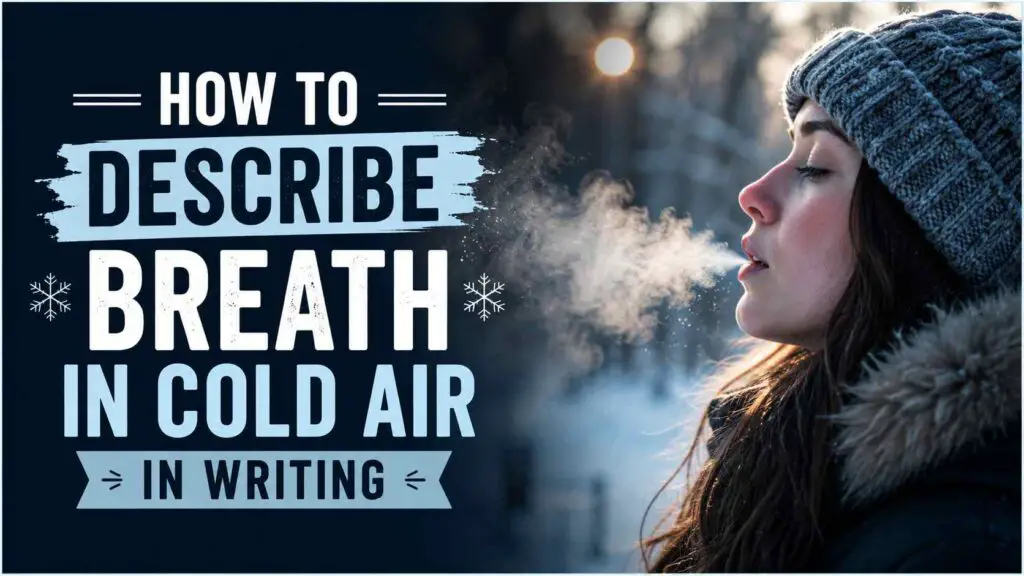
Breath in cold air is one of the smallest details a writer can include, yet it often has one of the greatest impacts on the reader’s imagination. The moment a character’s breath becomes visible, readers instantly recognize that the temperature has dropped below freezing or close to it. Without directly stating that the weather is cold, the image of white breath immediately establishes the setting and helps readers experience the scene rather than simply read about it.
Beyond indicating the weather, visible breath can also communicate mood and emotion. A slow, steady stream of vapor can suggest calmness or quiet reflection. Rapid bursts of white breath can emphasize fear, panic, exhaustion, or excitement. Even the way the breath disappears into the air can reinforce feelings of loneliness, hope, suspense, or peace. Because readers are familiar with seeing their own breath on cold mornings, this sensory detail creates an instant connection to the scene.
The surrounding environment also influences how breath appears. On a crisp winter morning, it may drift gently before fading away. During a snowstorm, it may be whipped aside by the wind. In still mountain air, it may linger longer than expected. Writers can use these subtle differences to enrich descriptions without interrupting the flow of the story.
One of the keys to writing effective descriptions is avoiding repetition. If every character’s breath “formed a cloud,” the imagery quickly becomes stale. Instead, varying the description based on the atmosphere, the character’s emotional state, and the pace of the scene keeps the writing fresh and engaging.
The following techniques offer different ways to describe breath in cold air, along with examples that can inspire more vivid and immersive writing.
How to Describe Breath in Cold Air in Writing
Cold breath can be described in many different ways depending on the atmosphere of the scene and the emotion you want to convey. Sometimes it simply establishes that the temperature is freezing. Other times it becomes part of the storytelling by reflecting a character’s physical condition, emotional state, or relationship with another character. The same visible breath can appear gentle in one scene and threatening in another simply because of the surrounding context. The following descriptions demonstrate different approaches that can make this common detail feel fresh and memorable.
#1. Describe It as Mist
Mist is one of the most common and natural ways to describe visible breath. It creates a soft, delicate image that suits peaceful mornings, quiet conversations, reflective moments, or beautiful winter landscapes. Because mist is associated with lightness and gentleness, it often produces a calm atmosphere. This type of description works especially well when the weather is cold but not violent, allowing the reader to focus on the quiet beauty of the setting. It is also an excellent choice when the goal is simply to establish the season or temperature without drawing too much attention to the description itself.
Her breath misted in front of her face, pale and thin against the dark morning.
Each word left his mouth wrapped in a small cloud of mist.
#2. Describe It as Smoke
Comparing breath to smoke creates a stronger and more dramatic visual image. Smoke often carries associations with fire, danger, industry, or survival, making it a fitting comparison for harsh winter conditions. This description works particularly well in urban settings, during nighttime scenes, or whenever the cold feels severe and unforgiving. The thicker, more substantial appearance of smoke can also emphasize heavy breathing after physical exertion or emotional stress.
His breath smoked in the frozen air as he waited beneath the streetlamp.
She spoke through little puffs of smoke, her voice trembling with the cold.
#3. Describe It as Clouds
Clouds suggest breath that is larger, fuller, and more noticeable than ordinary mist. This description is especially effective when a character is running, shouting, crying, laughing, or breathing heavily after intense physical activity. Large clouds of breath naturally draw attention to the character’s effort and can make the cold feel even more intense. They also help create movement within a scene, giving readers a stronger visual image of each breath leaving the character’s body.
His breath came out in white clouds, bursting from him with every step.
They stood in silence, their breaths forming small clouds between them.
#4. Describe It as Ghostly
Describing breath as ghostly introduces a mysterious or haunting quality to the scene. The pale vapor can resemble an apparition that appears briefly before fading into nothingness. This comparison works especially well in horror stories, suspense, lonely winter nights, abandoned places, cemeteries, or emotionally heavy scenes. It adds atmosphere without requiring lengthy descriptions and subtly reinforces feelings of isolation, uncertainty, or fear.
Her breath floated from her lips like a pale ghost and vanished into the dark.
Every exhale rose in the air, ghost-white and fragile.
#5. Describe It as Blooming
The image of breath blooming gives the description a poetic and almost artistic quality. Rather than simply appearing, the breath seems to unfold and expand before disappearing into the cold air. This metaphor is ideal for literary fiction, romantic scenes, emotional conversations, or moments of quiet contemplation. It transforms an ordinary physical process into something visually beautiful while slowing the pacing enough to let readers appreciate the moment.
His breath bloomed in the cold, opening like a white flower before disappearing.
With every sigh, a soft bloom of vapor unfurled from her mouth.
#6. Describe It as Puffs
Puffs provide a straightforward and highly visual description that works in almost any type of writing. Because the word is simple and familiar, readers can instantly picture short bursts of visible breath. This approach is particularly effective for children playing outside, people walking in cold weather, casual dialogue, or scenes where the pace remains quick and natural. The simplicity of the image keeps the writing accessible while still reinforcing the cold environment.
The children laughed, sending little puffs of breath into the winter air.
He rubbed his hands together, puff after puff rising from his mouth.
#7. Describe It as Hanging in the Air
When breath hangs in the air, the description creates a sense of stillness. Instead of disappearing immediately, the vapor lingers, making time seem to slow. This technique is especially effective in suspenseful moments, emotional confrontations, or scenes where silence carries as much meaning as dialogue. The lingering breath can also symbolize unspoken thoughts or unresolved tension, giving the description both visual and emotional significance.
His breath hung between them, white and unmoving in the frozen silence.
For a moment, her last words seemed to hang in the air with her breath.
#8. Describe It as Vanishing
Focusing on how breath disappears highlights its temporary nature. The brief appearance followed by its disappearance can symbolize fleeting moments, fading hope, passing time, or the fragile nature of life itself. This style of description often works well in reflective scenes where the character is thinking deeply or experiencing a quiet emotional moment. By emphasizing the disappearance rather than the appearance, writers can subtly reinforce themes of impermanence.
Her breath appeared for a second, then vanished into the gray morning.
Each exhale faded almost as soon as it left his lips.
#9. Describe It Through Movement
Rather than focusing only on what the breath looks like, writers can describe how it behaves as the character moves. Running, climbing, fighting, laughing, crying, or struggling through deep snow all change the rhythm and intensity of breathing. Visible breath naturally reflects these physical actions, allowing writers to reinforce both the character’s movement and the freezing temperature at the same time. This approach makes action scenes feel more dynamic and realistic.
His breath burst from him in sharp white clouds as he ran through the snow.
She laughed so hard that her breath came out in quick silver puffs.
#10. Describe It Through Emotion
Visible breath can become an extension of a character’s emotions. Fear may produce quick, shaky breaths. Relief may appear as one long exhale. Anger may create forceful bursts, while sadness may slow breathing into quiet sighs. By combining physical breathing with emotional context, writers can show rather than tell what a character is feeling. This technique creates stronger emotional immersion because readers witness the emotion instead of simply being informed about it.
She released a shaky breath, watching it tremble in the air before it disappeared.
He let out a long, tired sigh, and the cold turned it white.
Closing Thoughts
Describing breath in cold air is not only about showing that the weather is cold. It is also a way to reveal atmosphere, emotion, and movement. Simple words like mist, smoke, cloud, puff, and vapor can work well, but the best description depends on the mood of the scene.
For a quiet scene, breath may mist or drift. For a tense scene, it may smoke, burst, or hang in the air. For a poetic scene, it may bloom, ghost, or vanish. Used thoughtfully, this small detail can make winter writing feel vivid, immersive, and unforgettable.