
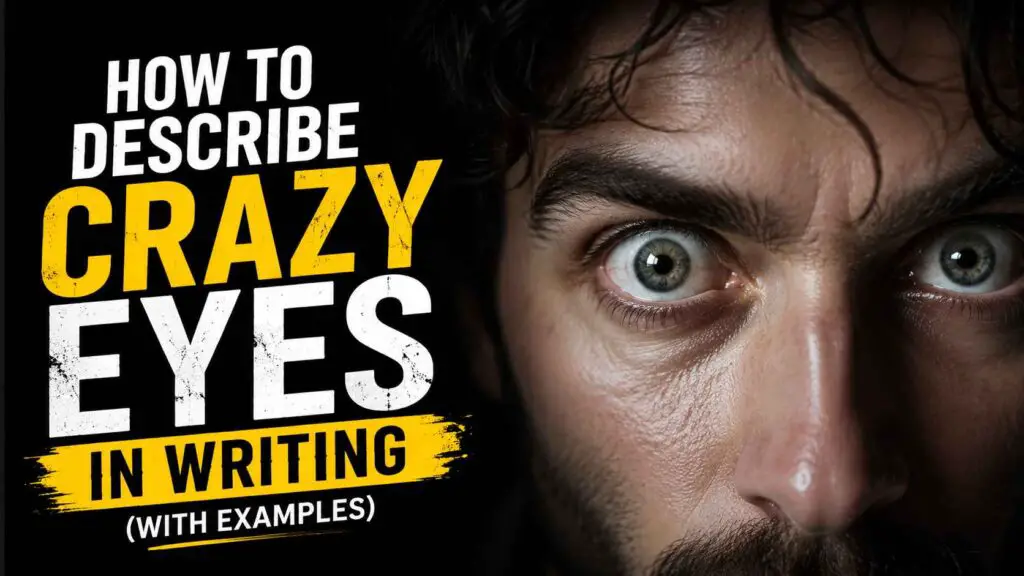
People often use the phrase “crazy eyes” to describe a look that feels unsettling, unpredictable, or emotionally overwhelming. It is not a medical or psychological term. Instead, it is a figurative expression that writers, speakers, and storytellers use to capture a person’s intense gaze. Depending on the context, crazy eyes can suggest fear, rage, obsession, panic, excitement, exhaustion, or emotional instability. The same pair of eyes can communicate completely different emotions depending on facial expressions, body language, and the situation surrounding the character.
When writing fiction, describing eyes effectively allows readers to experience a character’s emotions without being told exactly what they are feeling. Rather than simply stating that someone had “crazy eyes,” a more vivid description paints a picture through movement, shape, focus, and expression. Small details—such as darting pupils, an unblinking stare, or unusually wide eyes—can instantly create tension and make a character feel more believable.
The descriptions below explore different ways to portray crazy eyes in writing. Each approach focuses on a distinct visual characteristic and includes examples that can inspire your own descriptions.
How to Describe Crazy Eyes
Crazy eyes can appear in many different ways depending on the character, scene, and emotion behind them. They may look frantic, hollow, too wide, too focused, or completely disconnected from the moment. The best descriptions combine physical detail with emotional effect. Here are several ways to describe crazy eyes effectively.
#1. Wild and Unfocused Eyes
Wild, unfocused eyes suggest panic, confusion, or mental chaos. Instead of resting naturally on a person or object, the eyes constantly move from one point to another without purpose. This restless movement creates the impression that the character is overwhelmed or unable to process everything happening around them. Writers often use this type of description during moments of fear, emotional breakdown, or extreme stress because it immediately conveys instability without explicitly stating it.
These descriptions also work well when showing characters who are disoriented, hallucinating, or desperately searching for an escape. The unpredictable movement of the eyes makes readers feel uneasy because it suggests that the character’s thoughts are just as scattered as their gaze.
Examples:
His eyes darted around the room like trapped birds, never landing on anything for more than a second.
She stared past him with wide, frantic eyes, as if she were watching something no one else could see.
#2. Wide and Bulging Eyes
Wide, bulging eyes can make a person appear shocked, terrified, furious, or emotionally out of control. When the eyes are opened far beyond their normal range, they naturally draw attention and create a dramatic visual effect. This description emphasizes the intensity of a moment, making readers immediately recognize that the character is experiencing an extreme emotional reaction.
This type of imagery is especially effective in scenes involving confrontation, horror, or overwhelming excitement. The exaggerated openness of the eyes often makes the character seem unpredictable, adding suspense to the scene.
Examples:
His eyes bulged from his face, bright and glassy with a kind of feverish excitement.
Her eyes were stretched too wide, the whites showing all around the pupils.
#3. Glassy Eyes
Glassy eyes often suggest emotional detachment, exhaustion, illness, intoxication, or deep obsession. Rather than appearing lively and expressive, they seem smooth, reflective, and strangely empty. This lack of normal focus can make a character appear disconnected from reality or emotionally unavailable.
Because glassy eyes hide rather than reveal emotion, they often create mystery. Readers may wonder what the character is thinking or whether they are fully aware of what is happening around them. This uncertainty can make even an otherwise calm character seem unsettling.
Examples:
His glassy eyes fixed on the door, empty of reason but full of intent.
She smiled, but her eyes stayed dull and slick, like polished stones.
#4. Intense Staring Eyes
A fixed, unblinking stare can be one of the most uncomfortable expressions a character displays. Most people naturally blink and shift their focus while talking, so an unwavering gaze feels unnatural. It may communicate obsession, suppressed anger, determination, or emotional instability.
Writers frequently use this kind of stare to build suspense because it creates psychological pressure. The longer the character maintains eye contact without reacting normally, the more unsettling the interaction becomes for both other characters and the reader.
Examples:
He stared without blinking, his eyes locked on her with a terrifying calm.
Her gaze drilled into him, too steady and too bright to feel human.
#5. Twitching or Restless Eyes
Eyes that twitch, flicker, or constantly shift direction often suggest nervous energy or a mind struggling to stay in control. These subtle movements reveal anxiety, paranoia, fear, or emotional strain without requiring lengthy explanation. Even a small twitch around the eyes can communicate that something is deeply wrong.
This type of description works particularly well when a character is trying to hide their emotions. While their words may remain calm, the involuntary movement of their eyes betrays the tension beneath the surface.
Examples:
His eyes flicked from face to face, sharp and nervous, as if every shadow had accused him.
One eyelid twitched while his pupils jumped around the room.
#6. Empty Eyes
Empty eyes can be even more unsettling than exaggerated expressions because they lack visible emotion altogether. Instead of showing anger, fear, or excitement, they seem vacant, distant, and disconnected. This emotional absence often makes readers question what is happening beneath the surface.
Characters described this way may appear emotionally numb, deeply traumatized, completely exhausted, or frighteningly indifferent. The silence behind the eyes often creates greater suspense than dramatic emotional reactions because readers are left wondering what the character might do next.
Examples:
There was nothing behind his eyes, only a flat blankness that made her step back.
She looked at him with empty eyes, calm in a way that felt far more dangerous than anger.
#7. Burning Eyes
Burning eyes suggest intense emotion that feels ready to erupt. Whether fueled by rage, obsession, revenge, determination, or fanatical belief, the eyes appear alive with powerful energy. Although eyes do not literally burn, this metaphor effectively communicates overwhelming emotional intensity.
Descriptions like these are especially useful when portraying villains, rivals, or passionate characters whose emotions dominate their actions. The eyes become the visible expression of an inner fire that cannot easily be contained.
Examples:
His eyes burned with a furious light, as though anger had eaten everything else inside him.
She had the kind of stare that seemed to glow from within, hot and merciless.
#8. Dilated Pupils
Dilated pupils can dramatically change the appearance of a person’s eyes. Enlarged pupils make the eyes appear darker, deeper, and sometimes more mysterious or intimidating. Depending on the context, they may suggest fear, excitement, attraction, intoxication, shock, or emotional instability.
Because pupil size changes naturally in response to emotions and light, mentioning dilated pupils adds realism to a description. Combined with facial expressions and body language, this small detail can significantly strengthen the emotional impact of a scene.
Examples:
His pupils were blown wide, swallowing the color of his eyes until they looked almost black.
She leaned closer, her dark pupils huge and hungry in the dim light.
#9. Too Much White Showing
When the whites of the eyes become unusually visible around the iris, the expression often appears frightened, manic, or predatory. This happens naturally during moments of extreme emotion, making it a useful visual cue for portraying panic or loss of control.
Because people instinctively notice unusual eye shapes, this description quickly creates tension. It signals that the character is reacting with abnormal intensity, whether from terror, fury, or dangerous excitement.
Examples:
The whites of his eyes showed all around the irises, giving him the look of a cornered animal.
Her eyes were wide enough to show a ring of white, bright and terrible under the light.
#10. Manic Eyes
Manic eyes combine brightness, intensity, rapid movement, and overwhelming energy. They often appear unusually alert, almost as though the character is operating at a level of excitement that exceeds normal emotional boundaries. This expression can suggest euphoria, obsession, desperation, or emotional instability.
Writers often pair manic eyes with fast speech, exaggerated gestures, or impulsive behavior to reinforce the impression of someone whose emotions are accelerating beyond control. Together, these details create a memorable and vivid character description.
Examples:
His eyes glittered with a manic joy that made everyone else go quiet.
She laughed, and her eyes flashed with a wild, breathless energy.
Closing Thoughts
Crazy eyes are best described through specific visual details and the feeling they create. Instead of relying only on the phrase itself, show whether the eyes are wild, glassy, burning, empty, twitching, or too wide. The right description will reveal the character’s emotional state while making the scene feel vivid and unsettling.