
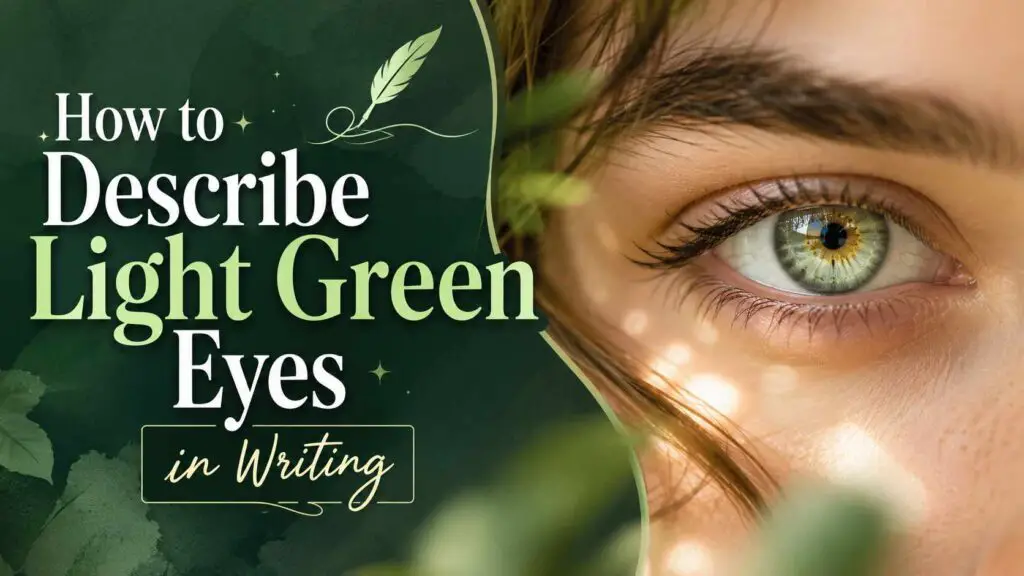
Light green eyes are among the most distinctive eye colors a writer can describe. They are uncommon enough to stand out, yet subtle enough to take on different meanings depending on the character and the setting. Unlike darker green eyes, light green eyes often seem to shift in color as the lighting changes. They can appear soft and welcoming in one moment, then cool and piercing in the next. This natural variation gives writers plenty of opportunities to create vivid and memorable descriptions.
When describing light green eyes, avoid relying solely on the color itself. Instead, think about what the eyes communicate. Do they suggest innocence, intelligence, mystery, confidence, or danger? Consider how the surrounding light affects their appearance, what emotions are reflected in them, and how another character perceives them. Combining color with emotion, movement, and imagery creates descriptions that feel authentic rather than decorative.
The best descriptions also match the tone of your story. A romance may portray light green eyes as warm and captivating, while a fantasy novel might make them appear enchanted or otherworldly. A mystery could describe them as unreadable or unsettling. By choosing comparisons and details that fit the scene, you can make a simple physical feature contribute to characterization and atmosphere.
The following techniques will help you describe light green eyes in ways that are vivid, natural, and engaging while providing examples you can adapt to your own writing.
How to Describe Light Green Eyes
Light green eyes are especially interesting because they can change depending on the scene. They may look pale and soft in sunlight, bright and piercing in anger, or shadowed and gray-green in sadness. Rather than repeating the same description throughout a story, vary your approach by focusing on different qualities of the eyes. Sometimes emphasize their color, other times their brightness, their expression, or the emotions they reveal. The descriptions below illustrate several effective ways to write about light green eyes while keeping your prose fresh and engaging.
#1. Compare Them to Nature
Nature provides some of the richest inspiration for describing light green eyes because many natural objects share similar shades and textures. Fresh spring leaves, moss-covered stones, pale grasses, sea glass, herbs, and forest foliage all offer comparisons that readers can easily picture. These images help create descriptions that feel organic instead of forced. Depending on the comparison you choose, the eyes can seem peaceful, vibrant, youthful, or deeply connected to the natural world. Nature-based descriptions also work well because they evoke more than just color—they often suggest movement, freshness, warmth, or tranquility.
Her eyes were the pale green of new leaves just beginning to unfold in spring.
His gaze held the soft green of moss after rain, quiet and strangely calming.
#2. Use Gemstone Imagery
Gemstones add elegance and richness to descriptions of light green eyes. Instead of simply stating the eye color, comparing it to precious or semi-precious stones gives the eyes a sense of value and uniqueness. Light green eyes are often better matched with gemstones such as jade or peridot rather than deep emerald, since these stones reflect their softer shades more accurately. Gemstone imagery can also suggest qualities like clarity, brilliance, rarity, or refinement, making it especially useful when introducing an important or striking character.
Her eyes shone like pale jade, smooth and cool beneath the candlelight.
He had peridot-green eyes, bright enough to catch the room before he spoke.
#3. Describe How the Light Changes Them
One of the most realistic ways to describe light green eyes is to acknowledge that they rarely look exactly the same in every situation. Sunlight, candlelight, moonlight, and shadows can dramatically change their appearance. Bright daylight may reveal golden or yellow undertones, while cloudy skies can make the eyes appear gray-green or muted. Indoor lighting may soften their color altogether. Incorporating these subtle changes into your descriptions not only creates vivid imagery but also makes the eyes feel more lifelike and believable within the scene.
In the morning light, her eyes turned a clear, watery green, almost transparent at the edges.
Under the clouds, his pale green eyes darkened to the color of storm-washed leaves.
#4. Connect Them to Emotion
Eye color alone rarely makes a description memorable. What truly captures a reader’s attention is how the eyes reflect a character’s emotional state. Light green eyes can appear warm during moments of affection, distant during grief, sharp during confrontation, or playful during humor. Rather than treating the eyes as static physical features, allow them to change with the character’s feelings. This approach strengthens characterization because readers naturally associate facial expressions and eye movements with emotion.
Her light green eyes softened when she smiled, losing their sharpness like ice thinning in the sun.
His pale green stare hardened, suddenly cold enough to make the room feel smaller.
#5. Use Unusual Color Blends
Very few light green eyes are a single, uniform shade. Many contain flecks of gold, rings of gray, hints of blue, or tiny amber specks near the pupil. Including these subtle variations makes your description feel more precise and realistic. Small details like these also help distinguish one character from another. Instead of giving multiple characters identical green eyes, unique color combinations create visual identity while adding depth to your writing.
Her eyes were a pale green threaded with gold, like sunlight caught in shallow water.
His irises were gray-green, with tiny amber sparks near the center.
#6. Match the Description to the Character
The same pair of light green eyes can create completely different impressions depending on the personality of the character who possesses them. Gentle characters may have soft, sage-colored eyes that inspire trust, while cunning or intimidating characters might have pale green eyes that feel sharp and calculating. Your descriptions should reinforce characterization rather than simply describe appearance. By selecting imagery that reflects the individual’s personality, the eye description becomes another storytelling tool rather than a decorative detail.
She had sage-green eyes that made every word she spoke feel patient and kind.
His eyes were a thin, glassy green, too calm to be comforting.
#7. Keep the Description Natural
Even the most beautiful description loses its impact if it feels inserted solely for the sake of description. Readers generally notice eye color most naturally during introductions, moments of close observation, emotional exchanges, or when changing light draws attention to a character’s face. Instead of interrupting the story with elaborate physical descriptions, weave details about light green eyes into the action and dialogue. This allows the description to enhance the narrative while maintaining the story’s pace and realism.
When she looked up, I noticed her eyes for the first time—light green, quiet, and clear as rainwater.
He turned toward the window, and the pale green of his eyes briefly caught the sun.
Closing Thoughts
Light green eyes can be described in many ways, from soft and delicate to sharp and unsettling. The key is to avoid plain color labels and choose images that fit the character, mood, and scene.
Use nature for freshness, gemstones for beauty, light for realism, and emotion for depth. A strong description should not only show the color of the eyes. It should reveal something about the person behind them.