
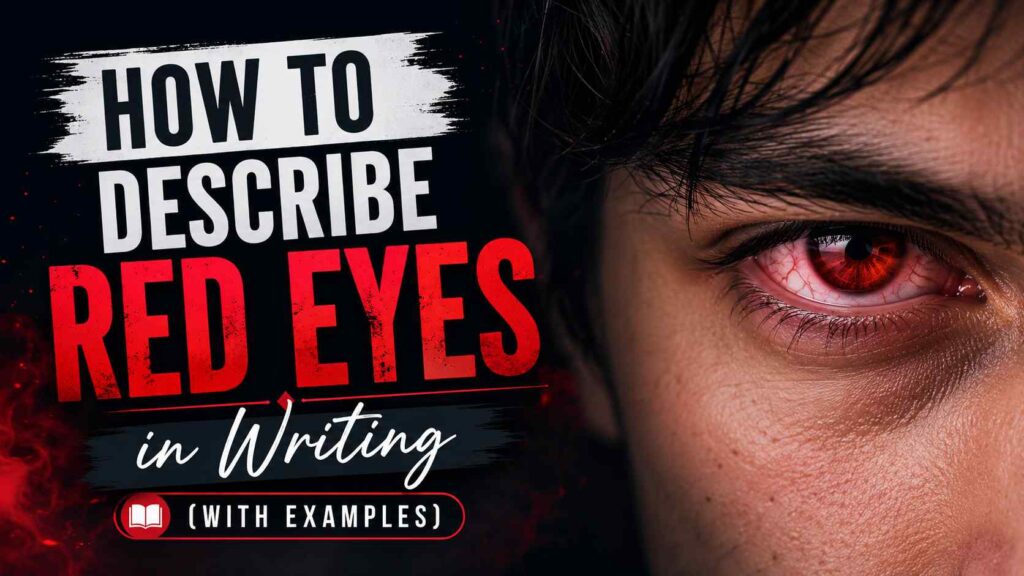
Red eyes are one of the most expressive physical details a writer can use. They can reveal emotions that a character is trying to hide, hint at physical exhaustion or illness, or create an unsettling impression in fantasy and horror stories. Unlike eye color, which rarely changes, redness is temporary and usually points to something that has happened to the character. A single description of red eyes can tell readers that someone has been crying all night, hasn’t slept for days, is burning with rage, or is suffering from an illness.
The most effective descriptions go beyond simply stating that the eyes are red. They explain why the eyes are red, how the redness appears, and what it says about the character’s physical or emotional state. Pairing the redness with facial expressions, body language, and the surrounding context creates a much stronger image than mentioning the color alone.
The following descriptions illustrate different ways to describe red eyes in writing, along with detailed explanations and examples that can be adapted to a wide variety of genres and situations.
How to Describe Red Eyes
Red eyes are more powerful when the description fits the scene. A tired person’s red eyes should not sound the same as a furious villain’s red eyes. Likewise, someone with irritated eyes from allergies should not be described the same way as someone who has spent hours crying. Choosing the right description helps readers immediately understand both the appearance of the eyes and the reason behind their redness.
#1. Bloodshot Eyes
Bloodshot eyes are one of the most common ways to describe red eyes. The tiny blood vessels in the whites of the eyes become enlarged and clearly visible, creating a web of red lines across the eye. This appearance often suggests exhaustion, stress, illness, heavy drinking, prolonged screen time, or lack of sleep. Bloodshot eyes can also indicate emotional strain, making them useful in both everyday and dramatic scenes. Because the term is familiar to most readers, it immediately paints a vivid mental picture without requiring lengthy description.
His eyes were bloodshot, the whites threaded with thin red lines that made him look as if he had not slept in days.
She looked up with bloodshot eyes, still wet from crying.
#2. Tear-Reddened Eyes
Tear-reddened eyes emphasize the emotional cause behind the redness. Crying irritates the eyes and causes the whites and eyelids to become flushed, often accompanied by swelling and lingering moisture. This description is especially effective in scenes involving grief, heartbreak, disappointment, relief, or overwhelming joy. It conveys vulnerability without directly stating the character’s emotions, allowing readers to infer what they have experienced.
Her tear-reddened eyes searched his face, hoping for an answer he could not give.
His eyes were red and swollen, the kind of red that came after hours of silent crying.
#3. Tired Red Eyes
Tired red eyes suggest physical exhaustion and mental fatigue. Characters who have stayed awake all night, worked long hours, cared for someone who is sick, or struggled with anxiety often develop red, irritated eyes. This description helps communicate weariness without explicitly saying the character is exhausted. It can also reinforce the emotional weight of a demanding situation by showing its physical effects.
His tired red eyes blinked slowly under the harsh office lights.
She rubbed at her red eyes, fighting to stay awake for just one more hour.
#4. Angry Red Eyes
Red eyes can symbolize intense anger when combined with an intimidating expression. While anger does not literally make the eyes bright red in most situations, flushed blood vessels, narrowed eyelids, and an unwavering glare create the impression of eyes burning with fury. This description works particularly well during confrontations, arguments, or moments when a character is struggling to control their temper. It makes the anger feel visible and immediate.
His eyes burned red with anger, sharp and unblinking.
She fixed him with a red-eyed glare that made the room fall silent.
#5. Swollen Red Eyes
Swollen red eyes provide additional physical detail that makes the description more vivid. The swelling usually results from prolonged crying, allergies, illness, or severe sleep deprivation. Mentioning both the redness and the puffiness helps readers visualize the character’s condition and understand that the irritation has lasted for some time. This description is particularly useful when showing the lingering effects of emotional or physical hardship.
Her eyes were swollen and red, the skin beneath them puffy from a sleepless night.
He tried to smile, but his swollen red eyes gave away the truth.
#6. Feverish Red Eyes
Feverish red eyes are commonly associated with illness. High fevers, infections, and physical weakness often leave the eyes looking irritated, glassy, and slightly bloodshot. This description immediately signals that something is physically wrong with the character. It can increase the tension in scenes involving sickness, injury, or survival by visually reinforcing the character’s deteriorating condition.
His feverish red eyes struggled to focus on the doorway.
She lay against the pillow, her red eyes glassy with sickness.
#7. Wild Red Eyes
Wild red eyes combine redness with frantic movement or an intense stare to suggest fear, desperation, panic, or madness. Rather than focusing only on color, this description highlights the unpredictable behavior behind the eyes. It works well in scenes involving psychological breakdowns, dangerous situations, or overwhelming terror. Readers often associate wide, restless eyes with a loss of control, making this a highly effective descriptive choice.
His red eyes darted around the room like a trapped animal searching for escape.
She stared at them with wild red eyes, her breath coming fast and uneven.
#8. Glowing Red Eyes
Glowing red eyes are most commonly found in fantasy, horror, and science fiction. Unlike naturally bloodshot eyes, these descriptions suggest something supernatural, mechanical, or inhuman. Glowing eyes immediately create an atmosphere of danger, mystery, or evil and often signal that a character or creature possesses unusual powers. Because readers strongly associate glowing red eyes with villains and monsters, the image instantly establishes tone and tension.
Two glowing red eyes appeared in the darkness, watching from the far end of the hall.
The creature’s red eyes burned like coals beneath its hood.
#9. Rimmed-in-Red Eyes
Eyes rimmed in red describe redness concentrated around the edges of the eyelids rather than across the entire eye. This subtle description often follows crying, allergies, irritation, or prolonged fatigue. It allows writers to hint at emotional or physical strain without making the redness the dominant feature. Because it is understated, it works especially well in quieter scenes where characters are trying to maintain their composure.
Her eyes were rimmed in red, though she kept her voice steady.
He gave a small nod, his eyes rimmed with red from the long night.
#10. Glassy Red Eyes
Glassy red eyes combine two descriptive qualities: redness and a glossy, unfocused appearance. Together, they suggest illness, intoxication, emotional shock, grief, or complete exhaustion. The glossy look makes the character appear detached from their surroundings, while the redness hints at the physical or emotional toll they have endured. This combination creates a powerful image of vulnerability or disorientation.
His glassy red eyes stared past her, as if he were seeing something far away.
She answered in a whisper, her red eyes glassy with unshed tears.
Closing Thoughts
Red eyes should match the character’s condition and the mood of the scene. For sadness, use words like tear-reddened, swollen, or rimmed in red. For anger, choose descriptions such as burning, glaring, or bloodshot. For illness, focus on details like feverish or glassy. In fantasy or horror, glowing red eyes can instantly create a sense of danger and the supernatural. By combining physical details with emotional context, writers can turn a simple description of red eyes into a memorable detail that deepens characterization and strengthens the atmosphere of a scene.