
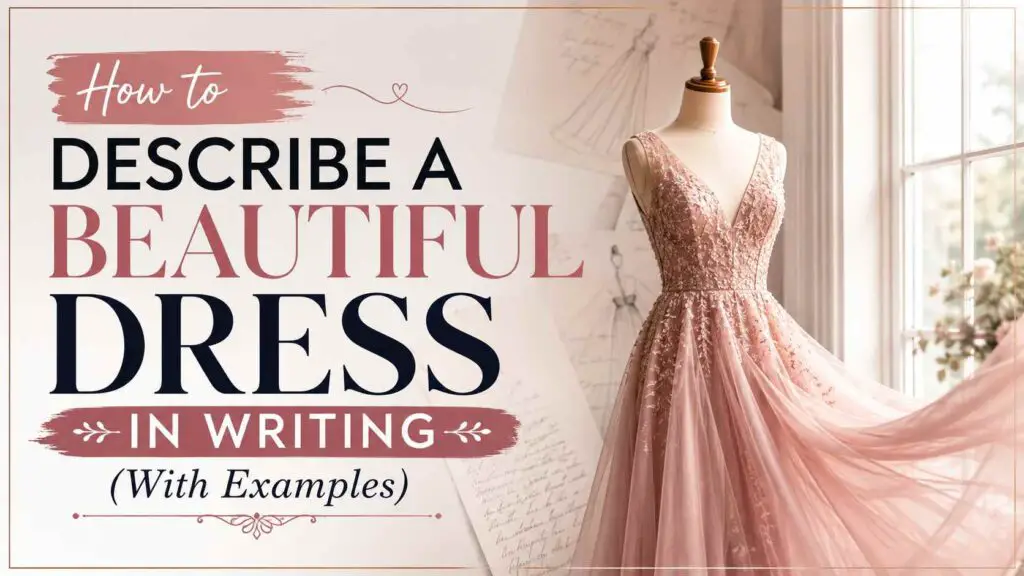
A beautiful dress can do much more than simply clothe a character. It can reveal personality, social status, confidence, emotion, culture, or the importance of a particular moment. Whether you’re writing a romance, fantasy, historical novel, or contemporary story, a well-described dress helps readers visualize the scene and connect with the character wearing it.
The key is to go beyond listing physical details. Instead, combine appearance with movement, texture, emotion, and context to create descriptions that feel vivid and natural. By focusing on the right elements, you can make a dress memorable without overwhelming the reader with unnecessary detail. The following techniques will help you describe a beautiful dress in a way that brings both the garment and the character to life.
How to Describe a Beautiful Dress in Writing
#1. Describe the Color with Precision
Color is often the first feature readers notice, making it one of the most effective ways to establish an immediate visual impression. Instead of relying on basic color names like “red” or “blue,” choose more specific shades that paint a clearer picture. Rich descriptions such as emerald, sapphire, ivory, blush, champagne, or midnight blue instantly make the dress feel more distinctive.
You can also strengthen your description by comparing the color to natural elements, precious stones, or lighting conditions. Doing so helps readers experience the beauty of the dress rather than simply identifying its color.
Examples:
The dress was a deep emerald green, rich as forest leaves after rain.
She wore a champagne-colored gown that shimmered softly under the candlelight.
#2. Focus on the Fabric
The fabric determines much of a dress’s appearance, movement, and overall impression. A silk gown suggests smooth elegance, while velvet conveys richness and warmth. Chiffon creates an airy, delicate feeling, whereas lace often communicates romance or timeless beauty. Mentioning the fabric allows readers to imagine not only how the dress looks but also how it might feel to touch or wear.
Choosing the right fabric description can also reinforce the mood of the scene. Luxurious materials suit formal occasions, while lighter fabrics may suggest innocence, freedom, or effortless grace.
Examples:
The gown was made of pale silk that flowed over her like water.
Layers of soft tulle floated around her ankles, giving the dress an almost dreamlike quality.
#3. Show How the Dress Moves
Movement transforms a dress from a static object into something alive. Instead of describing only its appearance, show how it reacts as the character walks, dances, turns, or runs. A dress that sways, ripples, glides, or trails behind its wearer creates a more dynamic image and naturally draws the reader into the scene.
Describing movement also reflects the mood. Gentle flowing fabric may suggest elegance or peace, while dramatic sweeping motion can emphasize excitement, confidence, or grandeur.
Examples:
As she walked, the skirt swept across the floor in gentle waves.
The dress moved with her, light and graceful, as though it had been made from air.
#4. Describe the Shape and Fit
The silhouette of a dress says a great deal about both the garment and the character wearing it. Whether the dress is fitted, flowing, structured, layered, or minimalist, its shape influences how readers picture the character. Rather than listing measurements or technical details, describe how the dress complements the body and contributes to the overall impression.
A well-chosen description of the fit can also communicate confidence, elegance, simplicity, or sophistication without directly stating those qualities.
Examples:
The dress fit closely at the waist before falling into a wide, graceful skirt.
Its simple shape followed her figure with quiet elegance, never needing to shout for attention.
#5. Highlight Special Details
Small decorative features often make a beautiful dress unforgettable. Intricate embroidery, delicate lace, shimmering beads, elegant buttons, pearls, sequins, or carefully stitched patterns can distinguish one dress from another. Rather than trying to describe every detail, focus on one or two striking features that naturally draw attention.
Selecting only the most memorable details keeps the writing concise while allowing readers to appreciate the craftsmanship and uniqueness of the garment.
Examples:
Tiny pearls were sewn along the neckline, catching the light whenever she turned her head.
Silver embroidery curled across the bodice like frost on a windowpane.
#6. Connect the Dress to the Wearer
A beautiful dress becomes far more meaningful when it reflects the person wearing it. Consider what the clothing communicates about the character’s personality, emotions, confidence, or role within the story. The dress may symbolize joy, authority, vulnerability, wealth, or even hidden insecurity.
By linking the garment to the character instead of treating it as a separate object, your description becomes more emotionally engaging and helps deepen characterization.
Examples:
The dress made her look calm and regal, though her hands trembled at her sides.
In the soft blue gown, she seemed gentler somehow, as if the color had quieted the whole room.
#7. Use Sensory Language
Although readers primarily imagine a dress visually, including other senses creates a much richer description. Mention how silk feels against the skin, how velvet absorbs the light, or how beads softly click together as the character moves. Sensory details help readers experience the dress instead of simply observing it.
Adding texture, sound, or even temperature makes the description feel more immersive and believable without requiring lengthy explanations.
Examples:
The satin was cool against her skin, smooth and heavy in the best possible way.
With every step, the beaded hem gave a faint, musical whisper.
#8. Match the Description to the Scene
The same dress can appear completely different depending on the setting and emotional tone of the scene. Bright ballroom lights may emphasize sparkle and glamour, while soft morning light may reveal subtle elegance or quiet sadness. Instead of describing the dress in isolation, consider how the environment shapes the reader’s perception of it.
Allowing the scene to influence your description helps the dress feel like a natural part of the story rather than a standalone piece of description.
Examples:
Under the golden lights of the ballroom, her gown glittered like a field of stars.
In the gray morning light, the once-bright dress looked softer, sadder, and strangely human.
#9. Avoid Overloading the Description
One of the most common mistakes when describing clothing is including too many details at once. Readers do not need to know every seam, button, and stitch. Instead, choose the features that best support the character, mood, or scene. A handful of carefully selected details usually creates a much stronger mental image than an exhaustive inventory.
Keeping your description focused also maintains the pacing of the story and prevents unnecessary interruptions to the narrative.
Examples:
She wore a white lace dress with long sleeves and a skirt that brushed the floor.
The gown was simple, black, and beautifully cut, with only a narrow line of silver at the waist.
#10. Use Figurative Language Carefully
Similes and metaphors can elevate a dress description by creating memorable comparisons. Comparing fabric to flowing water, moonlight, flowers, or drifting clouds allows readers to visualize beauty through familiar images. Well-chosen figurative language adds elegance without requiring lengthy physical descriptions.
However, it is important to use these comparisons sparingly. Too many poetic images in a single description can distract readers and reduce their impact. A single, well-crafted comparison is often all that is needed.
Examples:
Her silver dress shone like moonlight poured over silk.
The red gown bloomed around her like a rose opening in the dark.
Closing Thoughts
Describing a beautiful dress is about much more than listing its appearance. The strongest descriptions combine visual details with texture, movement, emotion, and context to create an image that feels alive. Every element, from the fabric and color to the way the dress moves, can contribute to the reader’s understanding of both the garment and the character.
As you write, focus on the details that serve the story rather than describing everything at once. A few carefully chosen observations will often leave a stronger impression than an overly detailed paragraph. When a dress reflects the mood of the scene and the personality of the wearer, it becomes an important storytelling tool rather than simply another piece of clothing.