
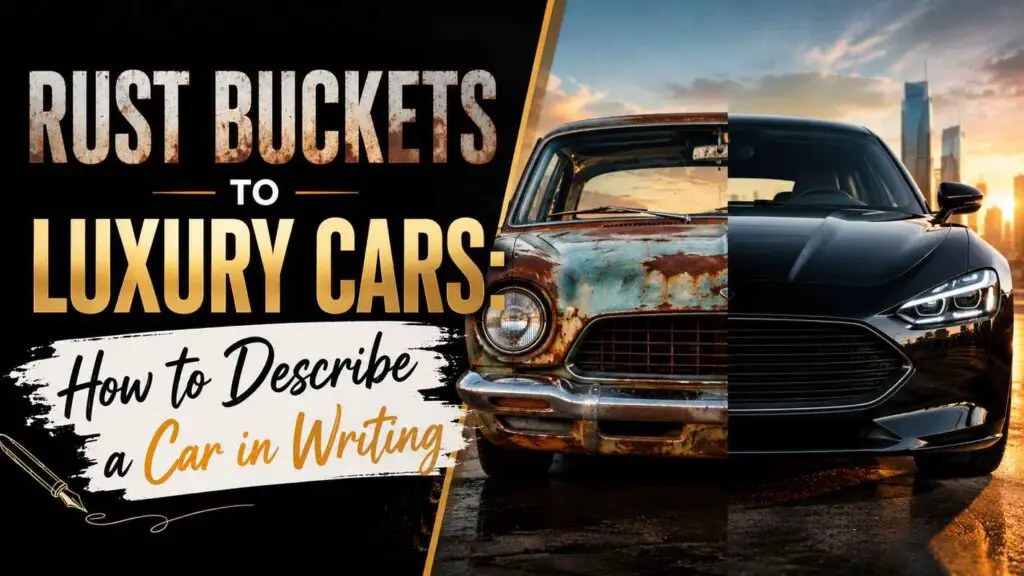
Cars are more than machines. In writing, they can reveal class, personality, danger, nostalgia, freedom, failure, or ambition. A single vehicle can shape a reader’s first impression of a character before that character says a single word. Whether it’s a rust-covered pickup sitting in a forgotten field or a gleaming luxury sedan pulling up to a five-star hotel, the right description immediately establishes mood and context.
Strong car descriptions do more than list physical features. They combine appearance, sound, movement, condition, and even emotional significance to make the vehicle feel like a natural part of the story. The most memorable descriptions also reveal something about the person behind the wheel or the life the car has lived.
The key is not to describe every part of the vehicle. Instead, focus on the details that create the strongest impression and support the scene. Here are practical ways to describe a car in writing, from broken-down rust buckets to sleek luxury cars.
How to Describe a Car in Writing
#1. Describe the Car’s Overall Impression
The first impression of a car often matters more than a detailed inventory of its features. Before readers notice the tires, paint, or interior, they form an immediate opinion based on the vehicle’s overall appearance. Ask yourself what emotion or idea the car should communicate. Does it appear elegant, neglected, intimidating, dependable, outdated, or adventurous?
This first impression can also tell readers something about the owner. A meticulously maintained luxury sedan suggests very different things than a battered pickup held together with duct tape. By establishing the overall impression first, every smaller detail that follows reinforces that initial image instead of competing with it.
Examples:
The car looked less parked than abandoned, its rusted frame sagging toward the curb like it had finally given up.
The silver coupe gleamed under the streetlights, smooth and silent, as if it had never known rain, mud, or ordinary roads.
#2. Focus on Color and Finish
Color is one of the fastest ways to make a car memorable, but simple descriptions like “red car” or “black SUV” rarely leave a lasting impression. Instead, describe the shade, texture, condition, or shine of the paint. The finish can reveal whether the vehicle is brand new, lovingly cared for, or slowly falling apart.
The appearance of the paint can also influence the mood of the scene. A glossy black finish may feel elegant or threatening. Faded paint can suggest years of neglect. Bright colors may communicate youthfulness or confidence, while muted tones often create a more understated atmosphere. Even subtle details, such as scratches or chipped paint, help make the description feel authentic.
Examples:
The paint had once been blue, but years of sun had bleached it into a tired, powdery gray.
Its black finish reflected the city lights like dark water, every curve polished to a mirror shine.
#3. Show Age Through Wear and Damage
One of the easiest ways to make an older car believable is to show the effects of time. Years of use leave visible marks that tell a story without requiring explanation. Rust, dents, cracked glass, peeling paint, faded headlights, worn tires, and sagging suspension all reveal a vehicle’s history.
Rather than mentioning every flaw, choose details that feel meaningful. A dented door may hint at an accident. A cracked windshield could suggest years of postponed repairs. Even a single missing hubcap can communicate financial hardship or neglect. The best descriptions allow readers to imagine the experiences that created those imperfections.
Examples:
Rust bloomed along the wheel arches, eating through the metal in orange patches.
The front bumper hung slightly loose, and one headlight stared brighter than the other, giving the car a permanently wounded look.
#4. Describe the Sound of the Car
A car comes alive when readers can hear it as well as see it. Every vehicle has its own personality through sound. An aging engine may cough, sputter, or rattle before starting. A sports car might roar with power, while a luxury sedan often hums so quietly it barely seems to make any noise at all.
Sound also helps establish mood. A screeching brake can create tension, while a smooth engine can communicate reliability or sophistication. Describing the noises a car makes allows readers to experience the vehicle rather than simply observe it from a distance.
Examples:
The engine coughed twice, rattled like a drawer full of tools, then reluctantly came alive.
The car started with a low, confident purr, smooth enough to make the pavement seem expensive.
#5. Use the Interior to Reveal Character
The inside of a car often reveals more about its owner than the exterior ever could. Readers naturally notice what fills the seats, cup holders, dashboard, and floorboards. Personal belongings transform an ordinary vehicle into a reflection of the character who drives it.
A spotless interior may suggest discipline, pride, or perfectionism. A cluttered back seat covered with children’s toys, fast-food wrappers, or work equipment tells an entirely different story. Small details such as air fresheners, worn steering wheels, cracked leather seats, or carefully organized compartments help create a realistic and memorable setting.
Examples:
The passenger seat was buried under coffee cups, fuel receipts, and a crumpled map that looked older than the car itself.
Inside, the leather seats were cream-colored and flawless, smelling faintly of cedar, money, and new beginnings.
#6. Compare the Car to Something Familiar
Comparisons allow readers to visualize a car quickly by connecting it to something they already know. A compact hatchback might resemble a toy, while a massive SUV could feel like an armored vehicle. Well-chosen comparisons create vivid mental images without requiring long descriptions.
The comparison should also fit the tone of the story. Humorous scenes benefit from playful imagery, while dramatic scenes may call for darker or more powerful comparisons. A single effective comparison often communicates size, condition, and personality all at once.
Examples:
The hatchback sat at the curb like a shoebox with wheels, too small to be taken seriously.
The SUV rolled forward like an armored animal, broad, black, and impossible to ignore.
#7. Describe Movement and Presence
A parked car tells one story, but a moving car tells another. The way a vehicle accelerates, turns, brakes, or glides down the road reveals its condition and character. Movement also affects how readers perceive speed, confidence, danger, or elegance.
Older vehicles may shake, bounce, or hesitate before gaining speed. High-performance cars often seem to glide effortlessly, while heavy trucks project strength simply through the way they move. Choosing active verbs helps transform the car from an object into something that feels alive within the scene.
Examples:
The van lurched down the road, bouncing over every pothole as if each one had personally insulted it.
The limousine eased toward the entrance, slow and silent, commanding attention without asking for it.
#8. Match the Description to the Scene’s Mood
The same car can feel completely different depending on the situation. A black sedan arriving at a wedding may appear sophisticated, while the same sedan parked outside an empty warehouse at midnight may seem threatening. Your description should support the emotional tone of the scene rather than simply describe the vehicle objectively.
Think about what you want readers to feel. During a romantic scene, focus on warm, inviting details. During a suspenseful moment, emphasize darkness, silence, reflections, or unsettling movement. Let the language work alongside the story to strengthen the atmosphere.
Examples:
The old convertible waited beneath the summer trees, its cracked red seats warm from the sun.
A black sedan idled across the street, its windows dark, its engine too quiet, its presence too deliberate.
#9. Use the Car to Reflect Social Status
Cars often communicate social status without requiring direct explanation. Readers naturally associate certain vehicles with wealth, practicality, luxury, hard work, or financial struggle. A character’s choice of vehicle can reveal priorities, occupation, aspirations, or personal values.
Avoid stating these ideas outright. Instead, let readers reach their own conclusions through carefully selected details. A polished luxury car outside an expensive restaurant creates a different impression than a well-maintained older sedan that has clearly been cared for despite its age.
Examples:
The car was clean but old, carefully washed, with one missing hubcap and a taped-up side mirror.
The Bentley waited outside the restaurant, its polished hood ornament catching the light like a private announcement.
#10. Give the Car Emotional Meaning
Sometimes a car is much more than transportation. It may represent childhood memories, family traditions, personal achievement, heartbreak, or the beginning of a new chapter. Giving a vehicle emotional significance makes it memorable because readers connect the object to the character’s experiences.
Instead of simply describing how the car looks, combine physical details with memories or emotions. A worn steering wheel, a familiar scent, or an old dent can instantly remind a character of someone they loved or a moment they can never forget. These emotional connections often become far more powerful than the car’s appearance alone.
Examples:
The station wagon still smelled faintly of sunscreen and old upholstery, and for a moment she was eight years old again, barefoot in the back seat.
He ran his hand over the dent in the door, the one his father had promised to fix every summer and never did.
Closing Thoughts
Describing a car in writing is not about listing every feature. It is about choosing the details that matter. A car can show wealth, age, personality, danger, freedom, grief, or hope.
The best car descriptions combine appearance, sound, movement, and meaning. Whether the vehicle is a rust bucket, a family van, a sports car, or a luxury sedan, make it serve the story. When the description reveals mood or character, the car becomes more than transportation. It becomes part of the world you are building.