
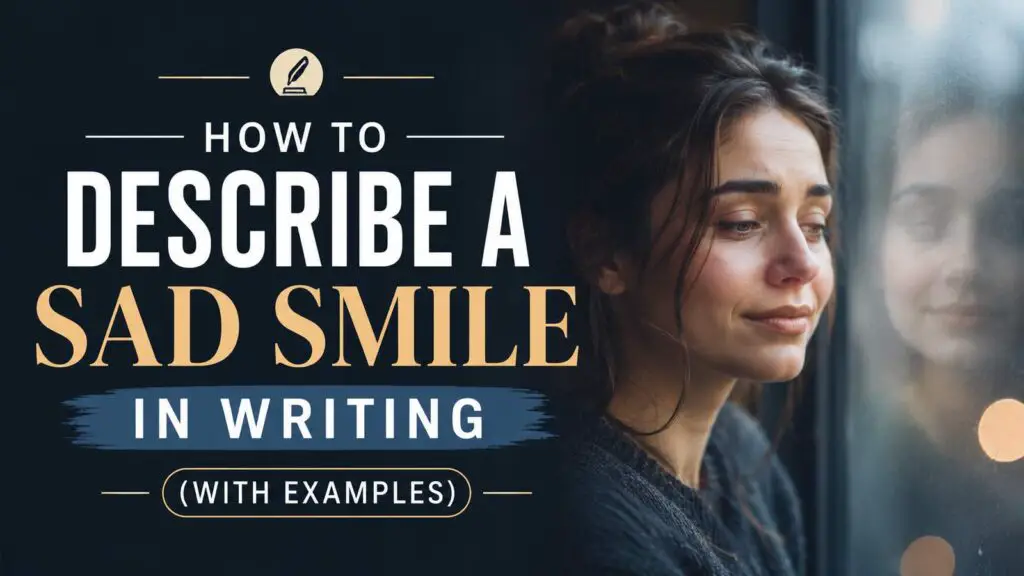
A sad smile is one of the most powerful expressions a writer can describe. Unlike a joyful smile, it carries two emotions at the same time. It can reveal grief hidden behind courage, disappointment softened by acceptance, or love mixed with loss. Because it is emotionally complex, a sad smile often tells readers far more than dialogue alone.
The key is to avoid simply writing, “She smiled sadly.” Instead, show the smile through the character’s facial expressions, eyes, body language, actions, and the surrounding emotional context. By focusing on these details, readers can experience the character’s feelings rather than simply being told about them. Here are several ways to describe a sad smile in writing.
How to Describe a Sad Smile in Writing
#1. Show the Smile Not Reaching the Eyes
One of the clearest signs of a sad smile is that it affects only part of the face. While the lips may curve upward, the eyes remain distant, tired, or full of emotion. Since people often express genuine feelings through their eyes, this contrast immediately tells readers that the smile is masking deeper sadness. Describing the eyes alongside the smile creates a more vivid and believable emotional image.
This technique works because readers naturally look for consistency in a character’s expression. If the mouth smiles while the eyes appear empty, watery, or exhausted, the emotional conflict becomes obvious without needing additional explanation. You can describe dull eyes, unfocused gazes, glassy eyes, or eyes that refuse to make contact. Even subtle details, such as a smile accompanied by eyebrows pulled together or eyelids weighed down with emotion, can strengthen the effect. By emphasizing what the eyes are doing—or not doing—you allow readers to sense that the smile is only a surface reaction hiding something much deeper.
Her lips curved into a small smile, but her eyes remained tired and glassy.
He smiled, though nothing in his eyes seemed to follow.
#2. Make the Smile Small or Fragile
A sad smile is rarely broad or carefree. More often, it appears as a faint, hesitant expression that seems uncertain or delicate. Words like small, weak, fragile, flickering, or trembling help communicate that the smile requires effort. This approach emphasizes the emotional weight behind the expression and makes it feel authentic.
Instead of describing a confident grin, focus on a smile that barely forms before fading or one that seems almost reluctant to appear. The size and strength of the smile can reflect the character’s emotional state. A barely noticeable smile suggests sorrow that is difficult to overcome, while a trembling smile may hint that tears or painful memories are close to the surface. These subtle descriptions allow readers to understand that the character is trying to express warmth or hope while carrying emotional pain.
A fragile smile touched her lips, so faint it almost disappeared before it began.
He gave a small, broken smile, the kind that looked like it took effort to hold.
#3. Add Tears or Moist Eyes
Combining a smile with tears creates a striking emotional contrast. It shows that the character is experiencing happiness and sadness—or hope and grief—at the same time. Even if tears never fall, watery or glistening eyes can communicate overwhelming emotion. This technique works especially well during emotional reunions, farewells, or moments of acceptance.
A smile through tears often tells readers that the character has reached an emotional limit. They may be grateful, relieved, heartbroken, or accepting a painful reality. Rather than stating these emotions directly, let the physical details tell the story. Describe tears collecting along the eyelashes, blurred vision, damp cheeks, or a smile interrupted by an unsteady breath. These visual details create a memorable emotional image while allowing readers to interpret the complex emotions for themselves.
She smiled through the tears gathering at the corners of her eyes.
His smile wavered as his eyes filled, but he did not look away.
#4. Use Body Language Around the Smile
A smile rarely exists in isolation. Supporting it with body language gives readers additional clues about the character’s emotional state. Lowered eyes, slumped shoulders, trembling hands, a shaky breath, or avoiding eye contact can all reinforce the sadness behind the smile. These accompanying details make the description richer and more immersive.
Think about how people naturally behave when they are trying to manage difficult emotions. A character may look at the floor instead of another person’s face, fold their arms tightly across their chest, clasp their hands together, or release a slow sigh before smiling. Small movements such as swallowing hard, wiping away a tear, or hesitating before speaking can strengthen the emotional impact. By combining facial expression with posture and movement, you create a scene that feels more realistic and emotionally layered.
She looked down and smiled, pressing her fingers against her lips as if to keep herself from crying.
He gave a tired smile and rubbed the back of his neck, unable to meet her eyes.
#5. Show the Character Trying to Hide Pain
Sometimes a sad smile is less about expressing emotion and more about concealing it. A character may smile to reassure others, protect themselves from vulnerability, or avoid revealing how deeply they are hurting. Showing the effort behind the smile allows readers to sense the emotional struggle beneath the surface without directly stating it.
Instead of saying the character was pretending to be okay, show the strain involved in maintaining the smile. Perhaps the smile appears forced, fades too quickly, or is accompanied by clenched teeth, tightened muscles, or a shaky voice. The character might smile before changing the subject or excuse themselves before their emotions become obvious. These subtle signs communicate that the smile is a mask rather than a genuine reflection of how they feel.
She smiled as if it could cover the hurt in her voice.
He forced a smile, but it cracked before he could make it convincing.
#6. Use Contrast Between Words and Expression
A powerful way to highlight a sad smile is to contrast it with the character’s dialogue. The words they speak may sound encouraging, polite, or optimistic, while the expression on their face suggests something entirely different. This disconnect creates emotional depth and allows readers to understand what the character truly feels.
People often say one thing while feeling another, especially during emotionally difficult moments. A character may congratulate someone while privately grieving, reassure a loved one despite their own fears, or insist that everything is fine when their expression clearly suggests otherwise. By placing hopeful dialogue beside a sorrowful smile, you invite readers to read between the lines. This creates stronger emotional engagement because readers recognize the hidden feelings without being told outright.
“I’m happy for you,” she said with a smile that looked more like goodbye.
“It’s fine,” he said, smiling softly, though his voice had lost all its warmth.
#7. Describe the Smile as Fading Quickly
A sad smile often appears only for a brief moment before disappearing. It may flicker across the character’s face and vanish as sadness returns. Describing the smile’s short duration emphasizes how difficult it is for the character to maintain a positive expression and reinforces the emotional conflict beneath it.
Rather than presenting the smile as a fixed expression, describe it as something temporary. It might appear after hearing a comforting memory before fading into silence, or it may disappear the instant the character is left alone with their thoughts. Verbs such as flickered, wavered, faded, collapsed, or melted away help capture this fleeting quality. The brief nature of the smile reminds readers that happiness is only passing through while sadness remains.
A smile flickered across her face and vanished almost at once.
He tried to smile, but it faded before it could settle.
#8. Connect the Smile to Memory or Loss
Sad smiles frequently appear when a character reflects on someone or something they have lost. The smile may represent gratitude for a cherished memory while also acknowledging that it can never return. Linking the smile to memory or longing adds emotional depth and helps readers understand why the expression carries both warmth and sorrow.
Memories often create mixed emotions. A character might smile while looking at an old photograph, hearing a familiar song, revisiting a meaningful place, or remembering a conversation with someone they miss. The smile acknowledges the beauty of the memory, while the sadness comes from knowing the moment cannot be relived. By tying the expression to a specific memory or loss, you give readers a concrete emotional anchor that makes the scene more meaningful and memorable.
She smiled at the photograph, but the sadness in it belonged to another lifetime.
A soft smile crossed his face as he remembered her voice, and for a moment he looked both grateful and wounded.
Closing Thoughts
A sad smile works best when it reveals emotional conflict. It should not just tell the reader that a character is sad. It should show the character trying to carry sadness, hide it, accept it, or soften it for someone else.
To describe a sad smile well, focus on contrast. Let the mouth smile while the eyes do not. Let the character speak gently while their body shows pain. Let the smile appear briefly, tremble, fade, or break. That is what makes the expression feel human.