
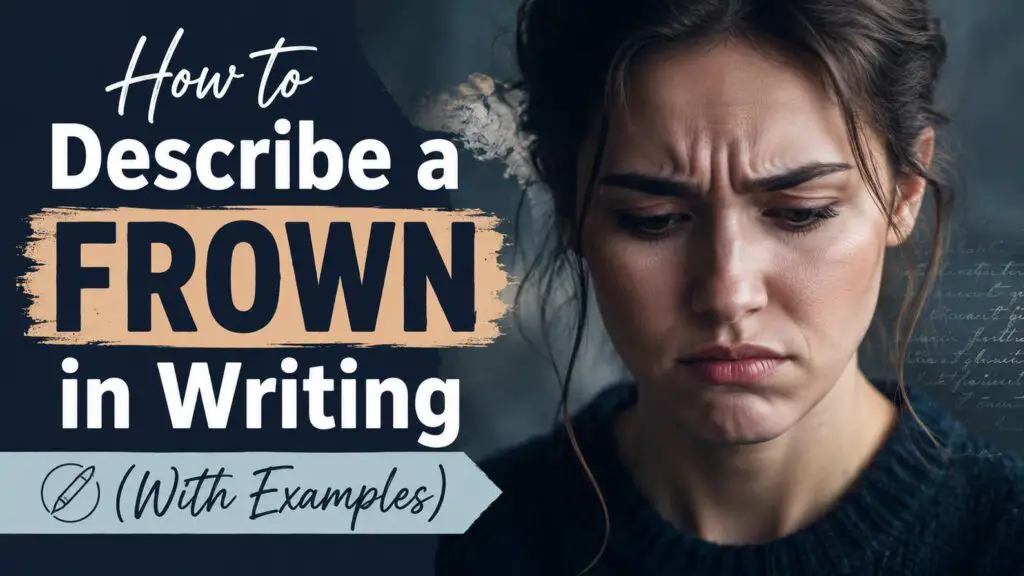
A frown can say more than a full paragraph of dialogue. It can reveal anger, confusion, disappointment, pain, suspicion, concern, or quiet sadness without a single word being spoken. Because facial expressions are universal, readers instinctively understand the emotions behind them when they are described well. A carefully written frown can build tension, deepen characterization, and reinforce the emotional atmosphere of a scene.
In writing, the goal is not just to say that a character frowned, but to show what kind of frown appeared and what it meant in the moment. The same expression can communicate very different emotions depending on the situation, the character’s personality, and the accompanying body language. By describing the details behind a frown, you can create scenes that feel more vivid and emotionally authentic. Here are several effective ways to describe a frown in writing.
How to Describe a Frown in Writing
#1. Describe the Movement of the Brows
The eyebrows are often the first part of the face to change when someone frowns. They may pull together, lower, knit, crease, or pinch. Describing these subtle movements helps readers visualize the expression while also hinting at the emotion behind it. A slight furrow may suggest uncertainty or concentration, while deeply knitted brows can indicate anger, worry, or frustration. Focusing on the eyebrows allows you to communicate emotion naturally without relying on dialogue or directly naming the feeling.
His brows drew together as he studied the letter, the lines between them deepening with every word.
She lowered her brows, her expression turning sharp and unreadable.
#2. Focus on the Mouth
A frown is often just as noticeable in the mouth as it is in the eyebrows. The lips may turn downward, press together, tighten, tremble, or flatten into a firm line. These small details can communicate disappointment, sadness, irritation, or restrained emotion. Rather than simply stating that a character frowned, describing the shape and tension of the mouth creates a clearer mental image and adds emotional depth to the scene.
Her mouth curved downward, not dramatically, but enough to show the hurt she was trying to hide.
He pressed his lips into a thin line, the frown settling slowly across his face.
#3. Show the Whole Face Tightening
Sometimes a frown spreads across the entire face instead of affecting only one feature. The forehead creases, the jaw tightens, the cheeks become tense, and the eyes may narrow. Describing the expression as a complete facial reaction emphasizes the intensity of the character’s emotions. This approach works especially well during moments of conflict, shock, grief, or determination, where multiple facial muscles react at once.
His face tightened into a deep frown, every line of it marked by disbelief.
A heavy frown crossed her face, pulling at her forehead and hardening her eyes.
#4. Use the Eyes to Add Emotion
The eyes often reveal the true meaning behind a frown. Two characters may wear identical frowns, yet one may look fearful while the other appears furious. Narrowed eyes can suggest suspicion or anger, while moist eyes paired with a frown may communicate heartbreak or disappointment. Combining the expression with eye details creates a richer and more emotionally nuanced description that helps readers understand exactly what the character is experiencing.
She frowned, her eyes narrowing as if she had just heard something she could not trust.
His frown deepened, but it was the sadness in his eyes that made her look away.
#5. Connect the Frown to Body Language
Facial expressions rarely exist on their own. A character who frowns may also cross their arms, clench their fists, avoid eye contact, shake their head, or shift their posture. Pairing a frown with meaningful body language reinforces the emotion and makes the character’s reaction feel more believable. It also prevents descriptions from becoming repetitive by showing emotion through multiple physical cues.
He frowned and folded his arms, planting himself in the doorway like he had no intention of moving.
She looked down with a small frown, twisting the ring on her finger.
#6. Make the Frown Subtle
Not every emotional moment requires a dramatic expression. A slight frown can communicate hesitation, mild concern, uncertainty, or quiet disapproval without drawing too much attention to itself. These understated reactions often feel more realistic because people frequently suppress or soften their emotions. Using a subtle frown can create emotional tension by suggesting that a character is holding something back.
A faint frown touched the corners of her mouth before she answered.
He gave a small frown, barely noticeable, but she caught it anyway.
#7. Make the Frown Intense
There are times when a character’s emotions become impossible to hide. A deep or pronounced frown can express overwhelming anger, grief, disgust, or frustration. Strengthening the description with words that emphasize depth, tension, or severity helps readers appreciate the emotional weight of the moment. This type of frown works especially well during climactic scenes or emotionally charged confrontations.
A fierce frown carved itself across his face as he listened to the accusation.
Her deep frown made the room feel colder.
#8. Use Metaphor Carefully
Metaphors can make a description more memorable when they are used with restraint. Comparing a frown to a storm cloud, a shadow, or a crack in calmness can reinforce the mood without becoming distracting. The key is to choose comparisons that fit the tone of the scene and feel natural. A well-placed metaphor can make an ordinary facial expression more vivid while adding a layer of atmosphere.
A frown settled over his face like a storm cloud.
Her smile vanished, and a frown cut across her features.
#9. Show What the Frown Reveals
A frown should do more than describe a physical movement. It should reveal something about the character’s thoughts, emotions, or internal conflict. Readers become more engaged when facial expressions hint at hidden feelings instead of simply labeling them. By connecting the frown to what the character is silently experiencing, you give the expression greater purpose and emotional impact.
He frowned at the empty chair, and for the first time that morning, his confidence seemed to crack.
She frowned at the invitation, not because she hated the idea, but because she wanted to say yes too badly.
#10. Avoid Repeating the Word Frown Too Often
While the word frown is perfectly acceptable, using it repeatedly can make descriptions feel repetitive. Varying your wording keeps the prose fresh while still communicating the same expression. Alternatives such as “his brow furrowed,” “her mouth tightened,” “his expression darkened,” or “a crease formed between her eyebrows” allow you to describe similar emotions without sounding repetitive. Mixing these variations throughout your writing also creates a smoother reading experience.
A crease formed between her brows as she read the final sentence.
His expression darkened, the corners of his mouth sinking with disappointment.
Closing Thoughts
A frown is more than a facial expression. It is a small emotional signal that can reveal what a character feels before they say a word. The best descriptions focus on the brows, mouth, eyes, and body language while matching the expression to the scene.
Instead of simply writing that a character frowned, show how the frown appeared, what caused it, and what it revealed. That will make the moment feel more vivid, natural, and emotionally clear.