
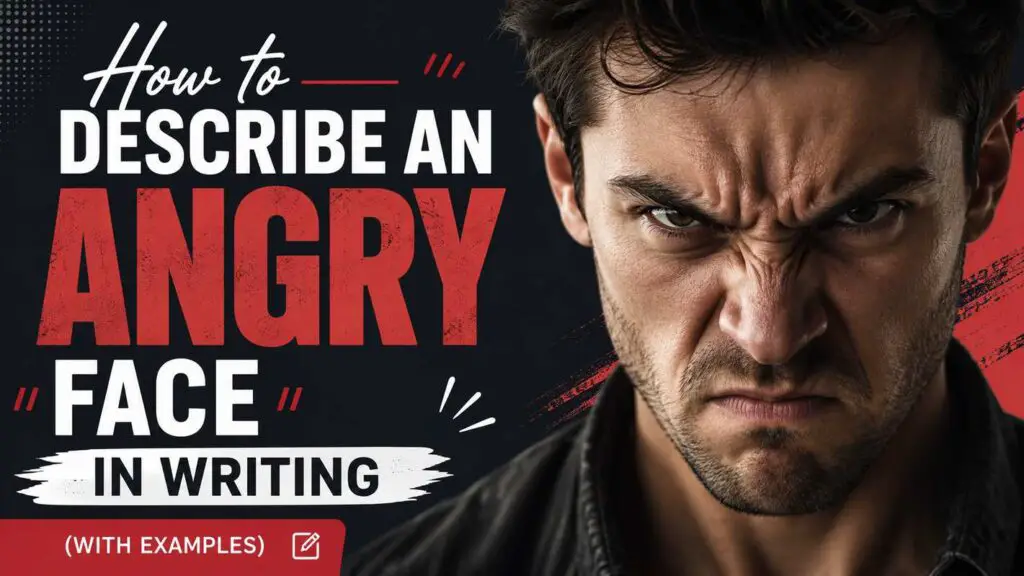
Anger is one of the strongest emotions a writer can show on a character’s face. But simply writing “he looked angry” or “she looked furious” often feels flat and tells the reader very little. Stronger descriptions allow readers to experience the emotion by observing the same physical details another character would notice.
An angry face is rarely defined by a single feature. The eyes, eyebrows, mouth, jaw, skin, and even breathing work together to create an expression that reveals not only anger but also its intensity. A slight tightening of the lips may suggest restrained frustration, while a flushed face and bared teeth can signal explosive rage. Choosing the right details helps distinguish one character’s anger from another’s and adds depth to every scene.
A well-described angry face also reveals personality. Some characters wear their emotions openly, while others fight to hide them behind a calm expression. The following techniques will help create vivid, believable descriptions of angry faces in writing.
How to Describe an Angry Face in Writing
#1. Describe the Eyes
The eyes are often the first place anger appears, making them one of the most effective features to describe. They may narrow, harden, glare, flash, burn, or become unnervingly cold. The way a character looks at another person can communicate hostility, resentment, disappointment, or barely controlled rage before a single word is spoken. Small details, such as an unblinking stare or eyes that dart with irritation, can make the emotion feel even more realistic.
Examples:
His eyes narrowed until they were little more than dark slits, fixed on her with a look sharp enough to cut.
Her eyes flashed with anger, bright and dangerous, as if one more word would make her explode.
He stared at me with cold, furious eyes that did not blink.
#2. Describe the Eyebrows
Eyebrows change position almost instinctively when someone becomes angry. They may pull downward, knit together, furrow deeply, or create heavy lines across the forehead. These subtle movements add tension to the face and can make an expression appear intimidating, skeptical, or openly hostile. Because eyebrow movement is easy for readers to visualize, it is an effective way to reinforce other facial details.
Examples:
His brows drew together in a deep, unforgiving scowl.
Her eyebrows lowered, casting a shadow over her eyes as her patience disappeared.
A sharp crease formed between his brows, deepening with every word.
#3. Describe the Mouth
The mouth often reflects how a character expresses or suppresses anger. Lips may tighten, press into a thin line, curl into a sneer, tremble with emotion, or pull back to reveal clenched teeth. Some characters struggle to keep their mouths shut, while others allow their expressions to betray contempt or bitterness. Paying attention to the mouth adds another layer of emotion beyond simply saying a character is angry.
Examples:
Her lips pressed into a thin, bloodless line.
His mouth curled into a bitter sneer, but his eyes held no humor.
He clenched his teeth so hard the muscles in his jaw jumped.
#4. Describe the Jaw
The jaw is especially useful for showing controlled or restrained anger. A clenched jaw often suggests that a character is holding back words or actions they desperately want to release. Small details, such as a muscle twitching beneath the skin or a jaw locking into place, communicate internal tension without requiring dialogue. This approach is particularly effective for characters who rarely lose their composure.
Examples:
His jaw tightened, the muscle ticking beneath his skin.
She held her jaw rigid, as though every word she refused to say was trapped behind her teeth.
A hard line formed along his jaw as he swallowed his anger.
#5. Describe the Skin and Color
Strong emotions frequently change the color and appearance of the face. Anger may cause someone to flush bright red, develop blotchy cheeks, or appear hot and tense. Others may grow pale when their anger is mixed with shock or fear. Including these physical reactions reminds readers that anger affects the entire body, making the description feel more vivid and believable.
Examples:
His face flushed a deep red, the anger rising in him like heat from a fire.
The color drained from her face, leaving only the cold shape of her fury.
Red blotches spread across his cheeks as his temper broke through.
#6. Describe the Nose and Breathing
Anger often changes the way people breathe, even if they remain silent. A character’s nostrils may flare, their breathing may become shallow or heavy, or they may release sharp, frustrated breaths through their nose. These reactions suggest mounting tension and help build suspense before the character finally speaks or acts. Combining breathing with facial expressions creates a more complete emotional picture.
Examples:
Her nostrils flared as she drew in a slow, furious breath.
He breathed hard through his nose, each breath louder than the last.
A sharp inhale lifted his chest, but he said nothing.
#7. Describe the Whole Expression
Sometimes the strongest description combines several facial features instead of focusing on only one. The eyes, eyebrows, mouth, jaw, and skin all work together to create a unified expression. By describing multiple details at once, writers can paint a clearer picture of a character’s emotional state while avoiding repetitive descriptions throughout a story.
Examples:
His eyes narrowed, his jaw locked, and his mouth flattened into a line of pure resentment.
Her face hardened all at once: brows low, lips tight, eyes bright with fury.
The smile vanished from his face, replaced by a stare so cold and angry that the room seemed to still.
#8. Show the Difference Between Quiet Anger and Explosive Anger
Not every angry face looks the same. Quiet anger often appears through stillness, controlled breathing, cold eyes, or tightly pressed lips, creating an unsettling sense of restraint. Explosive anger, by contrast, may involve a flushed face, wide eyes, bared teeth, and exaggerated expressions. Showing these differences allows readers to understand both the emotion and how the character is likely to respond next.
Examples:
She did not shout. She only looked at him with a calm, terrible anger that made him step back.
His face twisted with rage, teeth bared and eyes blazing.
The silence on her face was worse than screaming.
#9. Match the Face to the Character
Every character experiences and expresses anger differently. Personality, upbringing, confidence, and emotional control all influence how anger appears on the face. A proud character may glare openly, while a timid one may hide their expression as much as possible. Tailoring facial descriptions to the individual character makes the emotion feel authentic rather than generic.
Examples:
He lifted his chin, his angry stare full of wounded pride.
She looked away, but the tightness around her mouth betrayed her anger.
Only the faint twitch in his cheek revealed how furious he was.
#10. Avoid Overused Descriptions
Common phrases such as “red with anger” or “eyes blazing” can still be useful, but relying on them repeatedly weakens the writing. Instead, look for fresh combinations of physical details and emotional context that suit the scene and the character. Original descriptions are often more memorable because they capture the unique way a specific person experiences anger rather than using familiar clichés.
Examples:
Anger settled over his face slowly, closing every soft part of him.
Her expression sharpened, as though kindness had been wiped clean from it.
His face did not change much, but something in his eyes turned hard and unreachable.
Closing Thoughts
Describing an angry face in writing is about more than naming the emotion. It is about showing what anger does to the body. The eyes, mouth, jaw, skin, and breathing can all reveal what a character feels before they speak.
The strongest descriptions are specific. They match the character, the situation, and the type of anger being shown. Whether the anger is loud, quiet, cold, or explosive, the face can help readers feel the emotion without needing to be told.