
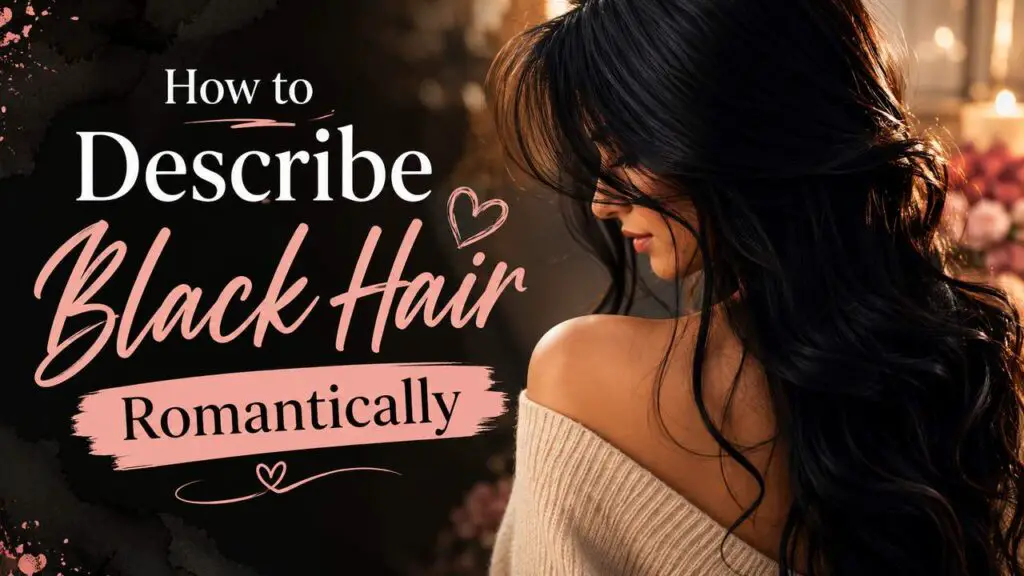
Black hair has a beauty that can feel deep, mysterious, elegant, and unforgettable. It can remind someone of midnight skies, polished silk, dark waves, soft shadows, or moonlit velvet. When described romantically, black hair should feel more than just “dark.” It should carry mood, texture, movement, and emotion.
There is something naturally captivating about black hair because it holds both simplicity and depth at the same time. At first glance, it may seem like a single shade, but when observed closely, it reveals layers of richness—subtle highlights, soft reflections, and shifting tones that change with light and movement. This quiet complexity makes it especially powerful in romantic descriptions, where even the smallest detail can evoke strong emotion.
The key is to describe black hair in a way that feels tender, vivid, and personal. Rather than simply mentioning its color, focus on the feelings it inspires and the imagery it creates. Think about how it frames a face, how it moves when someone turns their head, or how it catches light in a way that feels almost magical. Consider the atmosphere it creates—whether it feels calm and soothing, bold and striking, or soft and intimate.
Romantic descriptions are most effective when they connect physical beauty with emotion. Black hair can symbolize mystery, comfort, elegance, or even longing, depending on how it is portrayed. By blending sensory details with emotional depth, you can transform a simple observation into something memorable and meaningful.
Here are beautiful ways to describe black hair romantically.
How to Describe Black Hair Romantically
#1. Compare It to the Night Sky
Black hair naturally carries the romance of night. It can be described as deep, quiet, endless, and full of mystery. The night sky is one of the most timeless romantic images because it evokes wonder, peace, and infinite beauty. Comparing someone’s black hair to the darkness of the evening or the vastness of the heavens immediately gives the description a poetic quality.
You can mention moonlight, stars, twilight, or midnight to enrich the comparison. These celestial images create a sense of elegance and make the hair feel enchanting rather than simply dark. This approach works especially well in romance novels, love letters, and descriptive prose where emotion is just as important as appearance.
Her hair fell around her shoulders like a piece of the midnight sky, dark and endless beneath the moonlight.
His black hair held the quiet beauty of night, soft as shadow and deep as starlit silence.
#2. Use Words That Suggest Softness
Romantic descriptions often focus on touch because physical texture helps readers imagine closeness and intimacy. Black hair can be described as silky, smooth, soft, flowing, feather-light, or velvety. These descriptive words transform a visual observation into something almost tangible.
Instead of merely saying the hair looks beautiful, emphasize how it appears to feel. Softness suggests warmth, comfort, and affection, making the description more emotionally engaging. Even if no one actually touches the hair, suggesting its texture allows readers to imagine the experience, strengthening the romantic atmosphere.
Her black hair slipped through the light like silk, soft enough to make the world seem quieter.
His dark hair looked impossibly soft, the kind of softness that invited a lingering touch.
#3. Describe the Way It Moves
Hair becomes especially romantic when it feels alive. Rather than describing it as static, show how it falls over the shoulders, sways in the breeze, tumbles across the face, or flows with each movement. Movement creates vivid mental images that make the description more dynamic and memorable.
The motion of black hair can also reveal personality or emotion. Gentle movement can suggest grace and elegance, while windswept strands can convey freedom, confidence, or spontaneity. By focusing on movement, you turn hair from a simple physical feature into part of the character’s presence and charm.
Her black hair spilled over her back in soft waves, moving like a secret the wind could not keep.
His hair shifted gently across his forehead, dark and effortless, as if even the breeze admired him.
#4. Compare It to Luxurious Fabrics
Luxurious fabrics such as silk, velvet, satin, and cashmere are often associated with elegance, comfort, and refinement. Comparing black hair to these materials immediately gives it a sense of richness and sophistication. The comparison also helps readers imagine both the appearance and texture at the same time.
These fabric metaphors work because they evoke smoothness, softness, and quiet beauty without becoming overly elaborate. They are especially effective when describing glossy, healthy hair that reflects light beautifully. A simple comparison to velvet or satin can elevate an ordinary description into one that feels romantic and timeless.
Her hair was black as velvet, smooth and rich beneath the golden light.
His dark hair had the quiet shine of satin, elegant in a way that needed no effort.
#5. Mention Its Shine
Black hair often reflects light in striking and beautiful ways. Instead of describing it as simply black, notice how sunlight, candlelight, or moonlight catches individual strands and gives the hair depth and dimension. The contrast between darkness and light creates an especially romantic image.
Words like gleaming, shimmering, glossy, luminous, or glistening can make the description more expressive. You can also describe reflections of silver, gold, or soft white light to show that black hair is full of subtle beauty. These details help readers picture the scene while making the hair appear vibrant and alive.
Her black hair gleamed under the candlelight, each strand catching gold like a whispered promise.
His hair shone with a midnight brightness, dark at first glance but alive wherever the light touched it.
#6. Use Nature-Inspired Images
Nature offers countless beautiful comparisons for black hair. Images such as ravens’ wings, flowing rivers, storm clouds, volcanic stone, forest shadows, and moonlit lakes all capture different aspects of its beauty. These comparisons make descriptions feel organic and emotionally rich.
Choose natural imagery that matches the mood of the scene. Calm rivers and moonlit water create peaceful romance, while storm clouds or dark forests suggest mystery and intensity. Because nature is familiar to most readers, these comparisons are easy to visualize while still feeling poetic and original.
Her hair flowed like a dark river over her shoulders, quiet, graceful, and impossible to ignore.
His black hair had the beauty of a raven’s wing, dark and sleek with a hidden shine.
#7. Connect It to Emotion
A romantic description becomes far more powerful when it reflects the emotions of the person doing the observing. Rather than treating black hair as an isolated physical feature, show how it affects someone’s thoughts, feelings, or memories. This transforms a simple description into an emotional moment.
You might describe how the sight of someone’s hair leaves another person speechless, makes them smile, reminds them of a cherished memory, or draws them closer. Romantic writing is ultimately about emotional connection, so linking physical beauty with heartfelt emotion creates descriptions that feel sincere and memorable.
Her black hair framed her face so gently that he forgot every thought except how beautiful she looked.
His dark hair made him look tender and untouchable at once, like someone from a dream she did not want to wake from.
Closing Thoughts
To describe black hair romantically, focus on more than its color. Think about its softness, shine, movement, texture, and emotional effect. Compare it to beautiful things like midnight, silk, velvet, rivers, moonlight, and ravens. The most memorable descriptions combine vivid imagery with genuine emotion, allowing readers to see not only the beauty of the hair itself but also the feelings it inspires. By choosing thoughtful comparisons and sensory details, you can create descriptions that feel elegant, heartfelt, and unforgettable.