
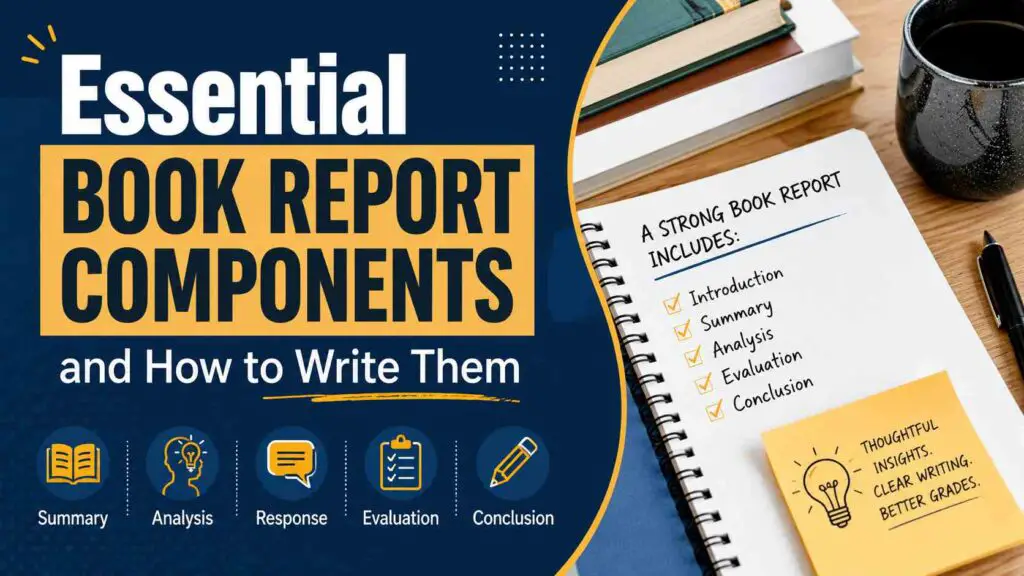
Book reports are one of the most common academic writing assignments, helping students demonstrate their understanding of a book while developing critical thinking and writing skills. Unlike a simple summary, a book report analyzes the author’s ideas, characters, themes, and writing style to provide a complete picture of the work.
Whether you’re writing a book report for elementary school, high school, or college, understanding the essential components and following a structured process can make the task much easier. This guide explains everything needed to create a clear, organized, and engaging book report.
The Basics of a Book Report
A book report is a written analysis that summarizes and evaluates a book. It provides readers with an overview of the story or subject while discussing important elements such as the characters, themes, setting, and author’s purpose. Depending on the assignment, book reports can focus on fiction or nonfiction works, and the approach may vary slightly based on the genre.
The primary goal of a book report is to show that the reader understands the material. Rather than simply retelling the story, a strong book report demonstrates comprehension by explaining how the various parts of the book work together to convey its message. This includes recognizing key plot developments, understanding character motivations, and identifying the central ideas the author is trying to communicate.
In addition to demonstrating understanding, book reports also help develop important academic skills. These include critical thinking, organization, and the ability to express ideas clearly in writing. By analyzing a book and forming an opinion about it, students learn how to support their thoughts with evidence and communicate them effectively.
Book reports may vary depending on the assignment, but most follow a similar structure. They begin with basic information about the book, continue with a summary of the content, examine important literary elements, and conclude with the writer’s evaluation or personal response. Some assignments may also require additional elements, such as quotations from the text, comparisons to other works, or connections to real-world issues.
Understanding these basics provides a strong foundation for writing a clear and effective book report.
Book Report Components (And How To Write Them)
Every effective book report contains several essential sections that work together to provide a complete analysis of a book. Each component serves a specific purpose, helping readers understand not only what the book is about but also why it is meaningful. Including all of these elements creates a report that is organized, informative, and demonstrates a thorough understanding of the material.
#1. Book Information
Every book report should begin with the basic facts about the book. This section identifies the work being discussed and gives readers important background information before they begin reading the analysis.
Typically, include the book’s title, the author’s name, the publication year, the genre, and the publisher if your instructor requests it. Depending on the assignment, you may also include the number of pages, edition, or ISBN.
Although this section is brief, accuracy is important. Correct bibliographic information makes the report more professional and allows readers to easily identify the exact book being reviewed.
How To Write This Component
Start your book report by creating a short list of the book’s publication details. Look at the title page and the copyright page inside the book to find accurate information.
Unless your teacher specifies otherwise, include:
- Full title of the book
- Author’s full name
- Genre
- Publication year
- Publisher, if required
Write this information exactly as it appears in the book. Double-check spellings, especially the author’s name and book title. Even though this section is short, errors here can make the rest of the report appear less reliable.
#2. Introduction
The introduction serves as the opening to the book report and sets the stage for everything that follows. Its purpose is to introduce the book, capture the reader’s interest, and explain what aspects of the book will be discussed.
A good introduction usually includes the book title and author, a brief overview of the subject or story, and one or two sentences explaining the significance of the work. If appropriate, you can also mention the intended audience or the author’s background.
Avoid giving away major plot twists or your complete opinion in the introduction. Instead, provide just enough information to prepare readers for the detailed discussion in the body of the report.
How To Write This Component
Think of the introduction as a preview of your report. Begin with one or two sentences introducing the book. Mention the title, author, and genre naturally.
Next, briefly explain what the book is about in one or two sentences without revealing important spoilers. Finally, tell readers what your report will discuss, such as the plot, characters, themes, and your evaluation.
A simple structure looks like this:
- Introduce the book.
- Briefly explain what it is about.
- State what the report will cover.
Keep the introduction between one and two paragraphs. Save your opinions and detailed analysis for later sections.
#3. Plot Summary
The plot summary provides a concise overview of the main events in the book. Its purpose is to explain what happens without overwhelming the reader with every detail.
Focus on the major events that move the story forward, introduce the main conflict, and explain how the story develops toward its conclusion. Present the events in logical order so readers can easily follow the storyline.
A strong summary is balanced. It includes enough information to explain the story while remaining concise and objective. Rather than describing every chapter, concentrate on the events that are essential to understanding the book.
How To Write This Component
Before writing the summary, make a list of the five to eight most important events in the book. Ask yourself which events someone would need to know in order to understand the story.
Write the summary in chronological order. Start by introducing the main character and the initial situation. Then explain the central conflict, the major turning points, and how the conflict is resolved.
Avoid including every subplot or minor event. If an event does not change the story in a meaningful way, leave it out.
Keep your writing objective. Instead of saying, “This was the best part of the book,” simply describe what happened. Opinions belong in the evaluation section.
#4. Main Characters
Characters are often the driving force behind a story, making this one of the most important sections of a book report. Describe the main characters and explain how they contribute to the plot.
Discuss each character’s personality, goals, strengths, weaknesses, relationships, and motivations. Consider how they respond to challenges and whether they change throughout the story.
For nonfiction books, this section may instead focus on the key individuals discussed by the author and their importance to the subject matter.
Analyzing characters helps readers understand why events unfold as they do and reveals many of the themes the author is exploring.
How To Write This Component
Choose only the most important characters rather than describing everyone in the book. For each major character, answer questions such as:
- What role does this character play?
- What motivates them?
- What challenges do they face?
- How do they change during the story?
- How do they influence the main conflict?
Support your observations with specific examples from the story instead of making unsupported statements. For example, explain which events demonstrate that a character is courageous, selfish, or compassionate.
Describe character development as well. Readers often want to know how a character changes between the beginning and end of the book.
#5. Setting
The setting explains where and when the events of the book take place. This includes not only the geographical location but also the historical period, cultural environment, and social conditions.
A well-developed setting often influences the characters’ decisions, creates the mood, and shapes the conflicts within the story. For example, a novel set during a war presents different challenges than one set in a peaceful modern city.
When discussing the setting, explain how it contributes to the story rather than simply identifying the location. Consider how changing the setting might alter the events or the overall message of the book.
How To Write This Component
Begin by identifying both where and when the story takes place. Then ask yourself how the setting affects the characters and the events.
For example:
- Does the historical period create specific challenges?
- Does the location influence the plot?
- Does the setting create suspense, danger, comfort, or mystery?
Instead of writing only “The story takes place in London,” explain why that location matters to the story. Connect the setting directly to the themes, characters, or conflicts whenever possible.
#6. Themes and Main Ideas
Every book communicates one or more central ideas. These themes represent the deeper messages that readers can take away after finishing the book.
Common themes include courage, friendship, sacrifice, justice, family, prejudice, perseverance, redemption, identity, freedom, and personal growth. Many books explore multiple themes simultaneously.
Rather than simply listing the themes, explain how the author develops them through the characters, conflicts, dialogue, and major events. Use examples from the book to support your explanation whenever possible. This demonstrates a deeper understanding than merely identifying the themes.
How To Write This Component
Start by asking what the book is really about beneath the surface events. A book may tell a story about a journey, a school, a war, or a family, but the deeper theme might be courage, loss, loyalty, injustice, or growing up.
Choose two or three major themes instead of trying to discuss every possible idea. For each theme, explain where it appears in the book and how the author develops it.
A useful structure is:
- Name the theme.
- Explain what the book says about that theme.
- Give an example from the story.
- Explain why that example matters.
For example, instead of writing, “The book is about friendship,” write something more specific: “The book shows that true friendship requires loyalty during difficult times.” Then support that idea with a character, event, or conflict from the book.
#7. Analysis of the Author’s Writing
A book report should also evaluate how the author tells the story or presents the information. This involves examining the author’s writing style and literary techniques.
Consider the tone, language, pacing, sentence structure, dialogue, descriptions, and overall organization. Think about whether the writing is humorous, emotional, suspenseful, formal, or conversational, and explain how these choices affect the reader’s experience.
You may also discuss literary devices such as symbolism, foreshadowing, imagery, metaphors, or irony if they play an important role in the book. Analyzing the author’s style helps readers appreciate not only the content but also the craftsmanship behind the writing.
How To Write This Component
Begin by describing the author’s style in simple, clear terms. Ask yourself what the writing feels like while reading. Is it fast-paced, serious, poetic, funny, suspenseful, emotional, simple, or descriptive?
Then explain how that style affects the book. For example, short sentences may create tension. Detailed descriptions may help readers imagine the setting. Humorous dialogue may make characters feel more realistic.
Look for specific writing choices such as:
- Tone
- Dialogue
- Description
- Pacing
- Symbolism
- Foreshadowing
- Imagery
- Point of view
Do not simply list these techniques. Explain how they shape the reader’s experience. A strong analysis connects the author’s writing choices to the book’s meaning, mood, or impact.
#8. Personal Evaluation
The personal evaluation allows you to present your own opinion of the book while supporting your conclusions with logical reasoning.
Rather than simply stating that you liked or disliked the book, explain why. Discuss what the author did well, where the book could have been improved, whether the story was engaging, and whether the themes were communicated effectively.
You might also comment on the intended audience and recommend the book to particular types of readers. A balanced evaluation considers both strengths and weaknesses, demonstrating thoughtful analysis rather than personal preference alone.
How To Write This Component
Start by deciding your overall opinion of the book. Did you find it interesting, powerful, confusing, inspiring, slow, entertaining, or disappointing? Then explain the reasons behind your opinion.
Support your evaluation with specific examples. If you liked the characters, explain what made them believable. If you disliked the pacing, mention whether certain sections felt too slow or rushed. If the ending was effective, explain why it worked.
A good evaluation may discuss:
- Strengths of the book
- Weaknesses of the book
- Most memorable parts
- Whether the themes were clear
- Whether the characters felt realistic
- Whether the book achieved its purpose
- Who would enjoy reading it
Avoid vague statements like “It was good” or “It was boring.” Instead, write a thoughtful explanation that shows you have considered the book carefully.
#9. Conclusion
The conclusion brings the entire book report together by summarizing the most important points discussed throughout the paper.
Briefly restate the book’s significance, reinforce the central themes, and summarize your overall evaluation. This section should remind readers of the key insights without repeating earlier paragraphs word for word.
Avoid introducing new information in the conclusion. Instead, provide a strong closing statement that leaves readers with a clear understanding of the book and its overall impact.
How To Write This Component
Begin the conclusion by briefly restating the main idea of your report. Do not repeat your introduction word for word. Instead, summarize the most important insight you developed.
Then bring together the main points you discussed, such as the plot, characters, themes, writing style, and your evaluation. Keep this section concise and focused.
End with a final sentence that leaves the reader with a clear impression of the book. You might mention its lasting message, its value to readers, or why it is worth reading.
A strong conclusion should:
- Summarize the report’s main points
- Reinforce your overall opinion
- Avoid new information
- Leave the reader with a final thoughtful statement
Closing Thoughts
A well-written book report does much more than summarize a story. It demonstrates careful reading, thoughtful analysis, and the ability to communicate ideas clearly. By including all the essential components and following a structured writing process, students can produce reports that are informative, organized, and engaging.
With practice, writing book reports becomes easier and more rewarding. Developing strong reading, analytical, and writing skills through book reports not only leads to better academic performance but also encourages a deeper appreciation for literature and the ideas that books have to offer.