
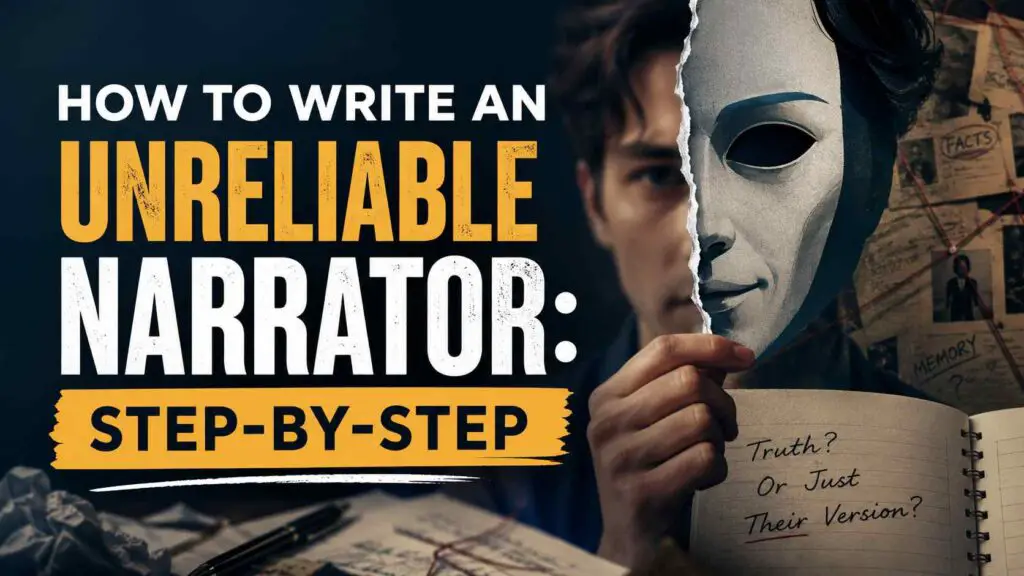
A good unreliable narrator does more than lie to the reader. This type of narrator shapes the story through a limited, distorted, biased, or incomplete version of events. The reader slowly realizes that the narrator’s account cannot be fully trusted.
An unreliable narrator can make a story more suspenseful, emotional, and layered. It allows the writer to create mystery without needing a traditional villain or plot twist. The tension comes from the gap between what the narrator says and what may actually be true.
What is Unreliable Narrator?
An unreliable narrator is a character who tells the story in a way that cannot be completely trusted. This does not always mean the narrator is intentionally dishonest. Sometimes the narrator misunderstands events. Sometimes they hide painful truths. Sometimes they are biased, immature, confused, mentally unstable, proud, guilty, or deeply emotional.
The key point is that the reader cannot accept everything the narrator says at face value.
For example, an unreliable narrator may describe another character as cruel, while the reader notices that the other character is actually patient and reasonable. A narrator may insist they are innocent, while their actions suggest guilt. A narrator may forget important details, contradict themselves, or explain events in a way that feels too convenient.
Unreliable narration works best when the reader senses that something is wrong before the truth becomes clear. The story becomes a puzzle. The narrator gives one version of reality, but the reader begins to see another version underneath it.
How to Write an Unreliable Narrator
Writing an unreliable narrator requires control. The narrator cannot simply be random, confusing, or dishonest for no reason. Their unreliability must come from who they are, what they want, what they fear, and what they refuse to admit.
A strong unreliable narrator gives the reader enough truth to stay engaged, but enough distortion to create doubt. The goal is not to trick the reader unfairly. The goal is to make the reader question the narrator’s version of events in a satisfying way.
Here is a step by step process for writing an unreliable narrator effectively.
Step #1: Decide Why the Narrator is Unreliable
Start by choosing the reason your narrator cannot be fully trusted. This reason should come from the character’s personality, background, or emotional state.
A narrator may be unreliable because they are lying. They may want to protect themselves, hide a crime, impress someone, or control how others see them. This is intentional unreliability.
But the narrator may also be unreliable without meaning to be. They may be young and naive. They may be grieving. They may be jealous. They may be afraid to face the truth. They may misunderstand people because of their own assumptions.
Before writing, ask: Why does this narrator see the world incorrectly?
The answer will guide the whole story. A proud narrator will distort events differently from a frightened narrator. A guilty narrator will notice different things from a naive narrator. The stronger the reason, the more believable the unreliability becomes.
Step #2: Give the Narrator a Clear Personal Bias
An unreliable narrator should have a strong way of interpreting the world. This bias affects what they notice, ignore, exaggerate, and explain away.
For example, a jealous narrator may describe a rival’s normal behavior as manipulative. A lonely narrator may see small acts of kindness as romantic interest. A bitter narrator may believe everyone is selfish. A guilty narrator may become defensive even when no one accuses them.
This bias should appear naturally in the narration. The narrator does not need to announce it. Instead, the reader should feel it through the narrator’s word choices, judgments, and descriptions.
If the narrator dislikes someone, they may describe that person’s smile as fake. If the narrator admires someone, they may excuse obvious flaws. This creates a gap between what the narrator says and what the reader suspects.
Step #3: Let the Narrator Tell Partial Truths
The best unreliable narrators are not completely false. They often tell the truth, but not the whole truth.
This makes them believable.
A narrator may accurately describe what happened but leave out their own role in causing it. They may include facts but arrange them in a misleading way. They may confess to small mistakes while hiding bigger ones. They may describe another person’s actions but not reveal the emotional history behind them.
Partial truth is powerful because it keeps the reader uncertain. The narrator seems honest enough to trust, but something still feels incomplete.
To use this technique, decide what the narrator knows but avoids saying. Then write around that hidden truth. Let the narrator mention related details, but not the full meaning behind them.
Step #4: Plant Small Contradictions
Contradictions help the reader notice that the narrator may not be reliable.
These contradictions should be subtle at first. The narrator might say they do not care about someone, but constantly talk about them. They might claim they are calm, while describing their shaking hands. They might say they remember everything clearly, then later change an important detail.
Do not make every contradiction obvious. If the narrator contradicts themselves too often, the story may feel messy instead of clever.
Use small cracks in the narration. Let the reader wonder whether the narrator is mistaken, lying, or avoiding something. Over time, these cracks can build toward a larger revelation.
Step #5: Show Reality Through Other Characters
Other characters can reveal the truth without directly explaining it.
They may react to the narrator in ways that do not match the narrator’s self-image. For example, the narrator may believe they are charming, but other characters seem uncomfortable around them. The narrator may claim to be the victim, but others treat them with caution.
Dialogue is especially useful. A character might say, “That is not what happened,” or “You always remember it that way.” These lines create doubt without giving everything away.
You can also show reality through body language, setting, or consequences. If the narrator says everything is fine, but their room is full of unpaid bills, broken objects, or ignored messages, the reader understands more than the narrator admits.
Step #6: Control What the Narrator Notices
An unreliable narrator does not notice everything equally. What they observe should reflect their emotional state and blind spots.
A vain narrator may focus on appearance. A paranoid narrator may focus on suspicious details. A grieving narrator may miss practical information but notice reminders of the person they lost. A guilty narrator may avoid looking at evidence connected to their guilt.
This selective attention makes the narration feel realistic. People do not experience the world objectively. They notice what matters to them.
When writing a scene, ask what this narrator would pay attention to first. Then ask what they would ignore. The ignored details can be just as important as the described ones.
Step #7: Make the Reader Work, But Not Too Hard
Unreliable narration should invite the reader to participate. The reader should be able to collect clues, question statements, and form their own interpretation.
However, the story should not become so confusing that the reader gives up.
Give enough evidence for the reader to sense the truth. Do not hide every important clue. The ending should feel surprising but fair. When the truth is revealed, the reader should be able to look back and see that the signs were there.
A good rule is this: the narrator may mislead the reader, but the writer should not cheat the reader.
The difference matters. Misleading comes from the narrator’s flawed perspective. Cheating happens when the writer withholds necessary information in an unfair way.
Step #8: Reveal the Truth Gradually
The truth behind an unreliable narrator does not always need one dramatic reveal. Sometimes it works better when the reader slowly understands what is happening.
You can reveal the truth through repeated contradictions, outside perspectives, memories, documents, dialogue, or consequences. The narrator may begin confident, then become defensive. They may start leaving out more details. They may accidentally reveal something they meant to hide.
The reveal should match the story’s tone. A psychological thriller may use a shocking twist. A literary story may use a quiet moment of realization. A coming-of-age story may reveal that the narrator misunderstood the world because of youth or innocence.
The important thing is that the reveal changes how the reader understands the story.
Step #9: Keep the Narrator Human
Even if the narrator lies, manipulates, or misunderstands everything, they should still feel human.
Avoid making the narrator unreliable only as a trick. Give them emotions, desires, fears, and wounds. Let the reader understand why they tell the story this way.
A narrator may lie because they are ashamed. They may exaggerate because they feel powerless. They may misread others because they desperately want love. They may deny the truth because accepting it would destroy their identity.
When the reader understands the emotional reason behind the unreliability, the story becomes deeper. The narrator is no longer just a device. They become a real character.
Closing Thoughts
An unreliable narrator is one of the most powerful tools in storytelling. It allows the writer to create suspense, mystery, irony, and emotional depth through voice and perspective.
To write one well, focus on motivation, bias, contradiction, and control. Decide why the narrator cannot be trusted. Let their worldview shape the story. Give the reader clues without making the truth too obvious. Most importantly, make the narrator believable as a person.
A strong unreliable narrator does not simply deceive the reader. They reveal how complicated truth can be when filtered through fear, pride, guilt, memory, or desire.