
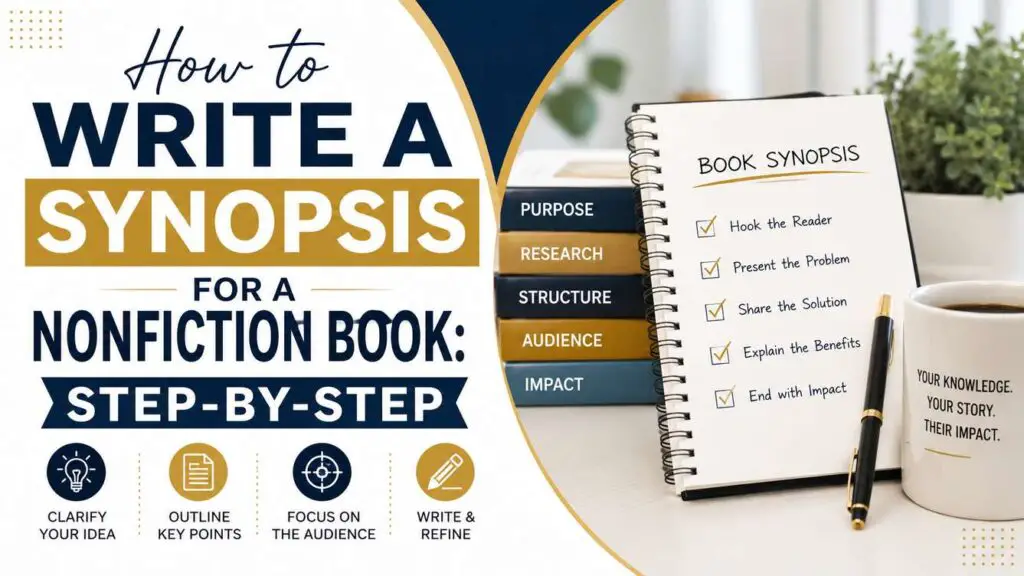
Writing a synopsis for a nonfiction book can feel challenging because nonfiction is usually built around ideas, arguments, lessons, research, or transformation. Unlike fiction, where the synopsis often follows a plot, a nonfiction synopsis must show the purpose of the book, the problem it solves, the audience it serves, and the value it provides.
A strong nonfiction synopsis gives readers, agents, publishers, or editors a clear understanding of what the book is about and why it matters. It does not need to include every detail. Instead, it should present the central idea, structure, and promise of the book in a clear and compelling way.
What is a Synopsis for a Nonfiction Book?
A synopsis for a nonfiction book is a concise summary of the book’s main idea, purpose, structure, and key takeaways. It explains what the book is about, who it is for, what problem it addresses, and how the book delivers value to the reader.
In nonfiction, the synopsis often acts as a bridge between the book idea and the reader’s understanding of its importance. It may be used in a book proposal, marketing materials, query letters, publishing submissions, or personal planning.
A good nonfiction synopsis should not read like a chapter-by-chapter outline alone. It should also communicate the book’s core argument, unique perspective, and practical benefit. The goal is to make someone understand the book quickly and feel that it has a clear reason to exist.
Key Components of a Synopsis for a Nonfiction Book
A nonfiction synopsis works best when it includes the most important parts of the book without becoming too long or too detailed. Each component should help the reader understand the book’s purpose, structure, and value. Here are the key components to include:
#1. The Central Idea
The central idea is the main message or argument of the book. It answers the question: What is this book really about?
For example, a book about productivity may not simply be about getting more done. Its central idea might be that people become more productive when they focus on energy management instead of time management.
Your synopsis should state this idea clearly. Avoid vague statements such as “this book helps people improve their lives.” Instead, explain the specific belief, method, insight, or argument that drives the book.
#2. The Target Audience
A nonfiction synopsis should make clear who the book is written for. The target audience helps publishers, agents, and readers understand the book’s market and purpose.
The audience may be beginners, professionals, parents, entrepreneurs, students, church leaders, managers, writers, or people facing a specific problem. The more clearly you define the audience, the easier it is to show why the book matters.
For example, instead of saying the book is for “everyone who wants success,” say it is for “first-time entrepreneurs who need a simple system for validating business ideas before investing money.”
#3. The Problem the Book Solves
Most nonfiction books address a problem, question, confusion, pain point, or need. Your synopsis should explain that problem early.
This helps the reader understand the importance of the book. A book about personal finance might address debt, poor budgeting habits, or confusion about investing. A book about leadership might address burnout, poor communication, or lack of trust in teams.
When writing this section of the synopsis, show that the problem is real and meaningful. Then explain how the book responds to it.
#4. The Book’s Promise
The book’s promise is the transformation, result, or understanding the reader can expect. It tells the reader what they will gain by reading the book.
This promise should be realistic and specific. For example, a nonfiction book may promise to help readers understand a historical event, build better habits, strengthen relationships, improve decision-making, or develop a new skill.
The synopsis should show the outcome clearly. This makes the book feel useful and purposeful.
#5. The Main Structure
A nonfiction synopsis should explain how the book is organized. This does not always mean listing every chapter in detail. Instead, it means showing the reader how the book moves from beginning to end.
For example, the book may begin by identifying a problem, then explain the root causes, then introduce a framework, then provide practical steps, and finally show how to apply the ideas in real life.
A clear structure helps the synopsis feel organized. It also shows that the book is not just a collection of random thoughts but a complete and carefully developed work.
#6. The Unique Angle
Many nonfiction topics have already been written about. Your synopsis should show what makes your book different.
The unique angle may come from your personal experience, professional expertise, research, framework, writing style, case studies, spiritual perspective, cultural insight, or practical method.
For example, two books may both be about prayer, but one may focus on beginners, another on busy parents, and another on healing after grief. The topic may be familiar, but the angle can make the book stand out.
#7. The Key Takeaways
A nonfiction synopsis should briefly mention the major lessons or takeaways readers will receive.
These takeaways help show the substance of the book. They may include principles, strategies, habits, frameworks, stories, examples, or insights.
Do not overload the synopsis with too many details. Focus on the most important takeaways that support the book’s central promise.
How to Write a Synopsis for a Nonfiction Book
Writing a nonfiction synopsis becomes easier when you approach it step by step. Instead of trying to summarize the entire book at once, build the synopsis from its most important parts. Follow this process to create a clear and useful nonfiction synopsis:
Step #1: Identify the Core Message of the Book
Start by writing one sentence that explains the main idea of the book. This sentence should capture the heart of the book.
Ask yourself: What is the one thing readers should understand after reading this book? What argument, lesson, or perspective holds the book together?
For example, if your book is about confidence, your core message might be: “True confidence is not built by eliminating fear but by learning how to act wisely while fear is present.”
This core message will guide the entire synopsis. Without it, the synopsis may feel scattered or unclear.
Step #2: Define the Reader and Their Problem
Next, identify who the book is for and what problem they are facing. This helps you write a synopsis that feels focused.
Write down the type of reader you are trying to help. Then describe their main struggle. Be specific.
For example, the book may be for new managers who feel overwhelmed by leadership responsibilities. Their problem may be that they were promoted because of technical skill but were never taught how to lead people.
Once you know the reader and the problem, your synopsis can explain why the book is needed.
Step #3: Explain the Book’s Main Promise
After defining the problem, explain what the book helps the reader achieve. This is the book’s promise.
The promise should connect directly to the reader’s need. If the problem is confusion, the promise may be clarity. If the problem is burnout, the promise may be a healthier way to work. If the problem is lack of knowledge, the promise may be practical understanding.
Avoid making the promise too broad. A focused promise is more believable and more powerful.
Step #4: Summarize the Book’s Approach
Now explain how the book delivers its promise. This is where you describe the method, framework, argument, or structure of the book.
You might say that the book uses personal stories, research, historical examples, practical exercises, interviews, biblical reflection, case studies, or a step-by-step system.
The goal is to show that the book has a clear path. The reader should understand how the book moves from problem to solution.
Step #5: Outline the Main Sections or Chapters
Create a brief overview of the book’s main sections. You do not need to describe every chapter in equal detail unless the synopsis requires it.
Focus on the major movement of the book. For example:
The first part may explain the problem. The second part may introduce the main framework. The third part may show how to apply the framework. The final part may help readers sustain the change.
This gives the synopsis structure. It also helps the reader see that the book is complete and logically organized.
Step #6: Highlight the Unique Value of the Book
Once the structure is clear, explain what makes the book different from other books on the same subject.
Ask yourself: Why should this book exist? What does it say that feels fresh, useful, personal, practical, or urgent?
Maybe the book simplifies a complex topic. Maybe it speaks to a neglected audience. Maybe it combines personal experience with professional knowledge. Maybe it offers a new framework.
Include this unique value in the synopsis so the book feels distinctive.
Step #7: Keep the Language Clear and Direct
A nonfiction synopsis should be easy to read. Avoid overly academic language, vague claims, and unnecessary detail.
Use clear sentences. Focus on the main idea. Make every paragraph serve a purpose.
Instead of trying to impress the reader with complexity, aim to help them understand the book quickly. A strong synopsis is not confusing. It is sharp, organized, and confident.
Step #8: Revise for Flow and Focus
After writing the first draft, read the synopsis from beginning to end. Check whether it flows naturally.
The synopsis should move from the book’s topic to its audience, problem, promise, structure, and value. If any part feels repetitive or unclear, revise it.
Remove details that do not support the main purpose. Strengthen weak sentences. Make sure the synopsis gives a complete but concise picture of the book.
A good final test is this: after reading the synopsis, someone should be able to explain what the book is about, who it is for, why it matters, and what makes it useful.
Closing Thoughts
A nonfiction book synopsis is more than a simple summary. It is a clear presentation of the book’s purpose, value, structure, and promise. It helps readers, agents, publishers, and editors quickly understand why the book matters.
To write a strong synopsis, begin with the core message. Then define the audience, explain the problem, describe the promise, summarize the structure, and highlight the book’s unique angle.
The best nonfiction synopsis is focused, practical, and easy to understand. It does not try to include everything. Instead, it gives the reader enough clarity to see the strength of the book and the value it offers.