
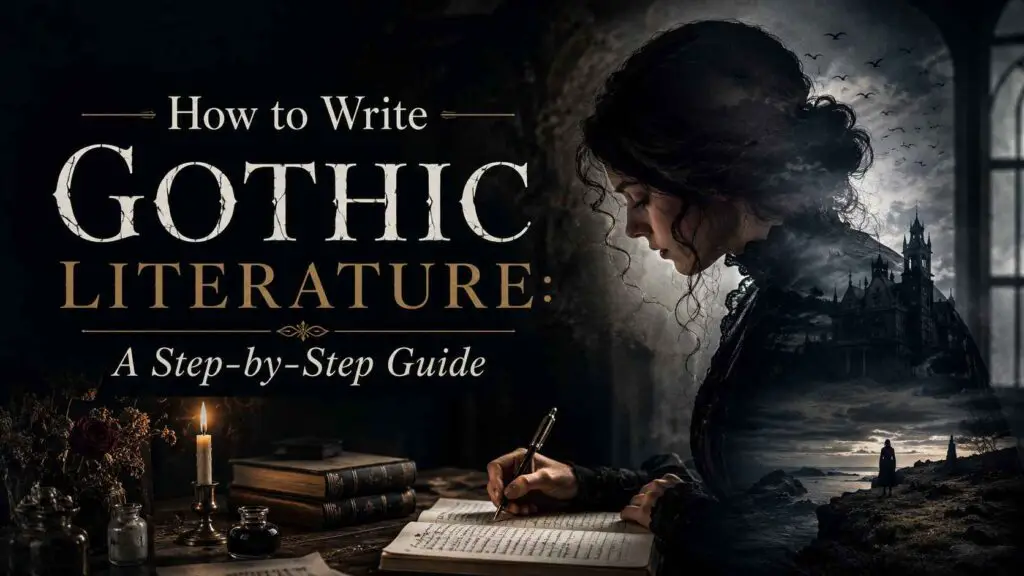
Gothic literature is one of the most atmospheric forms of storytelling. It pulls readers into dark places, troubled minds, hidden secrets, and emotional tension. A Gothic story does not simply try to scare the reader. It creates a world where fear, mystery, beauty, decay, and psychological conflict live together.
At its heart, Gothic literature is about unease. A ruined castle, an isolated house, a stormy night, a family curse, or a buried crime can all become part of the Gothic mood. But the true power of Gothic writing comes from what these things suggest. They point to guilt, desire, madness, grief, repression, or a past that refuses to stay buried.
To write Gothic literature well, a writer must build atmosphere carefully. The setting must feel alive. The characters must carry emotional weight. The mystery must deepen slowly. The supernatural, if included, should feel connected to the fears and secrets of the story. Gothic fiction works best when the reader feels that something is wrong long before the truth is revealed.
Introducing Gothic Literature
Gothic literature is a type of fiction that combines mystery, horror, romance, psychological tension, and dark atmosphere. It often explores haunted places, family secrets, forbidden desires, madness, death, isolation, and the struggle between reason and fear.
The genre became popular in the late eighteenth century and developed through novels, short stories, and poems. Classic Gothic works often featured castles, monasteries, ruins, ghosts, curses, and mysterious villains. Over time, the genre expanded. Modern Gothic stories may take place in old mansions, decaying towns, isolated farms, city apartments, schools, hospitals, or even ordinary homes that hide terrible secrets.
Gothic literature is not only about frightening events. It is also about emotional and psychological darkness. A Gothic story may show a character being haunted by memory, guilt, obsession, family history, or a secret they cannot escape. The fear often comes from uncertainty. The reader wonders whether the danger is supernatural, psychological, human, or all three at once.
This is what makes Gothic literature so powerful. It turns fear into atmosphere. It turns setting into symbolism. It turns secrets into structure. A good Gothic story feels heavy with meaning, even when the plot is simple.
Key Elements of Gothic Literature
Atmosphere
Gothic writing depends on a strong emotional setting. The reader should feel tension in the air. Darkness, silence, storms, shadows, decay, strange sounds, locked rooms, and empty corridors can all help create this effect. The atmosphere should not feel decorative. It should support the story’s emotional meaning.
To use atmosphere effectively in your own writing, focus on layering sensory details. Instead of simply stating that a place is frightening, show how it feels through sound, texture, and light. For example, describe the echo of footsteps in an empty hall, the flicker of a candle that refuses to stay lit, or the damp chill that clings to the walls. Let these details reflect the emotional state of your character. If your protagonist is anxious, the setting should seem more oppressive. If they are curious, the same space might feel mysterious rather than threatening. Build atmosphere gradually so that unease grows over time rather than appearing all at once.
Setting
Gothic stories often take place in isolated, old, or decaying locations. These places may include castles, mansions, ruins, forests, graveyards, churches, remote villages, or abandoned buildings. The setting often reflects the inner state of the characters. A crumbling house may suggest a crumbling family. A locked room may suggest a hidden memory. A dark forest may suggest confusion, danger, or moral uncertainty.
When writing your own Gothic setting, choose a location that naturally supports your story’s themes. Think about how the physical space can mirror the emotional or psychological conflict of your characters. Add specific details that make the setting unique, such as a staircase that creaks at certain hours or a garden that has been left to decay. Consider how characters move through the space. Are there areas they avoid? Are there places they are drawn to without understanding why? Use the setting not just as a backdrop, but as an active force that shapes the story.
Mystery
The story usually contains something hidden. This may be a crime, a family secret, a forbidden relationship, a ghostly presence, a curse, or a disturbing truth about one of the characters. The mystery should unfold gradually. Gothic fiction works best when the reader feels pulled deeper into uncertainty.
To build an effective mystery, plan what is hidden and decide how it will be revealed over time. Introduce small clues early in the story, such as strange behavior, unexplained objects, or fragments of information that do not fully make sense. Avoid revealing everything too quickly. Instead, allow each new detail to raise more questions. You can use letters, diaries, rumors, or conversations to slowly uncover the truth. Make sure the mystery connects to the emotional core of the story so that the final revelation feels meaningful rather than simply surprising.
Intense Emotions
Gothic literature often includes heightened emotional experiences. Characters may feel fear, grief, longing, guilt, obsession, jealousy, madness, or spiritual dread. These emotions are rarely subtle. Gothic stories are dramatic, intimate, and often extreme.
When writing intense emotions, focus on showing how those feelings affect your character’s thoughts and actions. Instead of simply stating that a character is afraid, describe how their body reacts, how their thoughts become scattered, or how they begin to doubt what they see. Let emotions influence decisions, even when those decisions lead to danger. You can also contrast different emotional states to create tension, such as a character who feels both attraction and fear toward the same person or place. Keep the emotions grounded in the character’s experiences so that they feel believable, even when they are extreme.
The Supernatural
Ghosts, curses, omens, visions, monsters, and unexplained events can appear in Gothic fiction, though they are not always required. When used, the supernatural should serve a purpose. It should reveal something about the characters, the past, or the central fear of the story.
If you choose to include supernatural elements, decide how they function within your story. Are they clearly real, or could they be explained by the character’s mind? Establish rules for how the supernatural behaves so that it feels consistent. Introduce these elements gradually, beginning with subtle hints before moving to more direct encounters. Make sure each supernatural event adds to the tension or reveals new information. Avoid using supernatural moments only for shock value. Instead, connect them to the deeper themes of guilt, memory, or unresolved conflict.
The Past
Gothic literature often explores how the past shapes the present. Old sins, buried memories, inherited guilt, family curses, and historical violence frequently influence current events. In Gothic fiction, the past is never truly gone. It returns through places, objects, dreams, secrets, and hauntings.
To incorporate the past into your story, decide what happened before the main events and how it continues to affect the present. Reveal this history in pieces rather than all at once. You can use objects like portraits, letters, or heirlooms to hint at what came before. Characters may also carry emotional or psychological traces of the past, such as guilt or fear that they do not fully understand. As the story progresses, allow the past to become more visible and more powerful, eventually forcing the characters to confront it. This connection between past and present will give your Gothic story depth and cohesion.
How to Write Gothic Literature: Step-by-Step
Gothic literature invites writers to explore dark emotions, mysterious settings, and the tension between fear and fascination. It blends atmosphere, symbolism, and psychological depth to create stories that linger in the reader’s mind. To craft a compelling Gothic narrative, it helps to follow a clear and thoughtful approach, which is outlined in the step-by-step process below.
#1. Choose a Dark Central Fear
Start by identifying the emotional fear that sits at the heart of your novel. This fear will become the foundation of your plot, characters, setting, and themes. Rather than asking what frightening event will happen, ask what emotional truth your protagonist is trying to avoid.
Common Gothic fears include the fear of madness, abandonment, family disgrace, death, guilt, corruption, imprisonment, loss of identity, or the return of a buried past.
For example, if your protagonist fears becoming insane like their mother, the entire novel can revolve around that fear. Strange noises, mysterious visions, and unexplained events may cause both the protagonist and the reader to question whether the supernatural is real or whether the character is slowly losing their grip on reality.
A useful exercise is to write a single sentence that summarizes your novel’s central fear:
“A young woman fears she is inheriting the madness that destroyed her family.”
Every major scene should reinforce or challenge that fear.
#2. Create an Atmospheric Setting
Your setting should feel like a character in its own right. It should influence the mood, create obstacles, hide secrets, and reinforce the themes of the story.
Begin by selecting a location that naturally creates isolation and unease. Gothic settings often include old mansions, remote estates, abandoned monasteries, decaying villages, windswept cliffs, forgotten cemeteries, or fog-covered forests.
Once you have chosen a location, develop its history. Ask yourself:
- Who built it?
- What happened there years ago?
- What secrets are hidden within it?
- Why has it fallen into decay?
For example, an abandoned estate might have once belonged to a wealthy family whose youngest daughter disappeared without explanation. Her portrait still hangs in the house, and no one in the nearby village will discuss what happened.
When writing scenes, engage all five senses. Instead of writing, “The house was creepy,” describe peeling wallpaper, the smell of mildew, the groaning of floorboards, and the cold draft moving through empty corridors.
#3. Build a Troubled Main Character
Gothic protagonists are often deeply flawed, emotionally wounded, or psychologically vulnerable. Readers should sense that the character carries a burden before the story even begins.
Create a character profile that includes:
- A major emotional wound
- A secret they are hiding
- A desire they cannot easily achieve
- A fear they desperately want to avoid
For example:
- Emotional wound: The death of a sibling.
- Secret: The protagonist was partly responsible.
- Desire: To uncover the truth behind a family mystery.
- Fear: That the family is cursed because of their actions.
This combination immediately creates internal conflict. The protagonist wants answers but fears what those answers may reveal.
The stronger the internal conflict, the stronger the Gothic atmosphere will become.
#4. Add a Secret from the Past
Almost every memorable Gothic novel contains a hidden truth waiting to be discovered.
Before outlining your story, decide exactly what secret lies at the center of the novel. The secret should be powerful enough to affect multiple characters and drive the plot forward.
Examples include:
- A murder disguised as an accident.
- A hidden inheritance.
- An illegitimate heir.
- A wrongful imprisonment.
- A betrayal that destroyed a family.
- A supernatural pact made generations ago.
Once you know the secret, work backward and create clues that gradually reveal pieces of it.
For example:
- Chapter 2: The protagonist finds a damaged diary.
- Chapter 5: An elderly servant refuses to answer questions.
- Chapter 9: A hidden room is discovered.
- Chapter 14: A letter exposes part of the truth.
This structure allows tension to build naturally throughout the novel.
#5. Use Symbols and Repeated Images
Symbols help make Gothic fiction feel deeper and more memorable.
Choose two or three symbols connected to your central themes and repeat them throughout the story.
For example:
| Symbol | Possible Meaning |
|---|---|
| Cracked mirror | Broken identity |
| Black roses | Death and decay |
| Locked door | Hidden secrets |
| Raven | Omen or guilt |
| Clock | Time running out |
| Fog | Confusion and uncertainty |
Suppose your novel explores hidden guilt. A cracked mirror might appear in the opening chapter, reappear in a dream sequence, and finally shatter completely during the climax when the truth is revealed.
This repetition creates emotional resonance and thematic unity.
#6. Create Slow-Burning Suspense
One of the biggest mistakes Gothic writers make is revealing too much too quickly.
Instead, focus on creating a growing sense of unease.
A practical approach is to introduce mysteries in stages:
Stage One: Something feels wrong.
Example: The protagonist hears footsteps in an empty hallway.
Stage Two: Evidence begins to accumulate.
Example: Objects change location overnight.
Stage Three: Danger becomes more personal.
Example: The protagonist discovers someone has been watching them.
Stage Four: The truth begins to emerge.
Example: Hidden documents reveal connections to an old tragedy.
Each revelation should answer one question while creating two new ones.
This keeps readers engaged and eager to uncover the mystery.
#7. Decide How to Use the Supernatural
Before writing your first chapter, decide what role the supernatural will play.
There are three common approaches:
Fully Supernatural
Ghosts, curses, and hauntings are real.
Example: The spirit of a murdered woman seeks revenge.
Psychological Gothic
Everything appears supernatural but has a rational explanation.
Example: The protagonist mistakes grief-induced hallucinations for ghostly encounters.
Ambiguous Gothic
The truth remains uncertain.
Example: The reader never fully learns whether the haunting was real or imagined.
Many successful Gothic novels use the third approach because uncertainty creates lasting tension.
Whatever option you choose, remain consistent throughout the story.
#8. Write with Rich but Controlled Description
Description is essential in Gothic literature, but it should always serve the story.
Instead of describing everything in a room, focus on details that support mood and character.
For example, if your protagonist enters a library, do not describe every bookshelf. Instead, highlight details that create unease:
“Dust covered the shelves like a burial shroud, and one book lay open on a table as though someone had abandoned it moments earlier.”
Notice how the description creates questions and tension.
A useful guideline is that every description should accomplish at least one of the following:
- Build atmosphere.
- Reveal character.
- Advance the plot.
- Reinforce theme.
If it does none of these, consider removing it.
#9. Make the Conflict Emotional and Psychological
The most powerful Gothic novels are not driven solely by external events. They are driven by emotional struggles.
As you plan your story, identify the conflict happening inside your protagonist.
For example:
External conflict:
A woman investigates strange occurrences in her ancestral home.
Internal conflict:
She fears discovering that her family committed terrible crimes.
These two conflicts should constantly interact.
Each new clue should force the protagonist to confront their fears, beliefs, or emotional wounds.
This creates a story that feels both suspenseful and meaningful.
#10. Reveal the Truth with Impact
The climax of a Gothic novel should feel inevitable yet surprising.
Readers should be able to look back and see how the clues pointed toward the truth all along.
Before writing your ending, ask yourself:
- What mystery is being solved?
- What emotional journey is being completed?
- How has the protagonist changed?
For example, if the novel centers on a family curse, the final revelation might show that no curse ever existed. Instead, generations of guilt and secrecy created the illusion of one.
This type of ending provides both plot resolution and thematic depth.
After the revelation, allow the consequences to unfold. Show how the truth affects the characters, the setting, and the future. A strong Gothic ending often leaves readers with a lingering feeling of beauty, tragedy, or unease.
Closing Thoughts
Writing Gothic literature means creating a story where atmosphere, fear, mystery, and emotion work together. It is not enough to add ghosts, old houses, or storms. These elements must serve a deeper purpose. They must reveal what is hidden inside the characters, the setting, and the past.
A strong Gothic story begins with unease and grows into revelation. It gives the reader a world filled with shadows, but those shadows must mean something. They may point to guilt, grief, desire, madness, violence, or secrets that refuse to remain buried.
To write Gothic literature well, focus on mood, setting, character, suspense, and symbolism. Build the darkness slowly. Let the past press against the present. Give every frightening detail emotional weight. When done well, Gothic fiction does more than scare the reader. It lingers in the mind like a half-remembered dream, beautiful and disturbing at the same time.