
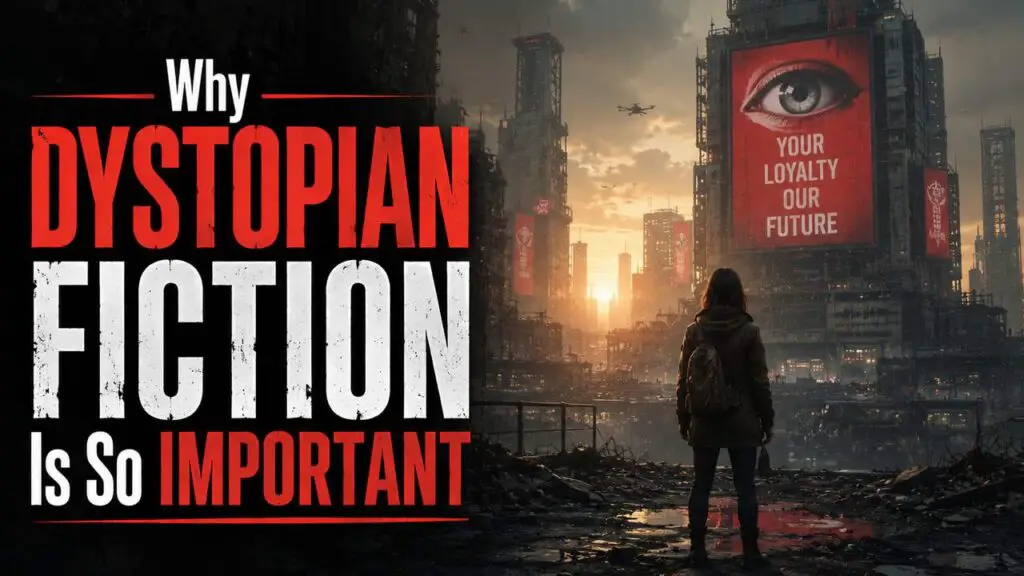
Dystopian fiction has become one of the most powerful forms of storytelling in modern literature. These stories imagine societies where fear, control, injustice, or suffering have become normal parts of life. They often show worlds that feel extreme, but they also reflect real human concerns.
At its best, dystopian fiction is not just about dark futures. It is about warning, questioning, and helping readers think more deeply about the world they live in. It asks what can happen when power goes unchecked, freedom is weakened, technology is misused, or people stop paying attention to injustice.
Understanding Dystopian Fiction
Dystopian fiction is a type of literature that presents an imagined society where life has become frightening, oppressive, or deeply flawed. These societies often appear organized or stable on the surface, but beneath that surface, people may suffer from control, fear, inequality, surveillance, propaganda, or loss of freedom.
A dystopia is usually the opposite of a utopia. A utopia imagines an ideal society. A dystopia imagines a society where attempts at order, perfection, security, or progress have gone terribly wrong.
Dystopian fiction often takes place in the future, but it does not always have to. Some dystopian stories are set in alternate versions of the present or in worlds that resemble our own. What matters most is not the time period, but the condition of society.
These stories usually focus on characters who begin to question the world around them. They may realize that the system they live under is unjust. They may discover hidden truths. They may resist authority. Through their journey, readers see the dangers of accepting harmful systems without question.
Elements of Dystopian Fiction
Dystopian fiction often includes several common elements. One major element is an oppressive government or ruling system. This authority may control what people say, think, read, believe, or do.
Another common element is surveillance. Characters may be watched constantly by the state, corporations, technology, or even other citizens. This creates fear and limits personal freedom.
Propaganda is also common in dystopian fiction. The people in power often control information. They may rewrite history, spread lies, or use slogans to shape public opinion.
Many dystopian stories also include social inequality. Some groups may enjoy comfort and privilege, while others live in poverty, danger, or forced obedience.
Technology can also play an important role. In some stories, technology is used to control people rather than help them. Machines, screens, data systems, or artificial intelligence may become tools of oppression.
Finally, dystopian fiction often includes resistance. A character or group begins to see the truth and push back against the system. This resistance may be brave, dangerous, imperfect, or tragic, but it gives the story its emotional force.
Why Dystopian Fiction Is So Important
Dystopian fiction matters because it helps readers examine society from a sharper angle. By creating extreme worlds, these stories make hidden dangers easier to see. They turn abstract fears into concrete situations. They show what life could become if cruelty, greed, control, or apathy are allowed to grow.
This type of fiction does more than entertain. It teaches readers to question systems, recognize warning signs, and think carefully about freedom, justice, and responsibility. Its importance can be seen in several powerful ways.
#1. It Warns Against the Abuse of Power
Dystopian fiction often shows what happens when too much power is placed in the hands of too few people. Governments, corporations, or ruling elites may claim that they are protecting society, but they often use that excuse to control people.
These stories remind readers that power must be questioned. A society can become dangerous when leaders are not held accountable. Even systems that begin with good intentions can become oppressive when they silence criticism or punish disagreement.
Through dystopian fiction, readers see how freedom can disappear slowly. It may not vanish all at once. It can be lost through fear, emergency rules, censorship, surveillance, or public obedience. This makes dystopian fiction a warning about the need to protect human rights before they are taken away.
#2. It Encourages Critical Thinking
Dystopian fiction pushes readers to ask difficult questions. Who controls information? Who benefits from the system? What happens to people who disagree? What is the cost of comfort, safety, or order?
These questions help readers become more thoughtful. Instead of accepting society as it is, they learn to look beneath the surface. They begin to notice how language, media, laws, and institutions can shape people’s beliefs.
This is one reason dystopian fiction is often studied in schools. It trains readers to think beyond the plot. The story becomes a way to discuss politics, ethics, technology, identity, and human nature.
#3. It Reflects Real-World Problems
Although dystopian fiction is imagined, it often reflects real problems. Stories about censorship, propaganda, inequality, environmental collapse, racism, surveillance, or authoritarianism connect strongly with real history and modern life.
This connection makes dystopian fiction powerful. Readers may enter the story expecting fantasy, but they often find a mirror. The world in the book may be exaggerated, but the fears behind it are familiar.
By turning real issues into fictional worlds, dystopian fiction allows readers to face uncomfortable truths. It can make social problems easier to understand because readers see how those problems affect characters emotionally and personally.
#4. It Shows the Value of Freedom
Freedom is easy to take for granted until it is gone. Dystopian fiction reminds readers how precious freedom is by showing worlds where people cannot speak openly, choose freely, love safely, or live honestly.
In many dystopian stories, characters are denied basic choices. Their jobs, relationships, beliefs, movements, and even thoughts may be controlled. This helps readers understand that freedom is not just a political idea. It is part of human dignity.
These stories also show that freedom requires courage. Characters who resist often face serious consequences. Their struggles remind readers that freedom must be defended, not merely enjoyed.
#5. It Explores the Danger of Conformity
Dystopian societies often depend on conformity. People are expected to obey, repeat official beliefs, and avoid standing out. Individuality becomes dangerous because it threatens the system.
This theme is important because it shows how oppression can survive through ordinary behavior. Not every harmful society is maintained only by cruel leaders. Sometimes it is maintained by fear, silence, habit, and social pressure.
Dystopian fiction asks readers to consider the cost of fitting in. It shows that when people stop thinking for themselves, injustice becomes easier to maintain. The individual who questions the system may seem strange at first, but that questioning is often the beginning of truth.
#6. It Helps Readers Understand Human Nature
Dystopian fiction places people under pressure. Characters must make hard choices in frightening circumstances. They may have to choose between safety and truth, obedience and resistance, survival and morality.
These situations reveal human nature. Some characters become selfish. Others become brave. Some betray their values. Others discover strength they did not know they had.
This makes dystopian fiction emotionally powerful. It is not only about broken societies. It is also about how people respond when the world around them becomes unjust. Readers are invited to ask what they would do in the same situation.
#7. It Inspires Hope Through Resistance
Even though dystopian fiction is often dark, it is not always hopeless. Many dystopian stories include acts of courage, love, memory, rebellion, or truth-telling. These acts may seem small, but they matter.
Resistance in dystopian fiction does not always mean victory. Sometimes the system remains powerful. Sometimes the ending is uncertain. But the act of resistance itself shows that oppression is not complete as long as someone refuses to surrender their humanity.
This is one of the deepest reasons dystopian fiction is important. It shows that hope can exist even in terrible conditions. It reminds readers that change often begins with awareness, courage, and the refusal to accept lies as truth.
Closing Thoughts
Dystopian fiction is important because it helps readers see the dangers that can threaten any society. It warns against unchecked power, blind obedience, propaganda, inequality, and the loss of freedom. It also reminds readers that courage, truth, and human dignity still matter, even in dark times.
These stories may imagine frightening worlds, but their purpose is not simply to scare us. Their purpose is to wake us up. Dystopian fiction challenges readers to think carefully about the present so that the future does not become something to fear.