
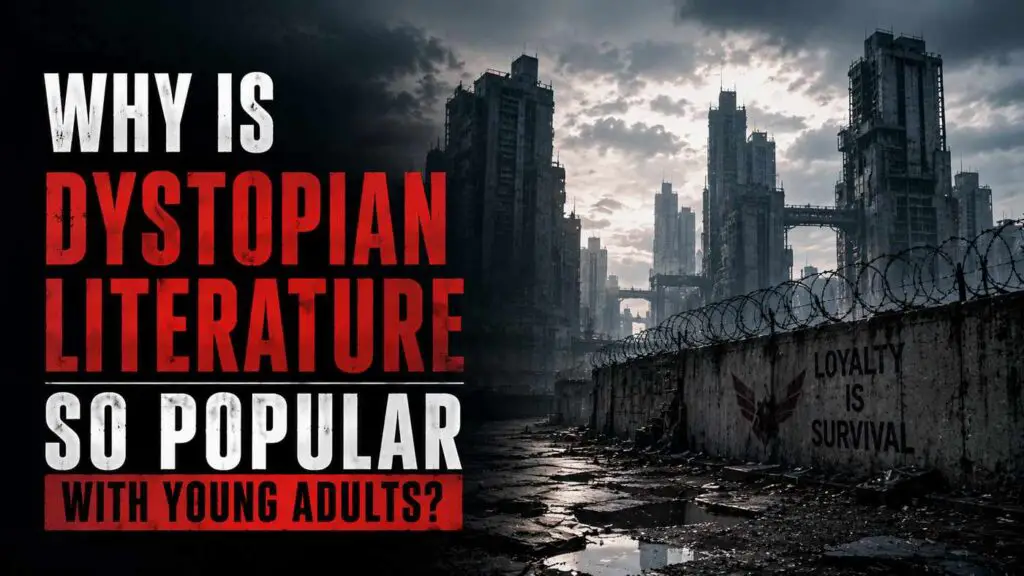
Dystopian literature has a powerful hold on young adult readers. These stories often imagine dark futures, broken societies, oppressive governments, environmental collapse, or worlds where freedom has been taken away. Yet despite their grim settings, they continue to attract millions of young readers.
The appeal is not just about danger or dramatic plots. Dystopian stories speak to the fears, questions, and hopes that many young adults carry. They explore identity, power, rebellion, survival, and the search for meaning in a world that feels uncertain.
Introducing Dystopian Literature
Dystopian literature presents a world where society has gone wrong in serious ways. The setting may look controlled, organized, or even perfect on the surface. But underneath, there is usually injustice, fear, violence, manipulation, or loss of freedom.
These stories often show characters living under strict rules. Governments may control what people think, say, read, or believe. Technology may be used to watch citizens. Social classes may be divided unfairly. Nature may be destroyed. Individual choice may be limited or completely removed.
In young adult fiction, dystopian literature often follows a teenager or young person who begins to question the system. At first, the character may accept the world as normal. Over time, they discover the truth and must decide whether to obey, escape, or resist.
This structure makes dystopian fiction especially powerful for young readers. It combines action and suspense with deeper questions about society, morality, courage, and personal identity.
Why Is Dystopian Literature So Popular With Young Adults?
Dystopian literature is popular with young adults because it reflects many of the emotional and social challenges they already face. These stories may be set in imaginary futures, but the struggles often feel familiar. Young readers see characters questioning authority, discovering who they are, and fighting for a better world.
Here are the main reasons dystopian literature connects so strongly with young adult readers.
#1. It Reflects Real Fears About the Future
Young adults are growing up in a world filled with uncertainty. Climate change, political conflict, economic pressure, war, social media, artificial intelligence, and global crises can make the future feel unstable.
Dystopian literature gives shape to these fears. It turns abstract worries into concrete stories. Instead of simply saying the future might be dangerous, these books show what danger could look like.
This helps young readers process anxiety in a structured way. They can explore frightening possibilities while still remaining safely inside a fictional world. The story becomes a place where fear can be examined, understood, and challenged.
#2. It Gives Young Characters Real Power
Many young adults feel ignored or underestimated by society. They are often told what to do, how to behave, what to study, and what kind of future to prepare for. Their opinions may not always be taken seriously.
Dystopian fiction often reverses this. The young protagonist becomes the person who sees the truth first. They challenge the system. They make difficult choices. They lead others. They become powerful.
This is deeply appealing because it gives young readers a sense of agency. It suggests that young people are not helpless. They can think for themselves. They can resist injustice. They can become part of meaningful change.
#3. It Explores Rebellion Against Authority
Adolescence is often a time of questioning. Young adults begin to examine rules, traditions, institutions, and beliefs that they once accepted without much thought. They may start asking whether authority is fair, honest, or worthy of trust.
Dystopian literature turns this natural questioning into a dramatic conflict. The government, school, corporation, or ruling class often becomes the symbol of oppressive authority. The hero must decide whether to obey or rebel.
This makes the genre emotionally exciting. It allows readers to imagine what it means to stand up against unfair systems. It also raises important questions about when rebellion is justified and what it costs.
#4. It Connects With the Search for Identity
Young adults are often asking major questions about identity. Who am I? What do I believe? Where do I belong? What kind of person do I want to become?
Dystopian stories place these questions under pressure. The main character may live in a society that assigns them a role, a class, a job, a partner, or a destiny. The character’s journey often begins when they realize they want more than what the system has chosen for them.
This mirrors the inner struggle of many young readers. They may feel pressure from family, school, culture, or society to follow a certain path. Dystopian fiction shows characters breaking away from imposed identities and discovering their own values.
#5. It Combines Action With Big Ideas
Dystopian literature is rarely slow or abstract. It often includes danger, secrets, betrayal, survival, romance, violence, and high-stakes decisions. This makes the stories exciting and easy to keep reading.
At the same time, the genre deals with serious ideas. It asks questions about freedom, justice, equality, truth, technology, propaganda, and human nature.
This combination is one of the biggest reasons young adults enjoy dystopian fiction. The books are entertaining, but they also feel meaningful. Readers get suspense and adventure while thinking about important issues.
#6. It Shows Ordinary People Facing Extraordinary Pressure
Many dystopian heroes do not begin as powerful leaders. They are often ordinary young people who are scared, confused, or unsure of themselves. They may not want to become heroes at all.
But the world forces them to act. They must make choices even when they are afraid. They must decide what matters most. They must learn courage through experience.
This makes the characters relatable. Young readers may not live in a dystopian society, but they understand pressure, fear, and uncertainty. Seeing ordinary characters become brave can be inspiring.
#7. It Offers Hope in Dark Worlds
Although dystopian literature often presents bleak societies, it is not always hopeless. In fact, many of these stories are popular because they contain hope.
The world may be broken, but the main character still fights. People still form friendships. Love still matters. Truth still has power. Change may be difficult, but it remains possible.
This hopeful element is important. Young adults may be drawn to dystopian fiction not because they want darkness, but because they want to see darkness confronted. These stories show that even in terrible circumstances, courage and resistance can matter.
#8. It Helps Readers Question Society
Dystopian fiction encourages readers to look at their own world more critically. A fictional society may exaggerate real problems, but those exaggerations often reveal uncomfortable truths.
A story about surveillance may make readers think about privacy. A story about censorship may make them think about free speech. A story about inequality may make them think about class, race, power, or privilege.
This makes dystopian literature more than entertainment. It becomes a way to think about society. Young adults are often beginning to form their own political, moral, and social views, and dystopian fiction gives them a powerful framework for doing that.
Closing Thoughts
Dystopian literature remains popular with young adults because it speaks to both their fears and their hopes. It presents dark futures, but it also gives readers brave characters who question, resist, and fight for something better.
These stories are exciting because they are filled with danger and conflict. But they are meaningful because they explore identity, freedom, justice, and courage. They help young readers think about the world they are inheriting and the kind of future they want to build.
At its best, dystopian literature does not simply imagine a broken world. It asks readers to notice what is already broken, to question what should change, and to believe that even young voices can matter.