
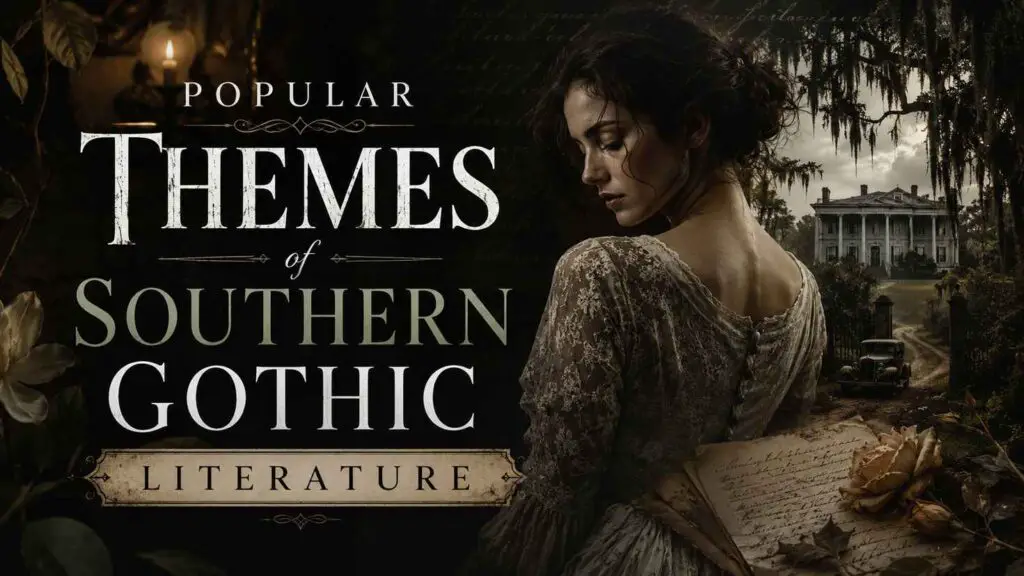
Southern Gothic literature is one of the most haunting and powerful traditions in American writing. It takes the familiar world of the American South and reveals what is hidden beneath its surface. Instead of presenting the South as graceful, polite, or romantic, Southern Gothic stories expose decay, violence, guilt, hypocrisy, and fear.
This style of literature often uses disturbing settings, flawed characters, family secrets, and moral tension. It is not horror in the simple sense. Its darkness comes from human weakness, social injustice, and the burden of the past. Southern Gothic literature shows that the most frightening things are often found inside homes, families, towns, churches, and human hearts.
An Introduction to Southern Gothic Literature
Southern Gothic literature is a distinctive branch of American literature that combines the eerie atmosphere of Gothic storytelling with the unique history, culture, and social realities of the American South. While traditional Gothic fiction often relies on medieval castles, supernatural creatures, haunted landscapes, and mysterious curses, Southern Gothic adapts these elements to a more recognizable and realistic setting. Instead of ancient European ruins, readers encounter decaying plantations, neglected mansions, isolated rural communities, and towns burdened by generations of unresolved conflict.
The genre emerged as writers sought to examine the contradictions and complexities of Southern life. The South has long been associated with images of hospitality, tradition, religion, and family pride. Southern Gothic literature challenges these idealized images by exposing the darker realities that often exist beneath them. Themes such as racism, poverty, violence, social inequality, family dysfunction, and moral corruption frequently appear in these works. The genre asks readers to look beyond appearances and confront uncomfortable truths about both individuals and society.
One of the defining characteristics of Southern Gothic literature is its focus on the lingering influence of the past. Historical events such as slavery, the Civil War, and the economic and social changes that followed continue to shape the lives of characters long after those events have ended. In many stories, the past feels almost alive, haunting families and communities through memories, traditions, and inherited guilt. This sense of historical weight creates an atmosphere of tension and unease that is central to the genre.
Southern Gothic literature is also known for its memorable and often unsettling characters. These may include social outcasts, eccentric individuals, morally conflicted figures, religious fanatics, or people struggling with psychological distress. Such characters are frequently described as grotesque, not merely because of their appearance or behavior, but because they reveal deeper truths about the world around them. Through these unusual figures, writers explore themes of alienation, identity, morality, and human weakness.
Writers such as William Faulkner, Flannery O’Connor, Carson McCullers, Tennessee Williams, and Eudora Welty helped shape and popularize the Southern Gothic tradition. Their works often focus on characters who are trapped by history, poverty, prejudice, pride, or personal failure. The setting is usually as important as the plot. Heat, dust, old houses, small towns, and rigid social customs all contribute to a mood of discomfort and uncertainty. The landscape itself often feels symbolic, reflecting the emotional and moral condition of the people who inhabit it.
Although Southern Gothic stories can be dark and disturbing, they are not simply tales of horror. Their purpose is often to expose hidden realities and challenge readers to think critically about society and human nature. By blending realism with Gothic elements, Southern Gothic literature creates stories that are both unsettling and deeply meaningful. It reveals how fear, guilt, prejudice, and obsession can shape lives while also exploring the possibility of self-awareness, redemption, and change.
Southern Gothic literature remains influential because its themes continue to resonate with modern readers. Its exploration of social injustice, personal trauma, family conflict, and the burden of history speaks to universal human experiences. Through its haunting settings, complex characters, and unflinching examination of difficult subjects, the genre offers a powerful and enduring portrait of the darker side of the American South.
Popular Themes of Southern Gothic Literature
Southern Gothic literature is known for exploring dark and difficult themes. These themes often connect personal suffering with larger social problems. The stories may feel strange or unsettling, but they usually point toward serious questions about guilt, identity, justice, faith, and memory.
Here are some of the most popular themes found in Southern Gothic literature.
#1. Decay and Ruin
Decay is one of the most common themes in Southern Gothic literature. This decay can appear in old mansions, abandoned plantations, dying towns, or broken families. Physical ruin often reflects moral, social, or emotional ruin.
A crumbling house may symbolize a family that has lost its power. A neglected town may represent a society unable to move forward. In many Southern Gothic stories, the past is not dead. It lingers in buildings, customs, memories, and relationships.
This theme is especially important because Southern Gothic literature often deals with the decline of old Southern ideals. The grand image of honor, tradition, and aristocracy is shown to be fragile or false. Behind the beauty, there is often rot.
#2. The Burden of the Past
Southern Gothic stories often show characters haunted by history. This past may involve slavery, racism, war, family shame, violence, or personal sin. Characters may try to ignore the past, but it continues to shape their lives.
The burden of the past appears through inherited guilt, old secrets, and repeated patterns of suffering. Families carry wounds across generations. Towns remember what people refuse to say aloud. Individuals are trapped by events that happened long before the story begins.
This theme gives Southern Gothic literature much of its emotional weight. The past becomes almost like a ghost. It may not appear as a literal spirit, but it controls the present.
#3. Grotesque Characters
Southern Gothic literature often features grotesque characters. These characters may be physically unusual, emotionally damaged, morally conflicted, or socially rejected. However, they are not included simply to shock the reader.
The grotesque character often reveals something true about society. A strange or disturbing person may expose the cruelty, hypocrisy, or blindness of supposedly “normal” people. In many stories, the outsider sees the truth more clearly than everyone else.
These characters also create sympathy and discomfort at the same time. Readers are forced to ask difficult questions about judgment, dignity, and humanity.
#4. Social Hypocrisy
Southern Gothic literature frequently criticizes social hypocrisy. Characters may speak about honor, religion, family, or respectability while hiding cruelty, prejudice, greed, or corruption.
This theme is especially visible in stories that explore class, race, gender, and religion. A community may present itself as moral and civilized, yet tolerate injustice. A family may protect its reputation while destroying its own members.
Southern Gothic writers use hypocrisy to show the gap between appearance and reality. The polite surface of society often hides something deeply disturbing underneath.
#5. Isolation and Loneliness
Many Southern Gothic characters are isolated. They may live in remote houses, small towns, broken families, or emotional prisons. Even when surrounded by others, they often feel misunderstood or trapped.
Isolation can be physical, social, or psychological. Some characters are rejected because they are different. Others isolate themselves because of pride, fear, guilt, or trauma. This loneliness often pushes them toward strange behavior or tragic decisions.
The theme of isolation helps create the eerie mood of Southern Gothic literature. It also shows how damaging it can be when people are cut off from love, truth, and community.
#6. Violence and Cruelty
Violence is another major theme in Southern Gothic literature. It may appear as murder, abuse, racial violence, family conflict, or psychological cruelty. Sometimes the violence is sudden and shocking. At other times, it is quiet and hidden.
This violence is rarely meaningless. It often reveals deeper problems within a character, family, or society. Southern Gothic stories use violence to expose what people try to suppress.
Cruelty is also important in this tradition. Characters may harm others through words, silence, judgment, or control. The result is a world where danger often comes from familiar places.
#7. Religion and Moral Judgment
Religion plays a major role in many Southern Gothic works. Churches, preachers, sermons, sin, salvation, and judgment often appear in these stories. However, religion is usually presented in a complex way.
Some characters use religion sincerely. Others use it to control, condemn, or hide their own wrongdoing. Southern Gothic literature often explores the tension between true faith and public performance.
This theme raises serious moral questions. What is sin? Who deserves grace? Can a person be redeemed? The answers are rarely simple, which makes the stories more powerful.
#8. Madness and Psychological Distress
Madness is a frequent theme in Southern Gothic literature. Characters may suffer from obsession, trauma, paranoia, grief, or delusion. Their mental distress often reflects the pressure of family secrets, social expectations, or past violence.
Southern Gothic stories do not always separate madness from the world around it. A character’s disturbed mind may be a response to a disturbed society. The line between sanity and insanity can become unclear.
This theme adds tension and mystery. It also allows writers to explore hidden fears, desires, and memories.
#9. Family Secrets
Family secrets are central to many Southern Gothic plots. These secrets may involve betrayal, crime, forbidden relationships, hidden shame, or old violence. They often remain buried for years before slowly coming to light.
The family in Southern Gothic literature is not always a place of safety. It can be a place of control, silence, and emotional damage. Secrets are protected to preserve reputation, but they usually cause deeper harm.
This theme connects closely with the burden of the past. What a family refuses to confess often becomes the force that destroys it.
#10. Outsiders and Misfits
Southern Gothic literature often focuses on outsiders and misfits. These characters may be poor, disabled, strange, rebellious, racially marginalized, socially awkward, or morally unusual. They do not fit easily into the expectations of their community.
Outsiders are important because they reveal the limits of social acceptance. Their treatment shows what a society values and what it fears. Sometimes they become victims. Sometimes they become truth-tellers.
Through misfits, Southern Gothic literature challenges readers to reconsider who is truly broken: the outsider or the society that rejects them.
Closing Thoughts
Southern Gothic literature remains powerful because it looks directly at what people often prefer to hide. It explores decay, guilt, violence, faith, madness, family secrets, and social hypocrisy with honesty and intensity.
These stories are dark, but they are not empty. Their darkness serves a purpose. Southern Gothic literature exposes the hidden wounds of individuals, families, and communities. It shows how the past shapes the present and how appearances can hide deep moral disorder.
By using strange characters, ruined settings, and unsettling events, Southern Gothic writers reveal truths that ordinary realism might miss. That is why the genre continues to fascinate readers. It turns the haunted landscape of the South into a mirror for human nature itself.