
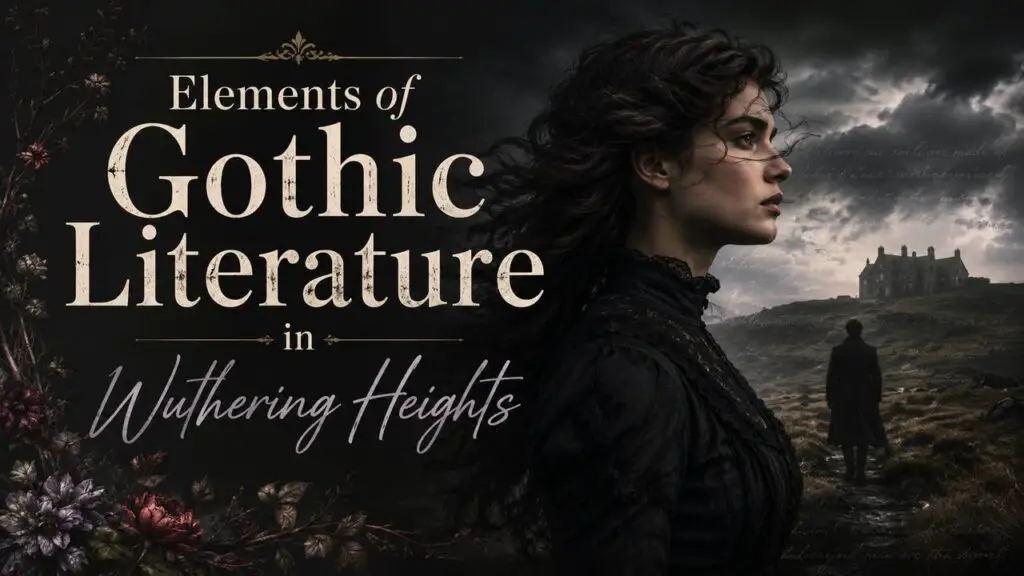
Emily Brontë’s Wuthering Heights is one of the most haunting novels in English literature. It is a story of love, revenge, obsession, cruelty, and emotional destruction. But it is also a deeply Gothic novel. From its isolated setting to its ghostly atmosphere, the book uses many features that are strongly connected to Gothic literature.
The novel does not rely on simple horror. Instead, it creates fear through mood, mystery, violence, emotional intensity, and psychological darkness. The world of Wuthering Heights feels wild, unstable, and dangerous. The characters are often driven by passion rather than reason. The houses feel more like prisons than homes. Even love becomes something frightening.
This is why the Gothic elements in Wuthering Heights are so important. They shape the mood of the novel and help reveal the darker side of human nature.
What is Gothic Literature?
Gothic literature is a type of writing that focuses on mystery, fear, darkness, and intense emotion. It often includes gloomy settings, isolated houses, supernatural events, family secrets, madness, violence, and characters who are trapped by the past.
The Gothic tradition became popular in the late eighteenth century. Many Gothic novels were set in castles, ruins, monasteries, or remote landscapes. These settings were used to create a feeling of danger and suspense.
However, Gothic literature is not only about ghosts or frightening places. It also explores the hidden fears of the human mind. It shows how obsession, guilt, revenge, and desire can destroy people from within.
In Wuthering Heights, Emily Brontë uses Gothic elements to create a dark emotional world. The novel feels haunted not only because of possible ghosts, but because the characters themselves are haunted by memory, loss, and passion.
An Overview of Wuthering Heights
Wuthering Heights was published in 1847 under Emily Brontë’s pen name, Ellis Bell. The novel tells the story of Heathcliff, Catherine Earnshaw, and the families connected to Wuthering Heights and Thrushcross Grange.
Heathcliff is brought to Wuthering Heights as a poor orphan by Mr. Earnshaw. He grows close to Catherine, but he is mistreated by her brother Hindley. Over time, Heathcliff becomes bitter, vengeful, and emotionally destructive.
Catherine loves Heathcliff deeply, but she chooses to marry Edgar Linton because of his social position. This decision wounds Heathcliff and sets off a long cycle of revenge. His anger affects not only Catherine and Edgar, but also the next generation.
The novel is told through a layered narrative. Mr. Lockwood hears much of the story from Nelly Dean, the housekeeper. This structure makes the story feel distant, mysterious, and uncertain. The reader must piece together the truth from memories, rumors, and personal accounts.
Elements of Gothic Literature in Wuthering Heights
Wuthering Heights contains many Gothic features, but they are woven into the emotional and psychological structure of the novel. The Gothic atmosphere is not just decoration. It reflects the violence, suffering, and obsession at the heart of the story.
The following elements show how Emily Brontë uses Gothic literature to deepen the power of the novel.
#1. A Dark and Isolated Setting
One of the strongest Gothic elements in Wuthering Heights is its setting. The novel takes place on the Yorkshire moors, a wild and lonely landscape. The moors are open, rough, and exposed to harsh weather. They create a sense of isolation from ordinary society.
Wuthering Heights itself is also a Gothic setting. The house is old, stormy, and uncomfortable. It is not presented as a warm family home. Instead, it feels harsh and oppressive. The name “Wuthering” suggests strong winds and violent weather, which matches the emotional storms inside the house.
This isolation is important because it separates the characters from the civilizing influence of the outside world. At Wuthering Heights, cruelty, revenge, and passion grow unchecked. The setting becomes a reflection of the characters’ inner lives.
#2. A Gloomy and Foreboding Atmosphere
Gothic literature often depends on atmosphere, and Wuthering Heights is filled with gloom. The novel opens with Lockwood arriving at Wuthering Heights during bad weather. The house feels strange, hostile, and unwelcoming from the beginning.
The mood of the novel is often dark and tense. There are storms, cold rooms, locked doors, disturbing dreams, and violent confrontations. Even peaceful moments feel temporary because the reader senses that pain and conflict are never far away.
This atmosphere creates emotional pressure. The reader does not simply read about suffering; the setting and mood make that suffering feel present. Brontë uses Gothic atmosphere to make the novel feel haunted by grief, anger, and unresolved passion.
#3. Supernatural Elements and Ghostly Presence
The supernatural is one of the most famous Gothic elements in Wuthering Heights. Early in the novel, Lockwood has a terrifying experience when he dreams, or perhaps believes, that Catherine’s ghost is trying to enter through the window.
This scene immediately gives the novel a ghostly quality. It suggests that Catherine’s presence has not disappeared after death. She remains connected to Wuthering Heights, to the moors, and to Heathcliff.
The novel never fully explains whether the supernatural events are real or imagined. This uncertainty is part of the Gothic effect. The reader is left wondering whether the characters are truly haunted by ghosts or by their own memories and desires.
Heathcliff’s obsession with Catherine after her death also strengthens this supernatural feeling. He longs for her spirit to remain with him. His grief becomes so extreme that it seems to cross the boundary between life and death.
#4. Intense and Destructive Passion
Gothic literature often presents emotions as overwhelming forces. In Wuthering Heights, love is not calm, balanced, or morally pure. It is wild, possessive, and destructive.
The relationship between Catherine and Heathcliff is the clearest example. Their bond is powerful, but it is also dangerous. They do not simply love each other; they seem to lose their separate identities in each other. Catherine even suggests that Heathcliff is part of her own being.
This kind of passion is Gothic because it goes beyond social rules and rational control. It becomes something almost supernatural. Their love does not lead to peace or happiness. Instead, it causes suffering for themselves and others.
Brontë uses this destructive passion to show the darker side of love. In the novel, love can become obsession, and obsession can become a form of emotional violence.
#5. Revenge as a Gothic Force
Revenge is central to the Gothic structure of Wuthering Heights. After Heathcliff is humiliated and rejected, he returns with wealth and power. But instead of seeking healing, he devotes himself to revenge.
Heathcliff punishes Hindley, manipulates Isabella, controls Hareton, and uses the younger Catherine and Linton in his plans. His revenge spreads across generations. It does not remain limited to those who hurt him directly.
This makes revenge feel like a dark force moving through the novel. It poisons families, destroys relationships, and traps innocent people in old conflicts.
In Gothic literature, the past often refuses to stay buried. Wuthering Heights follows this pattern. Heathcliff’s suffering turns into vengeance, and that vengeance keeps the past alive in the most destructive way.
#6. Psychological Darkness and Madness
Another Gothic element in the novel is psychological darkness. Many characters experience extreme emotional states. Heathcliff is consumed by obsession and revenge. Catherine is torn between social ambition and passionate love. Hindley falls into cruelty and self-destruction.
The novel often shows the mind under pressure. Catherine’s illness, emotional breakdown, and inner conflict are especially important. Her suffering is not only physical. It is psychological and spiritual.
Heathcliff’s grief after Catherine’s death also moves toward madness. He cannot accept separation from her. His desire to be haunted by her shows how deeply his mind has been overtaken by loss.
This psychological intensity gives the novel much of its Gothic power. The horror does not come only from outside events. It comes from the unstable emotions inside the characters.
#7. Violence, Cruelty, and Moral Corruption
Wuthering Heights is filled with acts of cruelty. Characters are abused, manipulated, imprisoned, neglected, and emotionally tormented. This violence is another major Gothic feature.
Heathcliff suffers cruelty as a child, but he later becomes cruel himself. Hindley mistreats Heathcliff. Heathcliff mistreats Isabella, Hareton, Linton, and others. The cycle of abuse becomes one of the novel’s darkest patterns.
The Gothic world of the novel is morally unstable. People who suffer often cause more suffering. Love becomes mixed with domination. Family ties become sources of pain rather than protection.
Brontë does not present evil as simple. She shows how cruelty can grow from humiliation, rejection, and bitterness. This makes the novel psychologically complex as well as Gothic.
#8. Imprisonment and Entrapment
Gothic literature often includes characters who are trapped. In Wuthering Heights, this imprisonment is both physical and emotional.
Several characters feel trapped inside houses, marriages, social expectations, or family histories. Isabella is trapped in her marriage to Heathcliff. Cathy is physically held at Wuthering Heights. Hareton is trapped by ignorance and degradation. Heathcliff is trapped by his obsession with Catherine.
The houses themselves become symbols of confinement. Wuthering Heights and Thrushcross Grange are not just places where people live. They are places where power, control, and suffering are acted out.
This sense of entrapment adds to the Gothic mood of the novel. The characters struggle to escape, but many are held by forces stronger than themselves.
#9. Family Secrets and Generational Conflict
Gothic novels often involve family secrets, inheritance, and conflicts that pass from one generation to another. Wuthering Heights uses this element strongly.
The first generation’s mistakes shape the lives of the second generation. Heathcliff’s revenge affects Hareton, Cathy, and Linton, even though they are not responsible for the original wounds.
This generational structure gives the novel a haunted quality. The children inherit the emotional damage of their parents. Old hatred continues to control new lives.
However, the younger generation also offers some hope. The relationship between Cathy and Hareton suggests that the cycle of revenge may finally be broken. This makes the ending less bleak than the rest of the novel.
#10. Death, Decay, and the Power of the Past
Death is constantly present in Wuthering Heights. Many important characters die, but their influence remains. Catherine’s death does not end her role in the story. In many ways, it makes her presence even stronger.
The past dominates the novel. Characters cannot easily move forward because they are bound to old wounds, old loves, and old hatreds. This is one of the most Gothic aspects of the book.
Heathcliff especially lives under the power of the past. His entire life becomes a response to what he lost. He cannot build a future because he is emotionally imprisoned by Catherine’s memory.
The novel suggests that the dead can continue to shape the living. Whether this haunting is literal or psychological, it gives Wuthering Heights its dark and unforgettable Gothic force.
Closing Thoughts
Wuthering Heights is a powerful example of Gothic literature because it combines external darkness with inner darkness. The lonely moors, stormy weather, ghostly scenes, violent emotions, and cruel relationships all create a world filled with mystery and fear.
Yet the novel’s Gothic power does not come only from supernatural moments. It comes from the way Emily Brontë explores obsession, revenge, grief, and emotional suffering. The real horror of the novel is found in the human heart.
Through its Gothic elements, Wuthering Heights becomes more than a tragic love story. It becomes a disturbing study of passion without restraint, revenge without mercy, and memory without peace. That is why the novel remains one of the most intense and haunting works in English literature.