
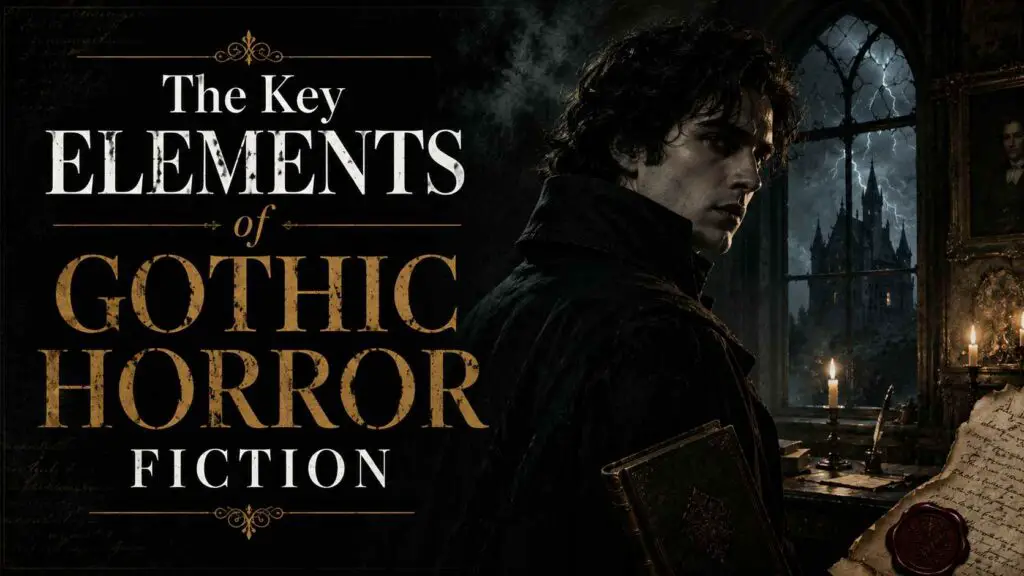
Gothic horror fiction is one of the most atmospheric forms of storytelling. It does not rely only on monsters, ghosts, or sudden shocks. Instead, it builds fear slowly through mood, setting, mystery, and emotional tension.
At its best, Gothic horror makes the reader feel that something is deeply wrong beneath the surface. A lonely castle, a decaying mansion, a family secret, a forbidden room, or a troubled mind can become more terrifying than a visible creature. This is what gives Gothic horror its lasting power.
An Introduction to Gothic Horror Fiction
Gothic horror fiction is a genre that blends fear, mystery, romance, psychological tension, and dark atmosphere. It often explores what happens when the past refuses to stay buried. Old houses, ancient curses, hidden crimes, and haunted memories are common features of the genre.
The Gothic tradition began in the late eighteenth century and became famous through works such as The Castle of Otranto, Frankenstein, Dracula, and The Strange Case of Dr Jekyll and Mr Hyde. These stories helped shape the modern idea of horror, especially the kind of horror that is emotional, symbolic, and deeply unsettling.
Unlike simple horror, Gothic horror usually focuses on dread rather than immediate danger. The fear grows through uncertainty. The reader senses that something terrible is present, even before it is fully revealed.
One of the defining characteristics of Gothic horror is its ability to combine the ordinary with the extraordinary. A seemingly normal home may conceal a terrible secret. A respected family may be connected to a dark crime. A quiet landscape may hide evidence of supernatural activity. This blending of familiar and unfamiliar elements creates a feeling of unease that stays with the reader throughout the story.
Gothic horror also places great importance on atmosphere. Weather, architecture, lighting, and sound are often used to create tension. Storms, shadows, flickering candles, creaking floors, and distant echoes all contribute to a mood of uncertainty and fear. These details help immerse readers in a world where danger feels close, even when nothing openly threatening has appeared.
Another important aspect of the genre is its exploration of human emotions and inner struggles. Gothic stories frequently examine guilt, obsession, loneliness, grief, and the fear of losing control. Characters are often forced to confront both external threats and their own psychological weaknesses. As a result, the horror becomes deeply personal rather than purely physical.
Throughout its history, Gothic horror has evolved and influenced many other forms of literature, film, and popular culture. Modern horror stories continue to borrow Gothic themes such as haunted locations, family secrets, unreliable narrators, and the return of the past. Even contemporary works that take place in modern settings often retain the emotional intensity and atmosphere that define the Gothic tradition.
In short, Gothic horror fiction is about confronting the unknown. Whether the source of fear is supernatural, psychological, or symbolic, the genre invites readers to explore dark places, hidden truths, and unsettling questions about human nature. This combination of mystery, emotion, and atmosphere is what has allowed Gothic horror to remain compelling for generations.
The Key Elements of Gothic Horror Fiction
Gothic horror fiction depends on a unique combination of setting, mood, character, and mystery. These elements work together to create a world where fear feels ancient, personal, and unavoidable. The following are the key elements that define Gothic horror fiction.
#1. Dark and Atmospheric Settings
Setting is one of the most important elements of Gothic horror. The location is rarely just a background. It often feels like a living force in the story.
Common Gothic settings include ruined castles, isolated mansions, abandoned churches, dark forests, underground passages, and storm-covered landscapes. These places create a sense of danger and mystery. They also suggest that the characters are cut off from safety, reason, and ordinary life.
A Gothic setting usually reflects decay. Crumbling walls, locked rooms, dusty portraits, and overgrown gardens all suggest that something from the past still has power. The setting becomes a symbol of secrets, guilt, and corruption.
#2. Mystery and Suspense
Gothic horror often begins with unanswered questions. Why is a room locked? What happened to the previous owner? Why does a family refuse to speak about the past? What is making strange noises at night?
These mysteries keep the reader uneasy. The story slowly reveals clues, but never too quickly. Suspense builds because the reader knows that the truth will probably be disturbing.
This slow uncovering of hidden knowledge is central to Gothic horror. The unknown is often more frightening than the known. The longer the mystery remains unresolved, the stronger the sense of dread becomes.
#3. The Presence of the Supernatural
Ghosts, curses, vampires, demons, visions, and haunted objects often appear in Gothic horror. The supernatural gives the story a sense that ordinary rules no longer apply.
However, Gothic horror does not always make the supernatural clear. Sometimes the reader is left wondering whether the events are truly supernatural or caused by madness, guilt, fear, or manipulation. This uncertainty makes the story more powerful.
The supernatural in Gothic fiction often represents something deeper. A ghost may represent a crime that has never been confessed. A curse may represent inherited guilt. A monster may represent the dark side of human nature.
#4. Psychological Fear
Gothic horror is deeply interested in the human mind. Characters often struggle with fear, obsession, madness, grief, guilt, or forbidden desire.
The horror does not only come from outside threats. It also comes from within. A character may begin to doubt their senses. They may question whether they are being haunted or losing their mind. This creates a powerful psychological tension.
This inner fear makes Gothic horror more complex than simple monster stories. The reader is not only afraid of what might happen to the character. The reader is also drawn into the character’s confusion, weakness, and emotional suffering.
#5. Secrets from the Past
The past is rarely dead in Gothic horror. Old crimes, family curses, hidden identities, and buried scandals often return to disturb the present.
This gives Gothic stories a strong sense of history. Characters may inherit houses, names, responsibilities, or guilt from previous generations. They may discover that their present suffering is connected to something that happened long before they were born.
These secrets make the story feel heavy and inevitable. The characters are not simply facing a new danger. They are being pulled into old darkness that has never truly disappeared.
#6. Isolation and Imprisonment
Gothic characters are often isolated. They may be trapped in a remote house, separated from friends, controlled by a powerful figure, or emotionally cut off from the world.
This isolation increases fear. When a character cannot escape or get help, every sound and shadow becomes more threatening. The sense of imprisonment may be physical, emotional, or psychological.
Locked doors, hidden chambers, barred windows, and long corridors are common Gothic images. They show that the character is trapped not only in a place, but also in a situation they do not fully understand.
#7. Threatening or Mysterious Characters
Gothic horror often includes characters who are difficult to trust. These may include cruel aristocrats, secretive guardians, strange servants, dangerous lovers, or mysterious strangers.
Such characters create tension because their motives are unclear. They may seem charming at first, but slowly reveal signs of cruelty, obsession, or corruption.
The villain in Gothic horror is often more than a simple enemy. They may represent power, temptation, social control, or hidden evil. Their presence makes the world of the story feel unstable and dangerous.
#8. Strong Emotions and Inner Conflict
Gothic fiction is filled with intense emotion. Fear, love, jealousy, grief, desire, shame, and guilt often drive the story.
These emotions are not mild or ordinary. They are extreme and sometimes destructive. A character may be torn between duty and desire, reason and madness, love and terror, innocence and corruption.
This emotional intensity gives Gothic horror its dramatic power. The reader feels that the characters are under pressure from both the outside world and their own inner lives.
#9. Decay, Death, and Corruption
Images of decay are central to Gothic horror. Old buildings fall apart. Families decline. Bodies die. Moral values collapse. Beauty becomes mixed with rot.
This focus on decay creates a dark view of life. It reminds the reader that everything can break down, including the body, the mind, the family, and society.
Death is also a constant presence. It may appear through ghosts, graves, illness, murder, or memories of the dead. Gothic horror often suggests that death does not end influence. The dead continue to shape the living.
#10. Symbolism and Hidden Meaning
Gothic horror is rich in symbolism. A house may symbolize a damaged mind. A locked room may symbolize a secret. A storm may symbolize emotional chaos. A monster may symbolize repressed desire or moral corruption.
These symbols make Gothic stories feel deeper and more haunting. The reader is invited to look beyond the surface of the plot and ask what the horror really represents.
This is one reason Gothic horror remains so powerful. It does not only frighten readers. It also explores human fears about death, guilt, identity, power, and the unknown.
Closing Thoughts
Gothic horror fiction remains popular because it speaks to fears that never fully disappear. People still fear isolation, madness, death, secrets, and the return of the past. Gothic stories give these fears a dramatic shape.
The key elements of Gothic horror fiction work together to create a world of darkness, mystery, and emotional intensity. The haunted setting, the hidden secret, the troubled mind, and the threatening presence all contribute to a deeper kind of fear.
This is why Gothic horror is more than a genre of old castles and ghosts. It is a powerful way of exploring the shadows within human life.