
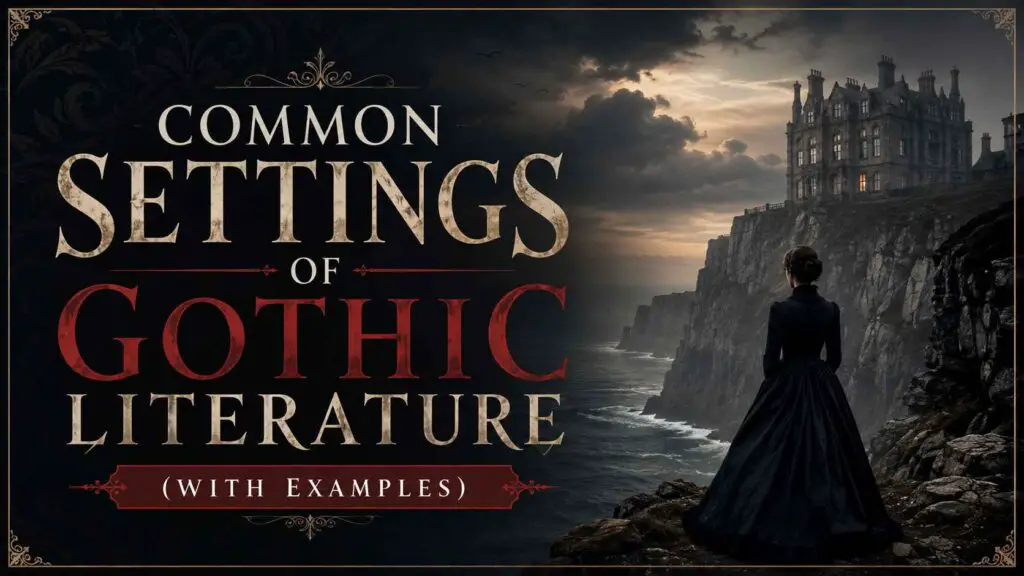
Gothic literature draws readers into a world of darkness, fear, mystery, and emotional intensity. It is a genre built on unease. From ruined castles to haunted mansions, Gothic stories use setting, atmosphere, and psychological tension to explore the hidden fears of human life.
At its heart, Gothic literature is not only about ghosts, monsters, or strange events. It is also about isolation, guilt, madness, secrets, forbidden desires, and the feeling that something terrible is waiting just beneath the surface. This is why Gothic fiction continues to feel powerful even centuries after it first became popular.
The settings found in Gothic literature play a critical role in creating this atmosphere. They are rarely ordinary locations. Instead, they are places that evoke fear, loneliness, suspense, and uncertainty. These settings often become characters in their own right, influencing the actions, emotions, and destinies of those who inhabit them.
What is Gothic Literature?
Gothic literature is a style of fiction that combines horror, mystery, romance, and psychological suspense. It often features dark settings, troubled characters, supernatural events, and a strong sense of fear or uncertainty.
The genre emerged in the late eighteenth century as a reaction against the rationalism and order associated with the Enlightenment. Gothic writers became interested in exploring the darker side of human experience, including fear, obsession, death, and the supernatural.
One of the earliest Gothic novels was The Castle of Otranto by Horace Walpole, published in 1764. The genre later expanded through the works of writers such as Mary Shelley, Edgar Allan Poe, Bram Stoker, Charlotte Brontë, Emily Brontë, and Robert Louis Stevenson. Each contributed unique elements while preserving the genre’s fascination with darkness and mystery.
A defining feature of Gothic literature is its use of setting. Gothic stories often take place in locations that feel isolated, ancient, decaying, or haunted. These settings help create a mood of dread and uncertainty while reinforcing the themes of the story.
Common Settings of Gothic Literature
The setting in Gothic literature is one of the genre’s most recognizable and important characteristics. Gothic writers carefully choose locations that create suspense, unease, and emotional intensity. The environment often reflects the fears, secrets, and struggles of the characters who inhabit it.
Many Gothic settings are associated with the past. They contain traces of forgotten histories, family secrets, crimes, curses, and tragedies. These locations often seem trapped between different time periods, allowing old wounds and buried truths to resurface.
The following settings appear repeatedly throughout Gothic literature and help define the genre’s unique atmosphere.
#1. Castles
Castles are among the most iconic settings in Gothic literature. Their massive stone walls, towering structures, winding corridors, hidden chambers, and underground dungeons create an environment filled with mystery and danger. Because castles are often centuries old, they naturally carry a sense of history that Gothic writers use to great effect.
In many Gothic stories, castles symbolize the weight of the past. Ancient family feuds, long-buried secrets, and inherited curses often originate within their walls. Characters may find themselves trapped inside a castle, both physically and emotionally, as they uncover disturbing truths about those who lived there before them.
The architecture of castles also contributes to the Gothic atmosphere. Narrow passageways, locked doors, secret staircases, and dark towers create constant uncertainty. Readers never know what might be hiding around the next corner. This sense of unpredictability keeps tension high throughout the story.
A classic example appears in The Castle of Otranto by Horace Walpole. The castle is more than a backdrop for the plot. It becomes an active force within the narrative, filled with supernatural occurrences and ominous events that drive the story forward. Its imposing presence creates an atmosphere of fear and mystery from beginning to end.
#2. Haunted Houses
Haunted houses are another defining setting of Gothic literature. These homes are often associated with strange events, unexplained noises, ghostly appearances, or disturbing histories. Even when supernatural elements are absent, the house itself may feel threatening and unsettling.
In Gothic fiction, a haunted house often serves as a reflection of the people who live there. Hidden rooms can symbolize buried memories. Crumbling walls can represent declining mental health. Dark corners may suggest secrets that characters desperately wish to conceal. The house becomes a physical manifestation of psychological and emotional struggles.
Many haunted houses in Gothic literature seem almost alive. Doors open unexpectedly, footsteps echo through empty halls, and shadows appear where no one should be standing. These details create a persistent feeling that something is wrong, even when no obvious threat is present.
One of the most famous examples is Hill House in The Haunting of Hill House by Shirley Jackson. The house possesses an unsettling personality that affects everyone who enters it. The story blurs the line between supernatural horror and psychological instability, making readers question whether the true threat comes from the house itself or from the minds of the characters.
#3. Ruined Buildings
Ruined buildings are frequently used in Gothic literature because they symbolize decay, decline, and the passage of time. These structures may include abandoned abbeys, crumbling castles, deserted churches, or neglected estates. Their deteriorating condition immediately creates an atmosphere of sadness and unease.
The appeal of ruins lies in their connection to forgotten histories. They suggest that something significant happened long ago but has since been lost or hidden. Characters who explore ruins often uncover secrets, ancient documents, family scandals, or evidence of past crimes.
Ruins also serve as powerful symbols. Just as the building has physically deteriorated, the people connected to it may have experienced moral, emotional, or psychological decline. Gothic writers frequently use this parallel to reinforce the themes of their stories.
Edgar Allan Poe’s The Fall of the House of Usher provides one of the best examples. The Usher mansion is visibly decaying, and its condition mirrors the collapse of the family itself. As the story progresses, the connection between the building and its inhabitants becomes increasingly apparent, culminating in one of Gothic literature’s most memorable endings.
#4. Isolated Mansions
Large mansions located far from civilization are common settings in Gothic fiction. These homes often stand alone on windswept hills, empty countryside, or remote estates where help is difficult to reach. Their isolation contributes significantly to the tension and suspense of the story.
Characters living in isolated mansions frequently experience loneliness and vulnerability. Because they are separated from society, they cannot easily escape danger or seek assistance when strange events occur. This isolation intensifies feelings of fear and uncertainty.
These mansions often contain hidden spaces, secret histories, and mysterious inhabitants. A seemingly respectable household may conceal shocking secrets beneath its elegant exterior. Gothic writers use this contrast between appearance and reality to create suspense.
Thornfield Hall in Jane Eyre is a classic example. Although impressive and beautiful, the mansion contains hidden truths that gradually emerge throughout the story. Strange laughter, mysterious incidents, and unexplained events transform the house into a distinctly Gothic setting that keeps both Jane and the reader in suspense.
#5. Dark Forests
Forests have long been associated with mystery and danger, making them ideal Gothic settings. Dense trees, limited visibility, and unfamiliar paths create an environment where characters can easily become lost or encounter unexpected threats.
In Gothic literature, forests often symbolize the unknown. Entering a forest frequently represents a journey into fear, uncertainty, or the darker aspects of human nature. Characters may confront hidden desires, painful memories, or terrifying realities while traveling through these landscapes.
Dark forests are particularly effective because they remove characters from the safety and order of civilization. Within the forest, ordinary rules seem to disappear. Strange creatures, supernatural forces, and dangerous individuals may emerge without warning.
Many Gothic tales use forests as places of transformation. Characters enter them as one person and emerge changed by what they have experienced. The forest becomes a testing ground where fears are confronted and hidden truths are revealed.
#6. Graveyards and Tombs
Few settings capture the Gothic imagination as effectively as graveyards and tombs. These locations place characters in direct contact with death, mortality, and the supernatural. They remind readers that life is temporary and that the past may never fully disappear.
Graveyards create a unique combination of fear and fascination. Weathered gravestones, overgrown pathways, and ancient crypts suggest countless untold stories. Characters often visit these locations seeking answers, only to uncover disturbing revelations.
Tombs and crypts are especially common in Gothic fiction because they symbolize hidden truths waiting to be discovered. They may contain long-forgotten family secrets, evidence of crimes, or supernatural beings that refuse to remain buried.
In Bram Stoker’s Dracula, cemeteries and burial places contribute significantly to the novel’s atmosphere. They reinforce themes of death and resurrection while creating some of the story’s most memorable moments of horror and suspense.
#7. Monasteries and Abbeys
Monasteries and abbeys provide Gothic writers with settings that combine religious symbolism, historical significance, and architectural grandeur. These structures often appear imposing and sacred, yet Gothic literature frequently reveals darker realities beneath their holy appearance.
The contrast between spiritual ideals and human corruption creates powerful dramatic tension. Characters may discover forbidden knowledge, encounter corrupt religious figures, or become entangled in sinister plots hidden within sacred walls.
Architecturally, monasteries and abbeys are well suited to Gothic storytelling. Their vast halls, underground chambers, cloisters, and ancient libraries offer numerous opportunities for mystery and suspense. The age of these buildings also contributes to the feeling that secrets have accumulated over centuries.
Matthew Lewis’s The Monk demonstrates how religious settings can become sources of terror. The novel explores themes of temptation, corruption, and moral decay, showing how institutions associated with virtue can conceal profound darkness.
#8. Remote Landscapes
Remote landscapes such as mountains, moors, cliffs, and rugged coastlines are frequently used in Gothic literature. These environments emphasize the smallness and vulnerability of human beings when confronted with the immense power of nature.
Harsh weather often accompanies these settings. Storms, fog, strong winds, and darkness increase the sense of danger while reflecting the emotional turmoil experienced by characters. Nature itself seems hostile, unpredictable, and overwhelming.
Remote landscapes also reinforce themes of isolation. Characters may be physically cut off from civilization, forcing them to confront challenges without outside support. This isolation creates opportunities for suspense and psychological conflict.
The Yorkshire moors in Wuthering Heights are a famous example. Their wild and untamed nature mirrors the intense emotions of the characters. The landscape contributes to the novel’s atmosphere of passion, loneliness, and emotional turmoil.
#9. Prisons and Dungeons
Prisons, dungeons, and locked chambers are recurring settings in Gothic literature because they represent confinement and loss of freedom. Characters trapped in these spaces often experience fear, helplessness, and despair.
These settings can function both literally and symbolically. A character may be physically imprisoned within a dungeon, but Gothic writers also use confinement to represent emotional, psychological, or social restrictions. A person may be trapped by guilt, obsession, family expectations, or past mistakes.
The darkness and isolation of prisons create a strong sense of claustrophobia. Readers share the character’s anxiety as they struggle to escape or uncover the reason for their imprisonment.
Many Gothic stories feature hidden prisoners, secret cells, or locked rooms containing shocking revelations. These discoveries often serve as major turning points in the narrative, exposing truths that others have worked hard to conceal.
#10. Laboratories and Scientific Spaces
Although many Gothic settings are ancient, the genre also includes scientific spaces such as laboratories, research rooms, and private studies. These locations became increasingly important during the nineteenth century as scientific progress raised new questions and fears.
In Gothic literature, laboratories often symbolize humanity’s desire to gain forbidden knowledge. Characters who conduct dangerous experiments frequently cross moral boundaries in their pursuit of discovery. Their ambitions can lead to disastrous consequences.
Scientific settings create a different kind of Gothic fear. Rather than focusing on ghosts or ancient curses, they explore the dangers of unchecked curiosity, technological advancement, and the belief that humans can control forces beyond their understanding.
Mary Shelley’s Frankenstein remains the most famous example. Victor Frankenstein’s scientific work leads him to create life, but his achievement quickly becomes a source of horror. The laboratory serves as a symbol of ambition, isolation, and the consequences of pursuing knowledge without considering its ethical implications.
Closing Thoughts
The settings of Gothic literature are far more than simple backgrounds. They help shape the mood, themes, and emotional impact of every story. Whether it is a haunted house, a ruined castle, a remote landscape, or a hidden laboratory, the setting creates the atmosphere of fear, mystery, and suspense that defines the genre.
These locations also reinforce many of the central themes of Gothic literature, including isolation, decay, forbidden knowledge, death, and the lingering influence of the past. Through carefully crafted settings, Gothic writers transform ordinary places into unforgettable sources of tension and wonder.
Understanding these common settings provides valuable insight into why Gothic literature continues to captivate readers. The dark and mysterious worlds created by Gothic authors remind us that fear often comes not only from monsters and ghosts, but also from the hidden corners of history, society, and the human mind.