
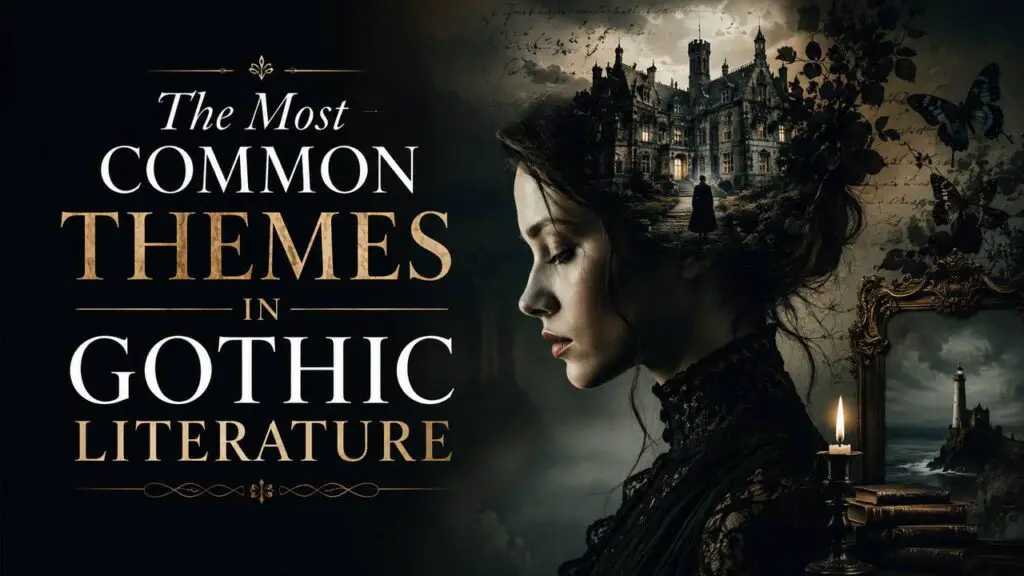
Gothic literature draws readers into worlds filled with fear, mystery, darkness, and emotional intensity. It is the kind of literature where old houses seem alive, secrets refuse to stay buried, and characters often face forces they cannot fully understand. These stories are not only about ghosts or haunted castles. They are also about guilt, madness, isolation, power, death, and the hidden parts of human nature.
At its heart, Gothic literature uses fear to explore deeper truths. It creates unsettling settings and intense situations so readers can confront what is strange, forbidden, or painful. This is why Gothic stories continue to feel powerful, even centuries after the genre first became popular.
Introducing Gothic Literature
Gothic literature began to develop in the late eighteenth century and became especially popular during the Romantic period. The genre is often traced back to Horace Walpole’s The Castle of Otranto (1764), a novel that combined medieval settings, supernatural events, and dramatic storytelling in a way that captured readers’ imaginations. As Gothic fiction evolved, writers such as Ann Radcliffe, Matthew Lewis, Mary Shelley, Edgar Allan Poe, Bram Stoker, and many others expanded its themes and techniques, helping establish it as one of the most influential literary traditions in Western literature.
Early Gothic novels often featured crumbling castles, mysterious villains, family curses, supernatural events, hidden passages, and vulnerable characters trapped in dangerous situations. These stories frequently took place in isolated locations where ordinary rules seemed to break down. Readers were drawn to the suspense created by dark settings and unexplained events, as well as the emotional intensity experienced by the characters.
Over time, the genre expanded beyond medieval castles and remote landscapes. Gothic fiction began to appear in cities, homes, minds, and even ordinary social settings. Writers discovered that horror and mystery did not need to exist only in distant ruins or ancient fortresses. Fear could emerge within familiar environments, making Gothic stories feel even more unsettling. A quiet household, a respected family, or an ordinary neighborhood could conceal disturbing secrets and hidden dangers.
What makes Gothic literature distinct is its atmosphere. The mood is often dark, tense, and uncertain. Readers are made to feel that something terrible may happen at any moment. The setting usually plays a major role, whether it is a ruined mansion, a gloomy abbey, a prison-like home, a lonely village, or a landscape filled with fog and shadows. In Gothic fiction, locations are rarely just backgrounds. They often reflect the emotions of the characters and contribute directly to the sense of dread and suspense.
Another defining feature of Gothic literature is its fascination with mystery and the unknown. Questions are often left unanswered for long periods, encouraging readers to wonder what is real and what is imagined. Strange noises, unexplained disappearances, hidden rooms, and mysterious figures create a sense of uncertainty that drives the narrative forward. This emphasis on mystery helps maintain tension and keeps readers emotionally invested in the story.
Gothic literature also focuses heavily on emotion. Characters often experience terror, grief, obsession, loneliness, guilt, despair, or psychological breakdown. These emotions are not treated as minor details. They are central to the story. Gothic fiction shows how fear and desire can shape human behavior, sometimes leading characters toward destruction. The genre is deeply interested in the darker aspects of human experience and the ways people respond when confronted with forces beyond their control.
In addition, Gothic literature frequently explores the conflict between reason and the irrational. Many Gothic stories were written during periods when science, logic, and progress were becoming increasingly important. Yet these works often suggest that human beings cannot fully explain every aspect of existence. Supernatural events, strange coincidences, and psychological disturbances challenge the belief that reason alone can provide all the answers.
Because of its rich themes and powerful atmosphere, Gothic literature has remained popular for centuries. Its influence can be seen not only in novels but also in poetry, films, television series, and modern horror fiction. Although the settings and storytelling techniques have changed over time, the genre continues to captivate readers by exploring fear, mystery, and the hidden depths of human nature.
Common Gothic Literature Themes
Gothic literature is built around recurring themes that give the genre its dark power. These themes help create suspense, deepen character conflict, and reveal hidden fears within individuals and society. Below are some of the most common Gothic literature themes.
#1. Fear and Terror
Fear is one of the central themes of Gothic literature. Gothic stories are designed to make readers feel uneasy. This fear may come from supernatural forces, violent threats, strange settings, or the unknown.
Terror in Gothic literature is often psychological. The reader may not always know whether a threat is real or imagined. A strange sound in a hallway, a locked room, or a shadow at the window can create intense suspense. The fear grows because the truth remains hidden.
This theme works because Gothic literature often suggests that human beings are vulnerable. Characters cannot always control their surroundings, their emotions, or their fate. Fear becomes a way to explore the limits of human courage and reason.
#2. The Supernatural
The supernatural is another major Gothic theme. Ghosts, curses, demons, visions, vampires, and other unnatural forces often appear in Gothic fiction. These elements create mystery and suggest that the world is not fully explainable by reason.
Sometimes the supernatural is real within the story. At other times, it may be uncertain. A character might believe they have seen a ghost, but the reader may wonder whether the experience is caused by madness, guilt, or fear.
This uncertainty is important. Gothic literature often blurs the line between reality and imagination. The supernatural becomes a symbol of everything that cannot be controlled, explained, or ignored.
#3. Isolation and Loneliness
Many Gothic characters are isolated from society, family, or emotional support. They may be trapped in remote castles, locked inside oppressive homes, or separated from the people they love. This isolation increases their fear and makes them more vulnerable.
Physical isolation is common in Gothic settings. A character may live in a lonely mansion, a distant village, or a gloomy landscape. But emotional isolation is just as important. Characters often feel misunderstood, abandoned, or unable to share their deepest fears.
This theme gives Gothic literature much of its emotional weight. Isolation forces characters to confront themselves. Without comfort or support, their hidden fears, desires, and weaknesses begin to surface.
#4. Madness and Psychological Breakdown
Gothic literature often explores the fragile state of the human mind. Characters may suffer from obsession, paranoia, hallucinations, grief, or guilt. As the story progresses, their mental condition may become more unstable.
Madness is powerful in Gothic fiction because it creates uncertainty. Readers may not know whether a character is seeing the truth or losing touch with reality. This makes the story more disturbing.
The theme also reveals the pressure characters face. Gothic stories often place people in extreme situations. Secrets, fear, trauma, and guilt can push them toward psychological collapse. In this way, madness becomes both a personal tragedy and a source of horror.
#5. Death and Decay
Death appears frequently in Gothic literature. It may appear through corpses, graves, family tombs, murder, illness, or memories of the dead. Gothic stories often remind readers that death is always close.
Decay is closely connected to this theme. Crumbling castles, ruined houses, rotting landscapes, and dying families all suggest decline. These images show that power, beauty, wealth, and life itself are temporary.
This theme gives Gothic literature its dark atmosphere. Death is not treated as something distant. It lingers in rooms, memories, buildings, and family histories. The past remains present, often haunting the living.
#6. Secrets and Hidden Truths
Gothic stories often revolve around secrets. A family may hide a terrible crime. A house may contain a locked room. A character may conceal their true identity, past actions, or forbidden desires.
These secrets create suspense. Readers want to know what is hidden and why it matters. As the truth slowly emerges, the story often becomes darker and more dangerous.
This theme shows that the past cannot always be buried. Gothic literature often suggests that hidden truths will eventually return. Secrets may destroy families, expose corruption, or force characters to face guilt and shame.
#7. The Haunted Past
The past has enormous power in Gothic literature. Characters are often haunted by earlier events, family histories, ancestral crimes, or personal regrets. The past does not stay behind them. It shapes the present.
This haunting may be literal, as in the appearance of ghosts. It may also be symbolic, as when old sins continue to affect later generations. A family curse, an inherited mansion, or a forgotten crime can become the center of the story.
The theme of the haunted past shows that history has consequences. Gothic literature often warns that unresolved guilt and buried violence will continue to influence the living.
#8. Imprisonment and Entrapment
Many Gothic stories feature characters who feel trapped. They may be physically imprisoned in a castle, room, convent, or house. They may also be trapped by marriage, family duty, social expectations, poverty, or fear.
This theme creates tension because the character wants freedom but cannot easily escape. The setting often becomes a prison. Doors, walls, corridors, and locked chambers all reinforce the feeling of confinement.
Entrapment also has psychological meaning. Characters may be trapped inside their own guilt, obsession, or madness. Gothic literature uses imprisonment to show how external control and internal suffering can destroy a person.
#9. Good vs Evil
Gothic literature often presents a struggle between good and evil. Villains may be cruel, corrupt, violent, or manipulative. Innocent characters may be threatened by dark forces beyond their control.
However, Gothic fiction does not always make this conflict simple. Evil may exist inside respectable people, noble families, religious institutions, or even the hero’s own mind. The genre often shows that darkness is not always easy to identify.
This theme makes Gothic literature morally intense. It asks readers to think about temptation, corruption, cruelty, and the hidden side of human nature.
#10. Forbidden Desire
Forbidden desire is a common Gothic theme. Characters may be driven by dangerous love, ambition, revenge, jealousy, lust, or the desire for power. These desires often lead them into secrecy, guilt, or violence.
Gothic literature is interested in emotions that society tries to control or suppress. When these emotions are denied, they often become more powerful. The result is conflict, obsession, and tragedy.
This theme reveals the tension between social rules and private longing. Gothic fiction shows that what is hidden or forbidden can become destructive when it is not understood or controlled.
#11. Oppression and Power
Gothic literature often includes oppressive figures and systems. A tyrannical father, cruel husband, corrupt aristocrat, abusive guardian, or powerful institution may dominate weaker characters.
This theme is especially important because Gothic stories often focus on vulnerability. Characters may be powerless because of gender, class, age, wealth, or social position. Their fear is not only supernatural. It is also social and personal.
By exploring oppression, Gothic literature reveals how power can become monstrous. The villain is often frightening not only because they are evil, but because they have control over others.
#12. The Uncanny
The uncanny refers to something that feels familiar and strange at the same time. Gothic literature often uses this feeling to disturb the reader. A home may feel unsafe. A loved one may seem different. A reflection, portrait, or double may suggest something deeply wrong.
This theme is powerful because it turns ordinary things into sources of fear. The familiar world becomes unstable. Readers begin to question what they can trust.
The uncanny is one reason Gothic literature remains so unsettling. It suggests that horror does not always come from faraway monsters. Sometimes it appears in the places and people closest to us.
Closing Thoughts
Common Gothic literature themes reveal why the genre has remained so influential. Gothic stories are not only about haunted houses, ghosts, and darkness. They are about fear, memory, guilt, desire, isolation, and the hidden forces that shape human life.
These themes allow Gothic literature to explore both external horror and internal conflict. A crumbling castle may represent a ruined family. A ghost may represent guilt. A locked room may represent a secret that someone refuses to face.
This is what gives Gothic literature its lasting power. It frightens readers, but it also makes them think. Through darkness, mystery, and terror, Gothic fiction exposes the fears people carry within themselves and the societies they inhabit.