
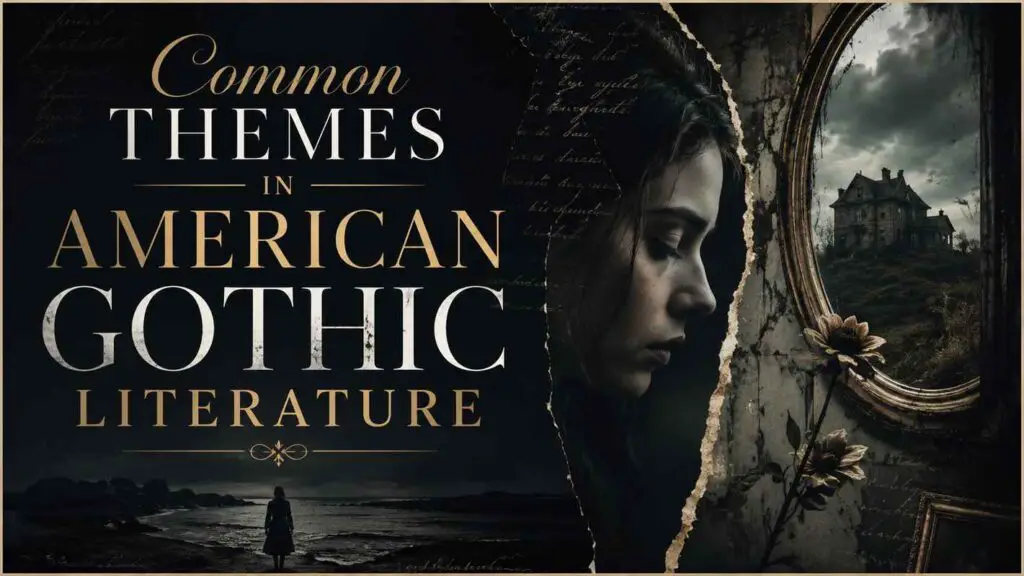
American Gothic literature explores the dark side of the American experience. It takes familiar places such as old houses, isolated towns, forests, plantations, churches, and family homes, then fills them with fear, guilt, secrets, and psychological tension.
Unlike traditional Gothic fiction from Europe, American Gothic literature is deeply tied to American history and culture. It often reflects anxiety about the past, the violence hidden beneath ordinary life, and the fragile line between civilization and chaos.
An Introduction to American Gothic Literature
American Gothic literature is a branch of Gothic fiction that developed in the United States. It uses darkness, mystery, horror, and emotional intensity to explore human nature and society. While it shares many features with European Gothic literature, it has its own distinct concerns.
The genre emerged during the late eighteenth and early nineteenth centuries as American writers began adapting Gothic traditions to the realities of life in the United States. Rather than relying on ancient European histories and medieval legends, these writers drew inspiration from the American landscape, religious traditions, political tensions, and social conflicts. As a result, American Gothic literature developed a unique identity that reflected the fears and uncertainties of a growing nation.
European Gothic stories often focus on castles, aristocratic families, ancient curses, and medieval settings. American Gothic literature usually replaces these with haunted houses, decaying towns, wilderness landscapes, slavery, religious fear, family trauma, and social isolation.
The American setting plays a crucial role in shaping the genre. Vast forests, remote settlements, abandoned plantations, and isolated rural communities often create an atmosphere of uncertainty and danger. These locations are more than simple backdrops. They symbolize the unknown and reflect the emotional and psychological struggles of the characters who inhabit them.
Another defining feature of American Gothic literature is its focus on the darker aspects of American history. Many works examine the consequences of slavery, racial injustice, religious extremism, violence, and social inequality. By confronting these issues through Gothic imagery and storytelling, authors reveal how historical trauma continues to influence the present.
Writers such as Edgar Allan Poe, Nathaniel Hawthorne, Shirley Jackson, Flannery O’Connor, William Faulkner, and Toni Morrison used Gothic elements to reveal deeper truths about America. Their stories are not only frightening. They also expose guilt, repression, violence, hypocrisy, and moral corruption.
Edgar Allan Poe explored madness, obsession, and psychological terror through stories that blur the line between reality and imagination. Nathaniel Hawthorne examined sin, guilt, and the lingering influence of Puritan beliefs. Later writers such as Shirley Jackson and Flannery O’Connor used Gothic techniques to expose social tensions and hidden cruelty within seemingly ordinary communities. William Faulkner and Toni Morrison expanded the tradition by addressing the lasting effects of history, memory, and racial injustice.
A key characteristic of American Gothic literature is its ambiguity. Readers are often left uncertain whether strange events are caused by supernatural forces or by the fears and perceptions of the characters themselves. This uncertainty creates tension and encourages deeper reflection on the themes being explored.
Fundamentally, American Gothic literature asks uncomfortable questions. What happens when the past refuses to stay buried? What lies beneath respectable society? How much darkness exists inside the human mind?
Rather than offering simple answers, American Gothic literature invites readers to confront these questions directly. Through haunting settings, troubled characters, and unsettling mysteries, the genre reveals that the greatest sources of horror are often not monsters or ghosts but the hidden fears, secrets, and contradictions that shape human experience.
Common American Gothic Literature Themes
American Gothic literature is built around recurring themes that reveal fear, guilt, and hidden conflict. These themes help writers turn ordinary American settings into places of mystery, dread, and moral tension.
Here are the most common themes found in American Gothic literature.
#1. The Haunting Power of the Past
One of the most important themes in American Gothic literature is the idea that the past never truly disappears. Old crimes, family secrets, historical injustices, and buried memories return to disturb the present.
This theme often appears through haunted houses, ancestral guilt, mysterious deaths, or characters who cannot escape what happened before. The haunting may be literal, with ghosts and supernatural events, or symbolic, with memories and guilt acting like ghosts.
In American Gothic fiction, the past is not just personal. It is often historical. Stories may reflect slavery, racism, Puritanism, violence, war, or the destruction of Native communities. The horror comes from the realization that America’s present has been shaped by unresolved darkness.
#2. Isolation and Loneliness
Isolation is another major theme in American Gothic literature. Characters are often cut off from society, family, reason, or emotional connection. They may live in remote houses, small towns, wilderness areas, or psychologically trapped inner worlds.
This isolation creates fear because it removes protection. When characters are alone, their minds become unstable, their fears grow stronger, and hidden truths become harder to avoid.
In many American Gothic stories, isolation is not only physical. A character may be surrounded by people but still feel emotionally or morally alone. This makes the Gothic atmosphere more intense because the real prison is often inside the character’s own mind.
#3. Madness and Psychological Breakdown
American Gothic literature often explores madness, obsession, paranoia, and psychological collapse. Instead of relying only on external monsters, many stories show that the greatest horror may come from within.
Characters may become consumed by guilt, fear, desire, revenge, or delusion. Their minds distort reality, making it difficult to know what is true and what is imagined.
This theme is especially powerful because it creates uncertainty. Readers are forced to question the narrator, the events, and even their own interpretation of the story. The result is a deep sense of unease.
#4. Guilt, Sin, and Moral Corruption
Many American Gothic works focus on guilt and sin. Characters may commit terrible acts, hide shameful secrets, or live under the weight of moral failure.
This theme is closely connected to America’s religious and Puritan heritage. In many stories, characters fear judgment, punishment, damnation, or exposure. Even when religion is not directly present, the atmosphere often feels morally intense.
American Gothic literature frequently shows that respectable people and institutions may hide corruption. A family, church, town, or community may appear decent on the surface while concealing cruelty, hypocrisy, or violence underneath.
#5. The Decay of the Family
Family is often presented as a source of fear in American Gothic literature. Instead of being safe and loving, the family home may become a place of secrets, control, inheritance, trauma, or emotional damage.
This theme appears through cursed families, abusive parents, hidden crimes, sibling conflict, ancestral shame, and generational trauma. The family becomes a symbol of how the past is passed down.
In many stories, the home itself reflects this decay. A crumbling house, locked room, dark hallway, or hidden attic may represent the broken condition of the family living inside it.
#6. The Fear of the Unknown
American Gothic literature often creates fear through mystery and uncertainty. Characters encounter strange sounds, unexplained events, hidden rooms, unknown figures, or disturbing dreams.
The unknown is frightening because it resists explanation. Readers do not always know whether the danger is supernatural, psychological, social, or moral.
This uncertainty is one of the strongest Gothic effects. It keeps the reader unsettled and forces them to remain inside the fear instead of escaping through a simple answer.
#7. Nature as a Threatening Force
In American Gothic literature, nature is often wild, dark, and dangerous. Forests, swamps, mountains, storms, and isolated landscapes become places where human control disappears.
This theme reflects the early American fear of the wilderness. The natural world is not always peaceful or beautiful. It can be overwhelming, mysterious, and hostile.
Nature may also symbolize the hidden parts of human nature. Just as the wilderness resists control, the human mind contains desires, fears, and impulses that civilization cannot fully suppress.
#8. Social Hypocrisy and Hidden Violence
American Gothic literature often exposes the violence hidden beneath polite society. A town may appear peaceful, a family may seem respectable, or a community may claim moral purity, but underneath there is cruelty, prejudice, or corruption.
This theme is common in Southern Gothic literature, where decaying social structures, racism, poverty, and family decline are often central. However, it appears throughout American Gothic writing.
The horror comes from the contrast between appearance and reality. American Gothic stories suggest that evil is not always outside society. Sometimes it is built into society itself.
#9. The Supernatural and the Unexplainable
Ghosts, curses, omens, visions, and strange events are common in American Gothic literature. These supernatural elements create suspense and deepen the atmosphere of dread.
However, the supernatural is not always meant to be taken literally. Sometimes it represents guilt, memory, trauma, or fear. A ghost may symbolize a crime that has never been confessed. A curse may represent the consequences of inherited sin.
This makes the supernatural especially powerful in American Gothic fiction. It works both as horror and as symbolism.
#10. Death and Decay
Death is one of the most constant themes in American Gothic literature. Stories often include graves, corpses, illness, murder, mourning, ruined buildings, and decaying landscapes.
Decay shows that nothing is as stable as it seems. Bodies decay. Families decay. Houses decay. Societies decay. Even moral values can decay when people hide the truth or refuse to face the past.
This theme gives American Gothic literature its dark atmosphere. It reminds readers that beneath ordinary life there is always mortality, loss, and hidden ruin.
Closing Thoughts
American Gothic literature uses fear to reveal truth. Its dark houses, haunted memories, unstable minds, and decaying communities are not just there to frighten readers. They expose the secrets and conflicts that people often try to hide.
The most common American Gothic literature themes include the haunting power of the past, isolation, madness, guilt, family decay, the unknown, threatening nature, social hypocrisy, the supernatural, and death. Together, these themes create stories that are disturbing, symbolic, and deeply connected to American history and identity.
American Gothic literature remains powerful because it shows that horror is not always distant or imaginary. Sometimes it lives in the home, the family, the town, the nation, and the human mind itself.